The “Long-Haired Army”: the story of Vietnam’s first female general
In 1946, Nguyễn Thị Định went to sea to obtain weapons. She was twenty-six, had grown up in a farming family in southern Vietnam and had no experience of sea voyages. But a war against the French was being fought in her homeland, and the people alongside whom she was struggling for the country’s independence needed rifles and ammunition. Định and three companions travelled north to seek help.
The return journey proved more difficult. She now had to bring twelve tonnes of weapons home, avoiding French patrols. To do this, the vessel was disguised as a trading boat carrying fish sauce, and Định hired four experienced sailors. For a whole month, they waited for a favourable wind. When it finally came, the sea grew rough — and that was when she decided it was time to set out.
A girl from Bến Tre
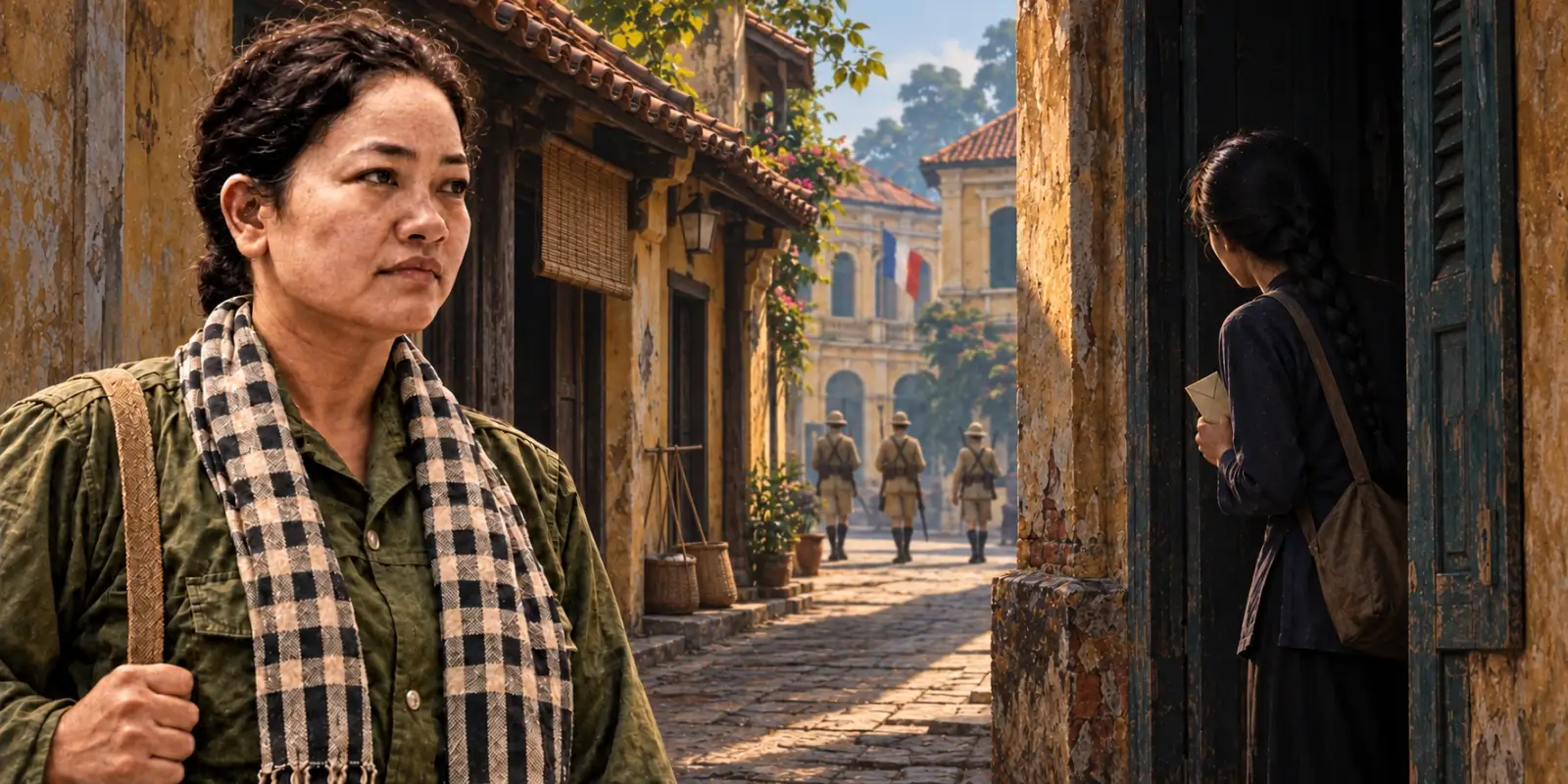
Before that journey, her life had unfolded among the rivers and canals of Bến Tre, a region in the Mekong Delta in southern Vietnam. The large farming family into which she was born in 1920 had ten children. Định was the youngest. Her older siblings worked in the fields and caught fish, while she helped sell the catch. In her memoirs, Định recalled getting up at two or three in the morning at the age of ten and boarding a boat with her sister-in-law. They had to reach the market with their fish and shrimp by dawn.
Vietnam was then under French rule. Định’s older brother was involved in the underground movement, and through him she met people who wanted to secure the country’s independence. At first, she listened to their conversations and prepared food for those gathered. Later, she was entrusted with carrying messages, distributing leaflets and newspapers, and helping bring local residents together. By sixteen, she was already involved in political work, and at eighteen she joined the Indochinese Communist Party.
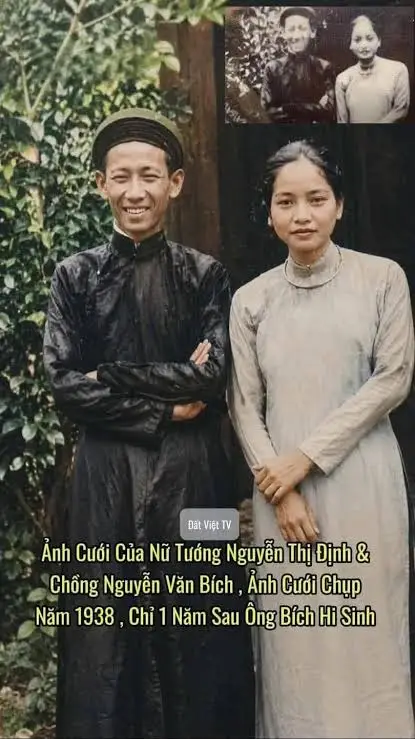
Among her underground comrades was her future husband, Nguyễn Văn Bích. They married and had a son. Three days after his birth, the French secret police came for her husband. Định managed to take the baby to visit him in prison only once before he was sent to the Côn Đảo islands.
In 1940, she too was arrested. Before being sent to the colonial prison at Bà Rá, where the French authorities held political opponents, she had to leave her young son with her family. Later, Định learned that her husband had died in prison on Côn Đảo. After her release, she returned to underground work, and in 1945 she took part in the uprising during which supporters of independence seized power in Bến Tre. It was part of the August Revolution, which led to the proclamation of the Democratic Republic of Vietnam.
France, however, tried to regain control of the country, and war broke out again in the south. Định was tasked with reaching the leadership in the north, explaining the resistance’s situation and securing help. That was how she came to take part in the sea expedition.
Twelve tonnes of weapons
Định and her companions set off north in the spring of 1946. For the return voyage, the weapons were loaded on the coast of central Vietnam: twelve tonnes of cargo had to be brought to the southern coast, where armed units were waiting for it. The vessel was disguised as a trading boat carrying fish sauce to conceal the weapons from patrols.
For the return voyage, Định hired four experienced sailors. Then all they could do was wait for the seasonal wind. In November, after a month’s wait, the boat put to sea and ran into a storm. The published account of the voyage says that the bad weather helped them avoid the enemy’s attention. They succeeded in delivering the cargo to Bến Tre.
Many years later, when regular deliveries of weapons by sea from north to south had been established, this journey came to be remembered as one of the precursors of the Hồ Chí Minh Trail at sea. In 1946, that was still a long way off: Định returned to her home province and continued working with local underground activists and women’s organisations.
Bến Tre, 1960
The war with France ended, but a peaceful life never came for Định. After the Geneva Accords of 1954, Vietnam was divided: in the north, power lay with the communists led by Hồ Chí Minh; in the south, with the government of Ngô Đình Diệm, supported by the United States. Nationwide elections were supposed to reunify the country, but they never took place.
Định remained in the south. Her son went north to study, while she continued her underground work, hiding from the authorities. The southern authorities persecuted communists and their supporters, carrying out raids and arrests. According to recollections of those years, Định changed her appearance, posed sometimes as a trader and sometimes as a farmer, and hid in the homes of people who helped the underground movement.
By the late 1950s, the Communist Party leadership had authorised its supporters in the south to launch armed uprisings against Ngô Đình Diệm’s government, backing them with mass protests by local residents. Định learned of the decision at a meeting of party leaders, then returned to her home province of Bến Tre, where she served as deputy secretary of the provincial committee. There she was to discuss preparations for the uprising with local comrades. It proved impossible to gather all the leaders at once. She insisted that those who were present prepare the uprising without postponing it until the others returned.
They decided to begin in three communes in Mỏ Cày district. Weapons were scarce, and some rifles had to be carved out of wood. The replicas were painted black and fitted with covers to make them look real. Eleven such rifles survive in a museum collection. They were accompanied by drums, wooden clappers and loud bangs from bamboo tubes. At the same time, rumours were spread that large armed units had arrived in the area. The insurgents needed to convince the garrisons that they faced a much stronger force than the one they actually possessed.
The uprising began on 17 January 1960. Armed groups and local residents surrounded posts, disarmed local self-defence forces and dissolved the authorities. The uprisings quickly spread to neighbouring settlements. They became known as “Đồng Khởi”, usually translated as “simultaneous uprising”. Định was one of the leaders of this collective effort.
In response, the government sent troops into the district. For local residents, the capture of the posts brought new military operations in their villages. Resistance had to continue under these conditions, and the women decided to take their demands directly to the district authorities.
Boats outside the district offices
In the spring, boats began arriving in Mỏ Cày from surrounding villages. Women brought children, the elderly and the sick, along with clothes, blankets, mosquito nets and cooking pots. Accounts of these protests also mention wounded relatives. Those who arrived settled outside the government offices, in the covered market, on pavements and in a school. They cooked and made arrangements to spend the night there as well.
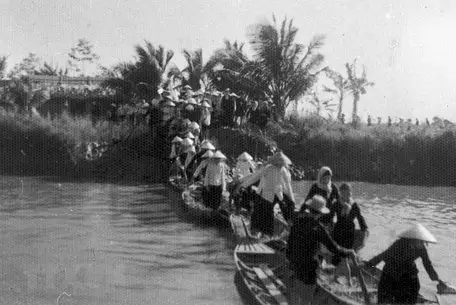
This tactic was called “reverse evacuation”: people leaving villages where military operations were taking place came to those who represented the government. They demanded an end to raids and shelling, help for the wounded, medicine and food, and the withdrawal of troops so they could return home. Entire families had to stay in the district centre, together with their household belongings.
As early as February, participants in one of the first protests were bringing the district head a written complaint about the military’s actions. Two women were tasked with carrying it through military checkpoints; the paper was hidden in a container of rice. On reaching the government offices, one of them handed the complaint to the district chief. Later, residents from other communes joined the protests, and the participants took turns. Officials might promise to pass the demands on to their superiors, but the people did not disperse. The villages’ grievances became an everyday problem for the district centre.
According to the published history of the spring protests, one of them lasted twelve days and ended with the withdrawal of troops from three communes. The protest took place alongside the actions of armed groups and efforts to influence soldiers. Định helped organise this resistance, drawing on connections built over years of underground activity.
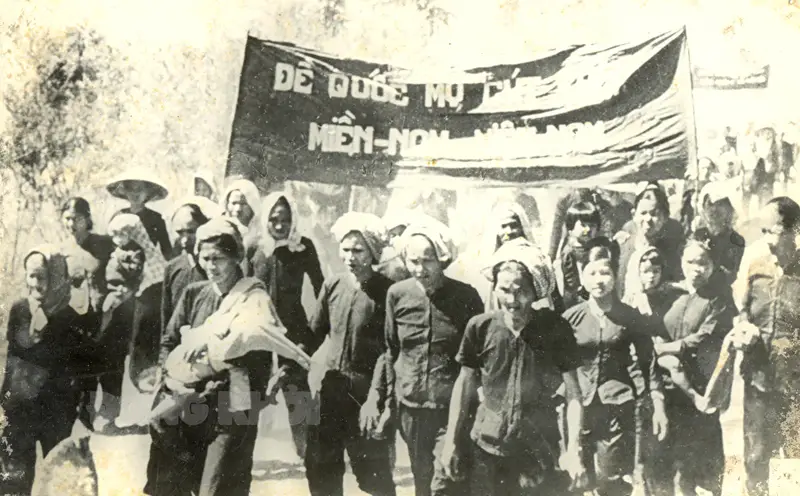
Why it was called the “Long-Haired Army”
The women’s movement became known as the “Long-Haired Army” — Đội quân tóc dài. Its members took part in demonstrations, carried messages, helped shelter underground activists and supplied armed units. Women also participated in armed struggle. The movement brought together different forms of resistance, rather than existing as a single separate unit.
The women also sought support among the families of soldiers in the South Vietnamese army. Mothers, wives and sisters were asked to persuade their relatives not to take part in raids or shoot at local residents. They were also encouraged to convince them to leave their units or join the insurgents. This work with servicemen was called “binh vận”.
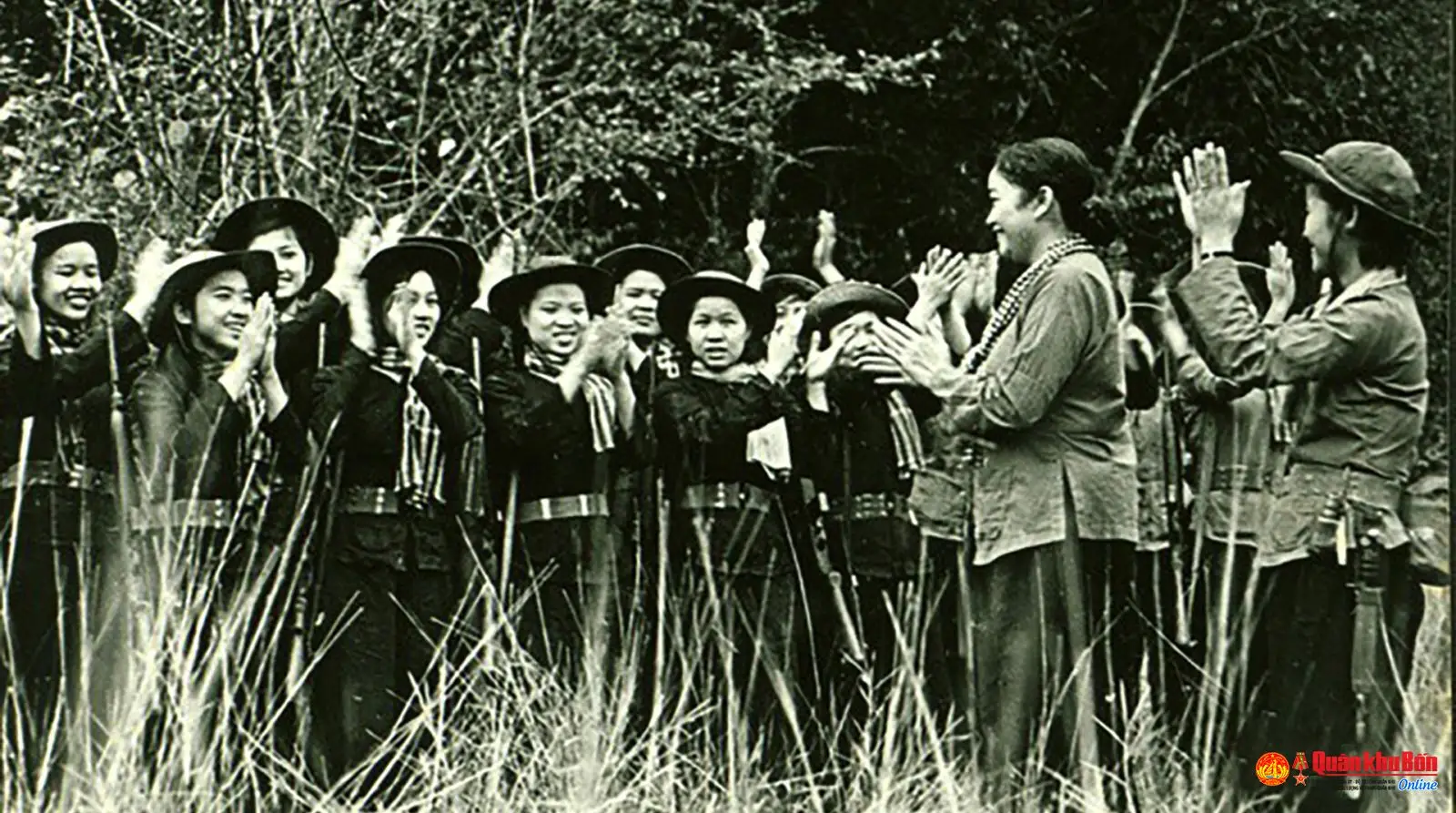
Such protests remained dangerous. Women were detained and arrested; the presence of children and the elderly offered no guarantee of protection. Continuing the protests required coordination between communes, the exchange of information and the organisation of shifts between groups. Behind the evocative name lay constant organisational work, in which Định had many years of experience.
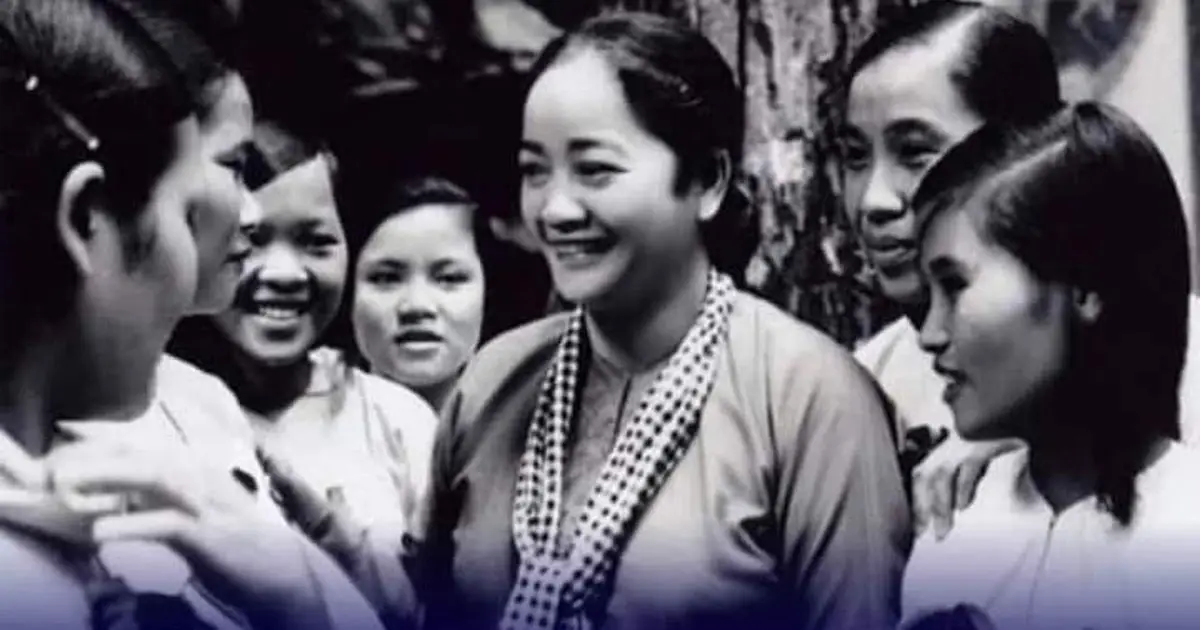
From Bến Tre, this form of women’s participation spread to other parts of the south. Farmers, workers, traders, teachers and nuns became involved. In some places, the main activity was a demonstration; elsewhere, it was liaison with armed units or conversations with relatives serving in the army. Định’s name was increasingly associated with the movement.
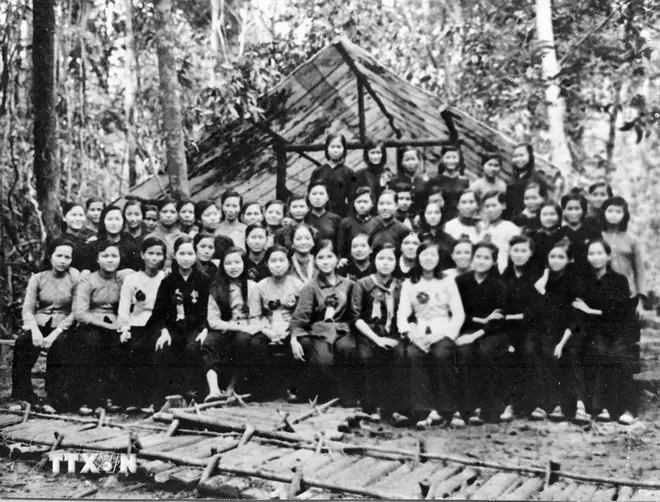
A letter to her son
While Định was organising protests in Bến Tre, her son was living in the north of the country. According to an account published by the Vietnam Women’s Union, only one letter and a photograph arrived from him during their six years apart.
In a surviving letter from 1959, Định wrote that she had faith in her son and urged him to study harder. He could express his love for his parents and the family who remained in the south by helping to build socialist North Vietnam. Even when addressing her own child, she connected his future with work for the country.
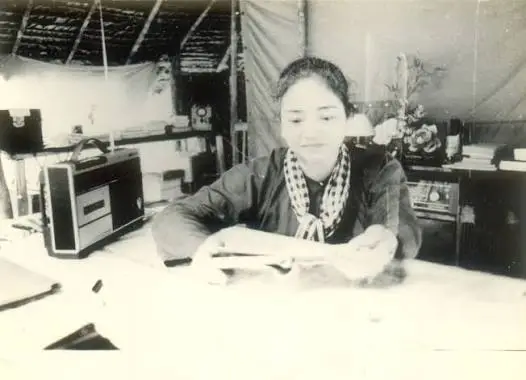
In early September 1960, during a work trip, Định wrote to her son again. She did not yet know that there was no one left to answer her: he had died of illness on 4 May. The news reached her several months after his death, after she had already sent the letter.
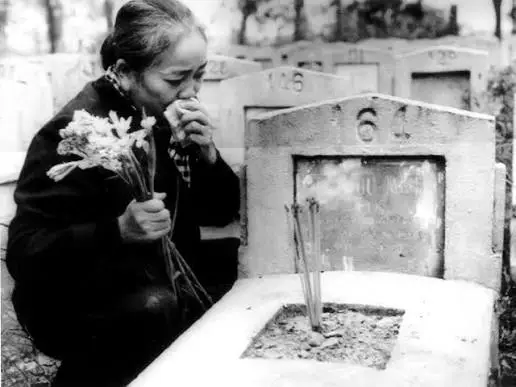
After the war, a portrait showing Định with her husband and son stood on her desk. The museum caption describes it as a photomontage — a photograph assembled from separate pictures. By then, both had been dead for many years: her husband in prison on Côn Đảo, and her son in the north of the country.
A female general
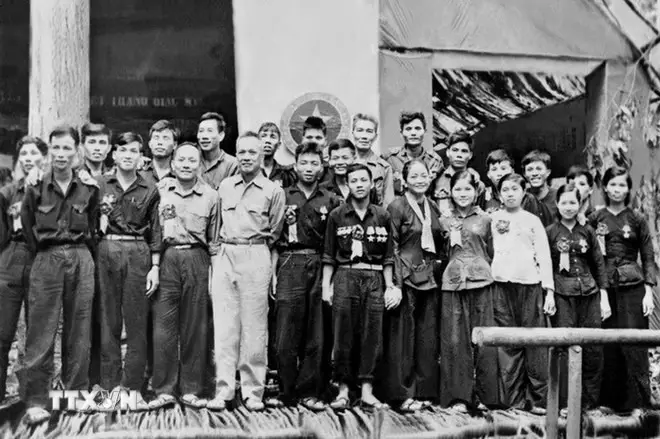
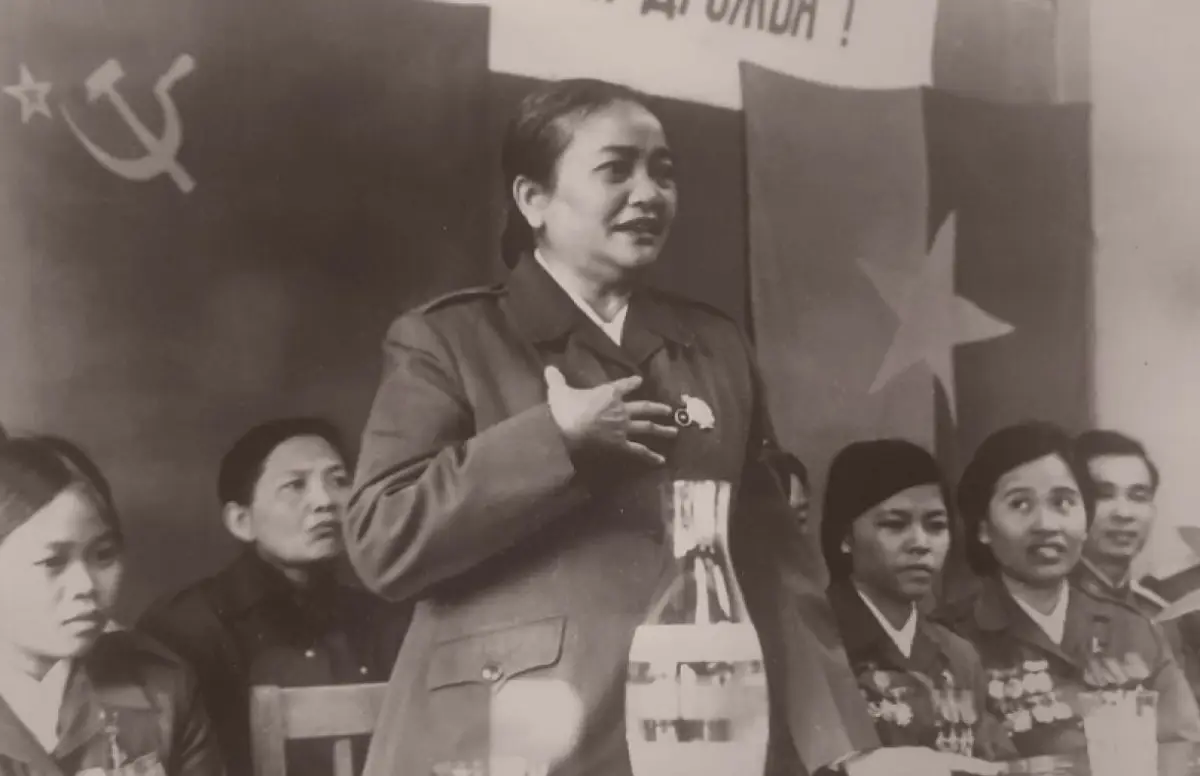
For Định, the war continued. In 1965, she joined the command of the South Vietnam liberation forces as deputy commander, with responsibilities that included the guerrilla movement. The rank of general entered her biography only nine years later: in April 1974, she became a major general, the first female general in the Vietnam People’s Army.
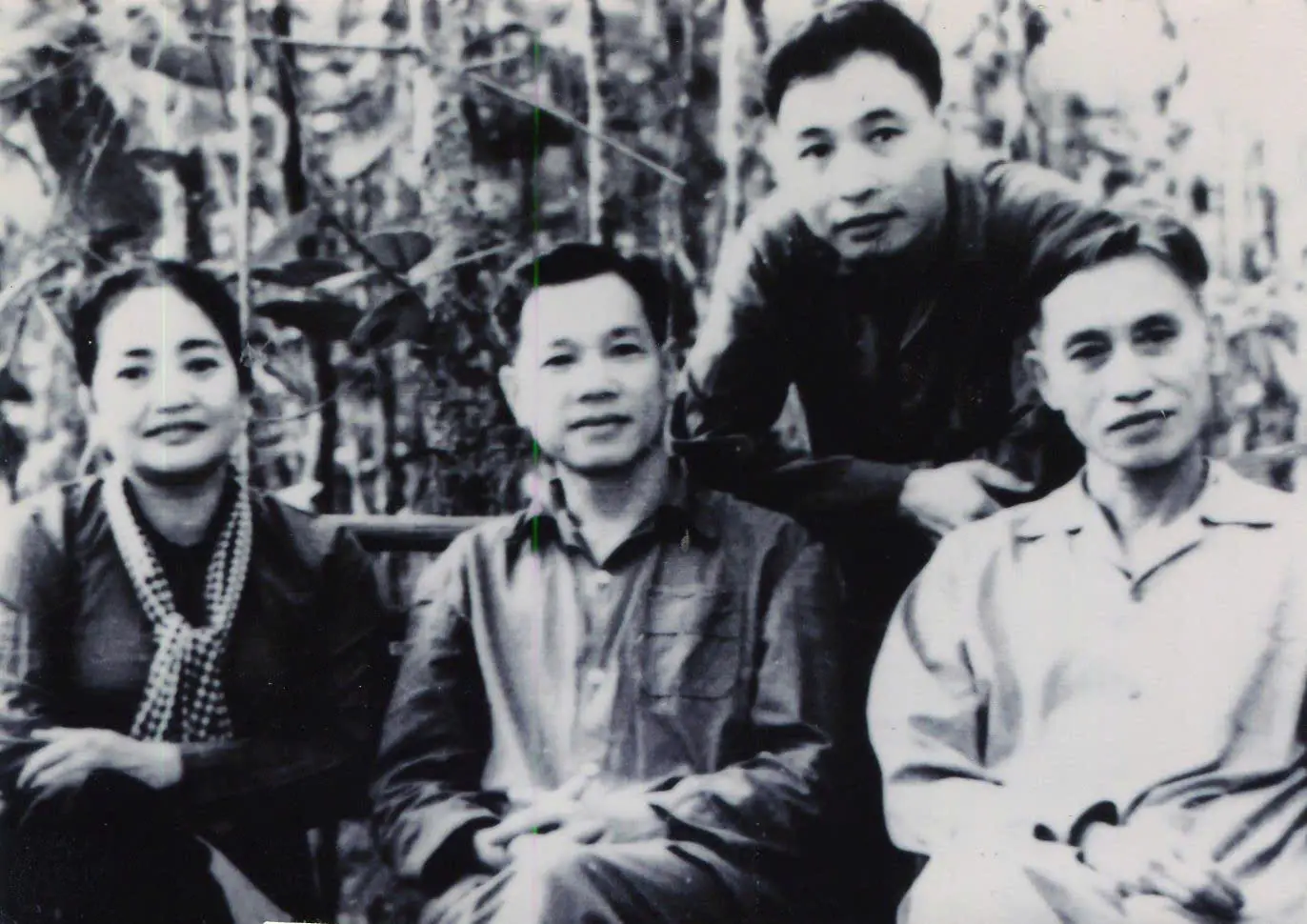
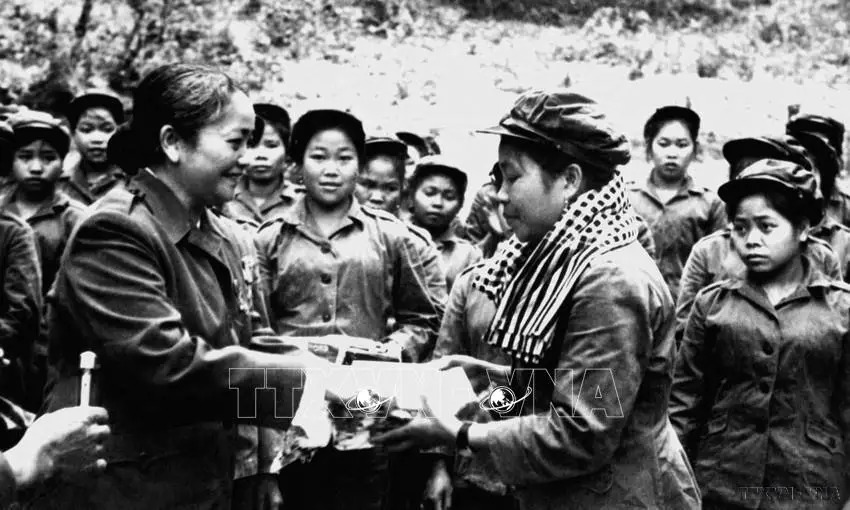
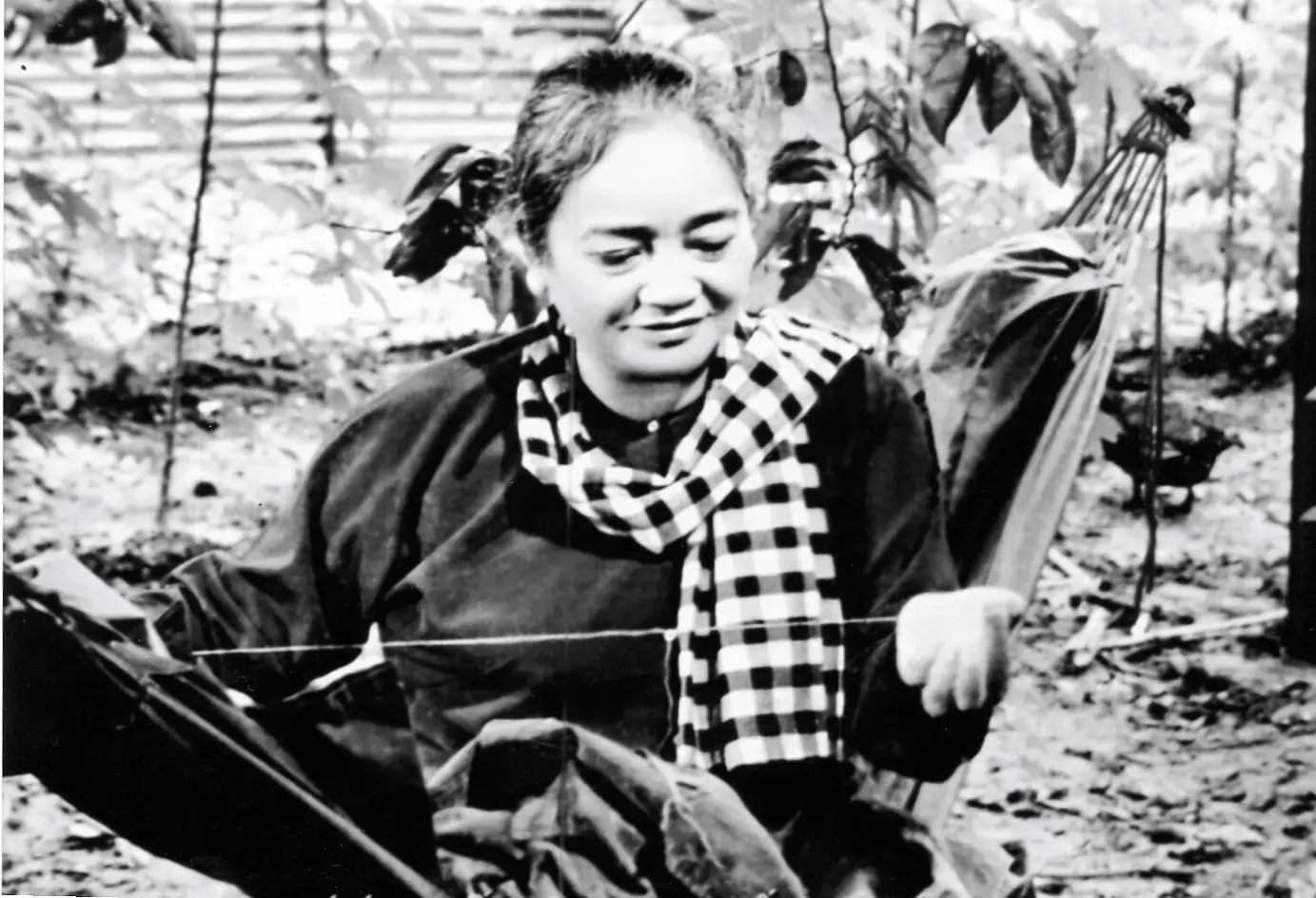
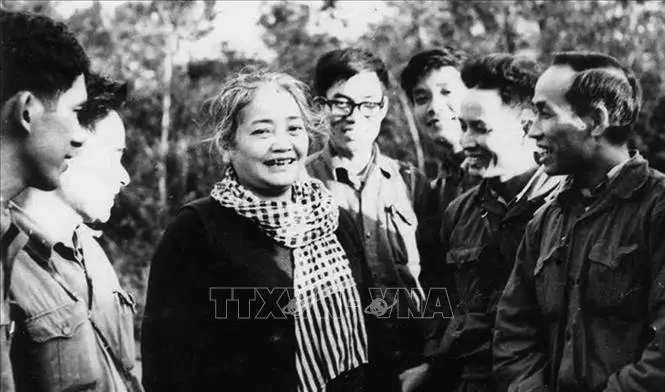
Her comrades’ recollections preserve another side of her. When visiting units, Định brought tea, sweets, needles and thread; during stops, she mended soldiers’ torn shirts. They called her aunt and mother. In photographs, a checked scarf — the khăn rằn, an everyday item in southern Vietnam that became a recognisable part of her appearance — can often be seen alongside her military uniform.
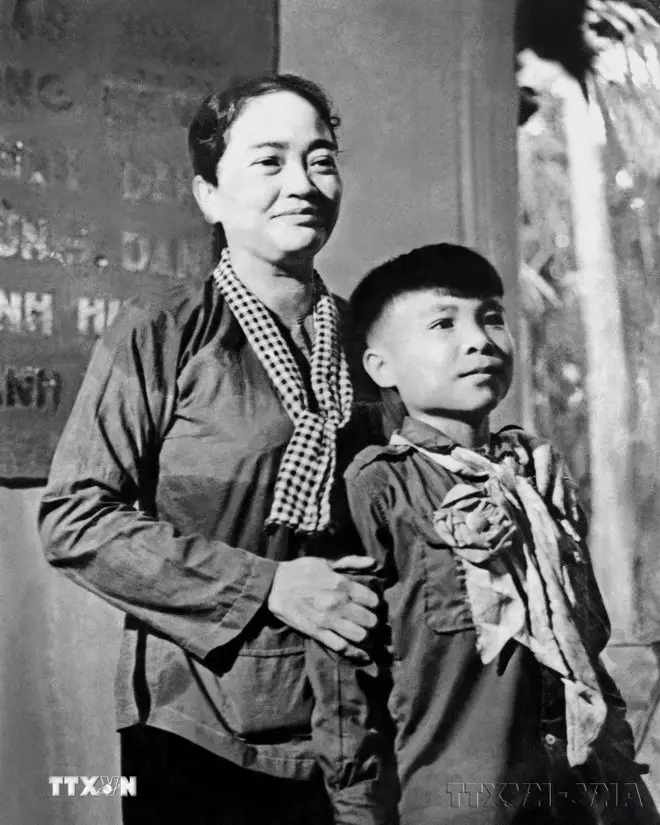
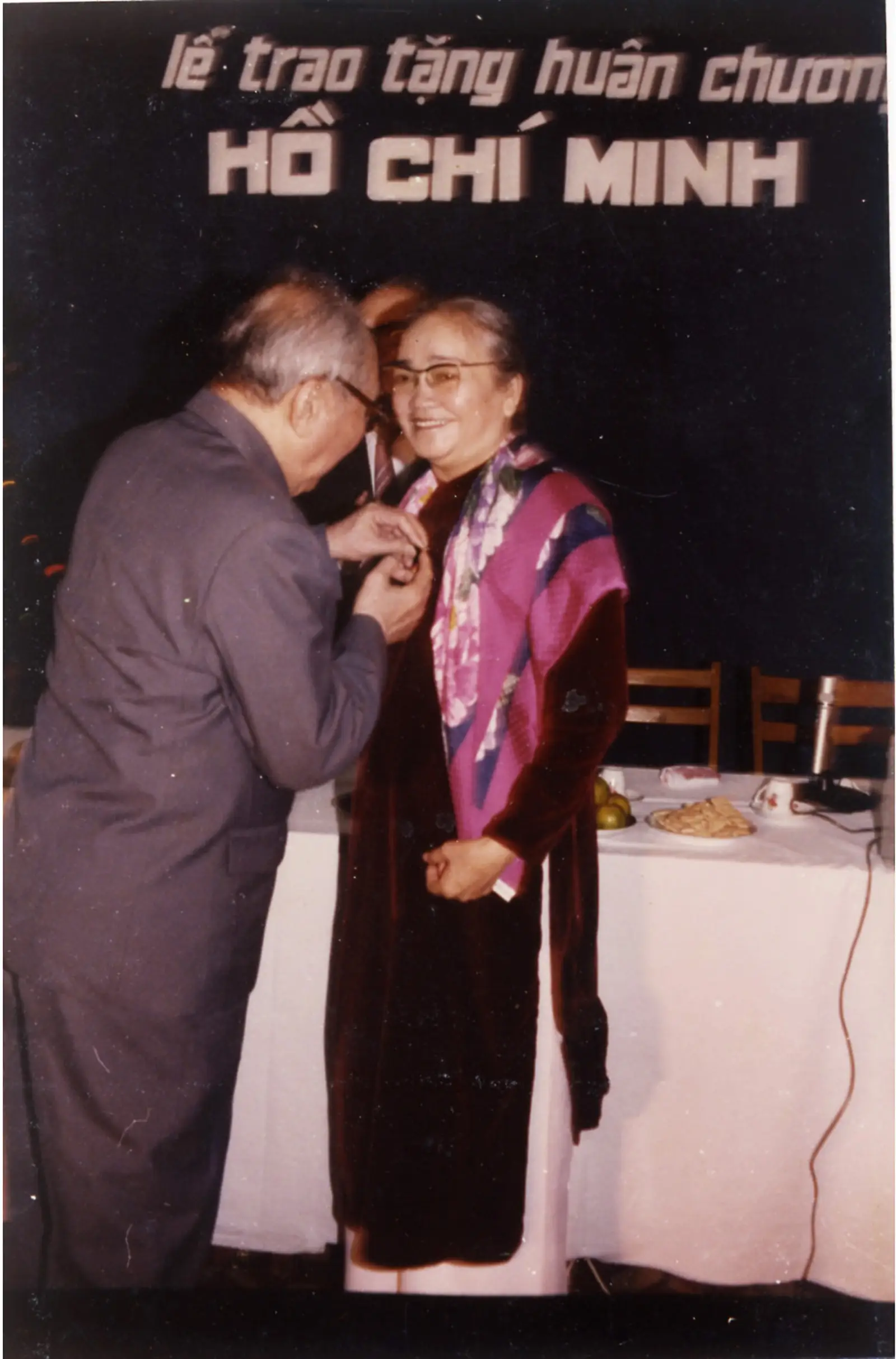
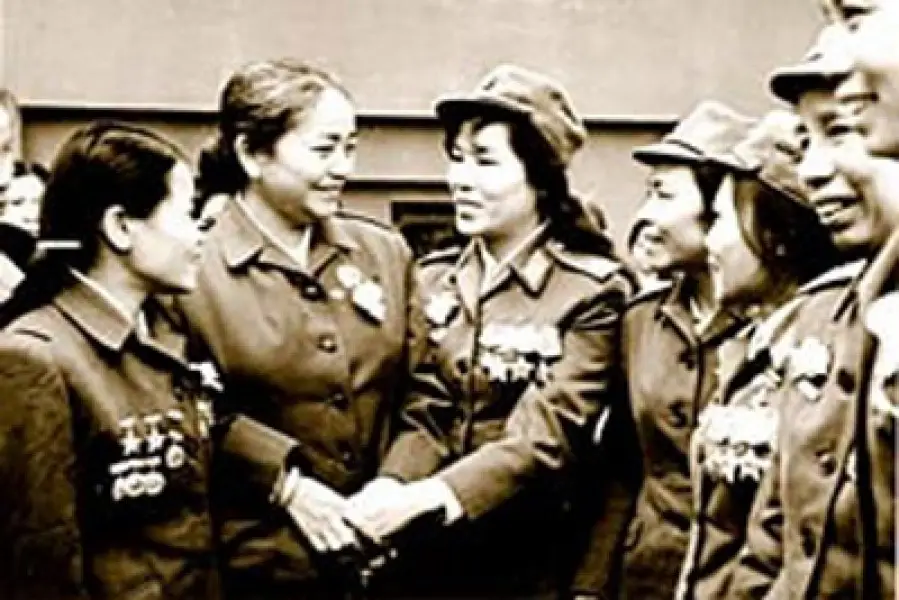
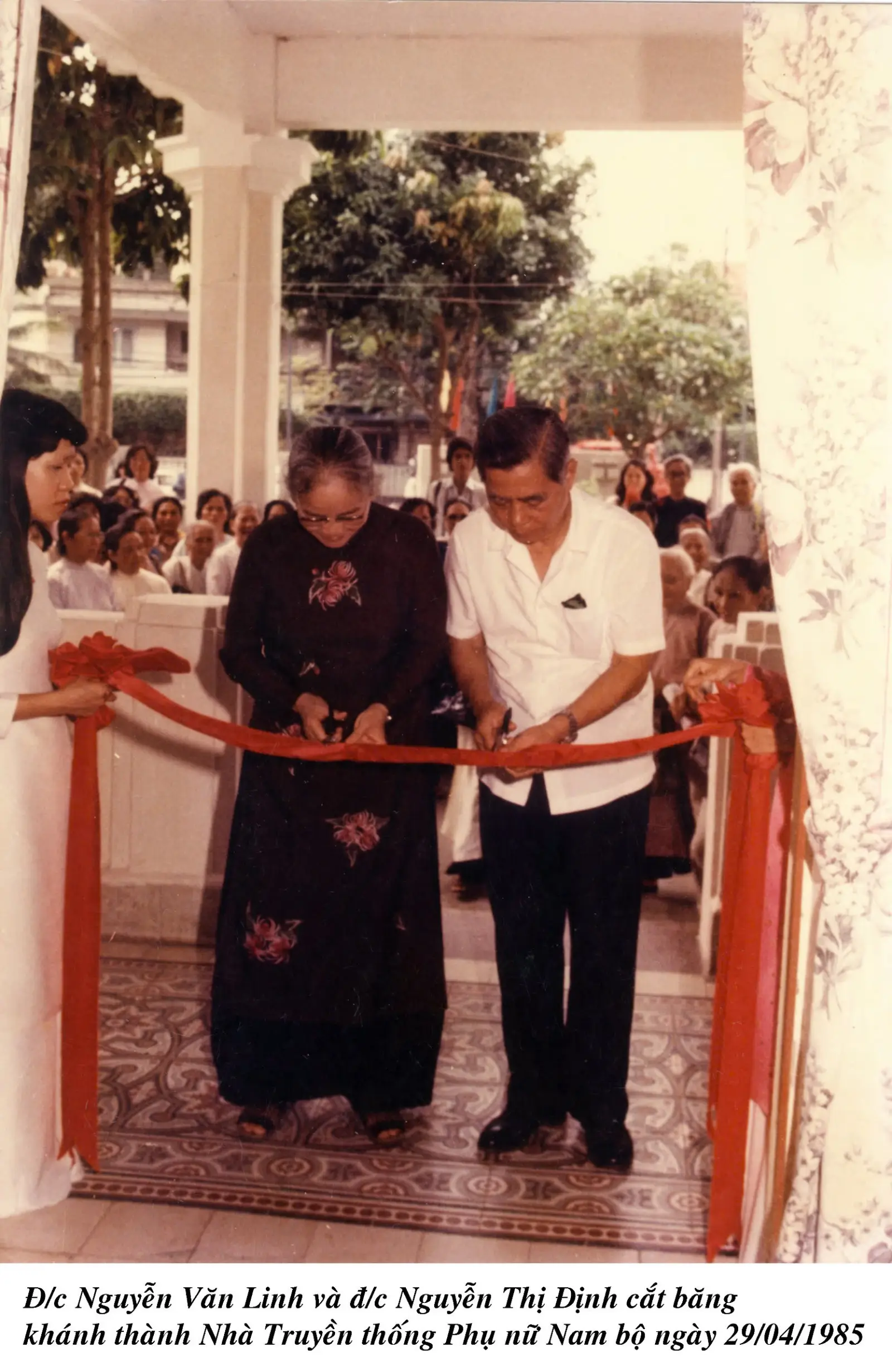
After the war ended, Định headed the Vietnam Women’s Union, and in the late 1980s she became vice-chair of the Council of State. She continued travelling around the country and meeting women. One of the projects she worked on during those years was the creation of a museum to which they could entrust their belongings, documents and memories.
A women’s museum
The Vietnamese Women’s Museum in Hanoi was established in 1987. It would be another eight years before it opened: a building had to be constructed, a collection assembled and exhibitions prepared. Định sought support, approached organisations and accepted donations. On her travels, she carried a bag and a notebook in which she recorded the money collected.
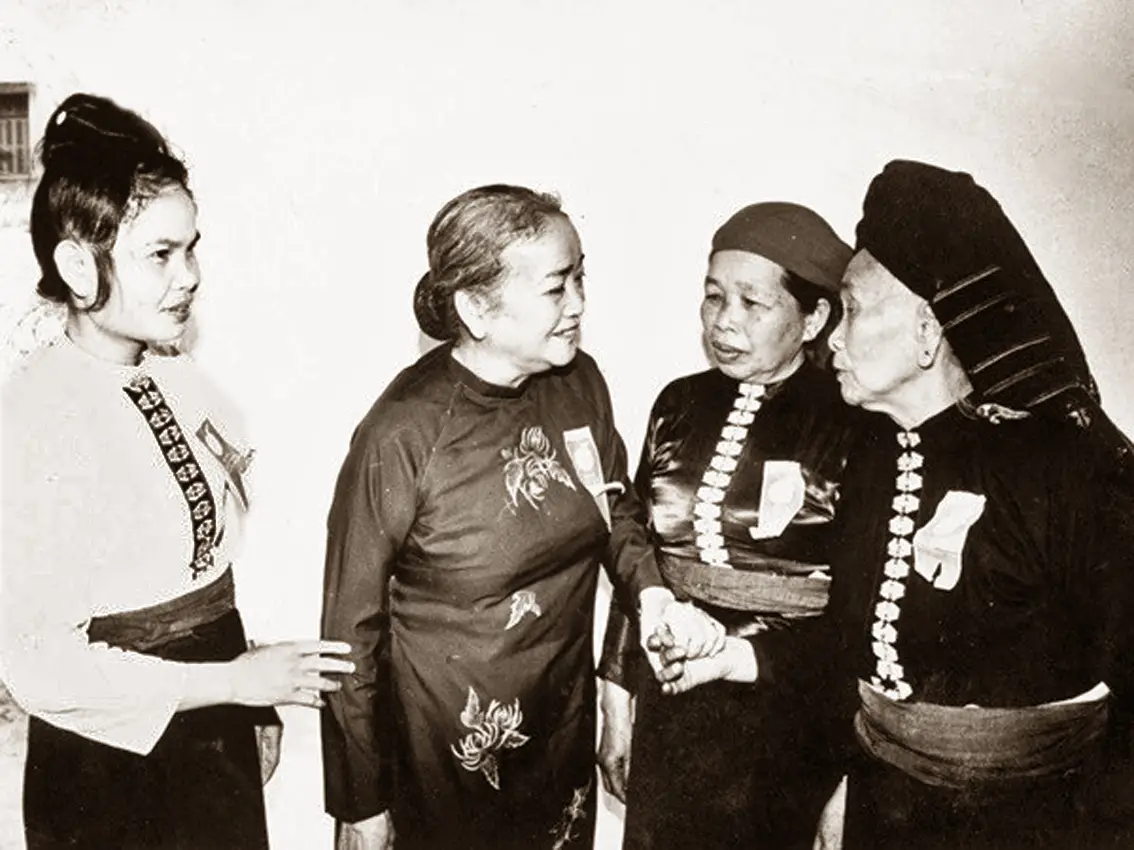
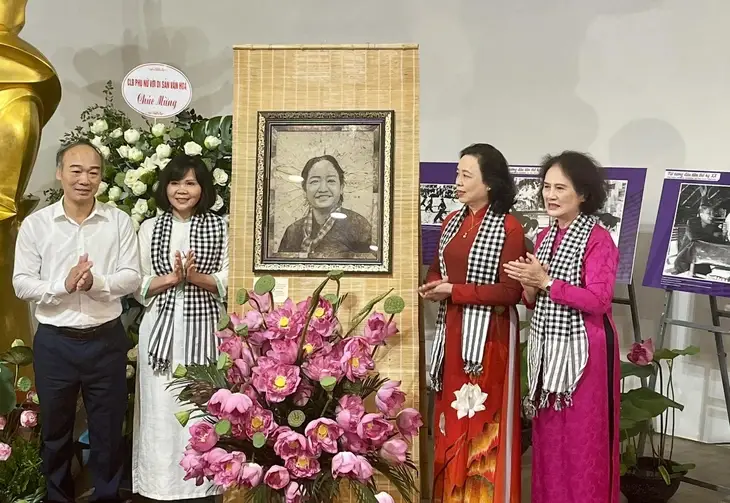
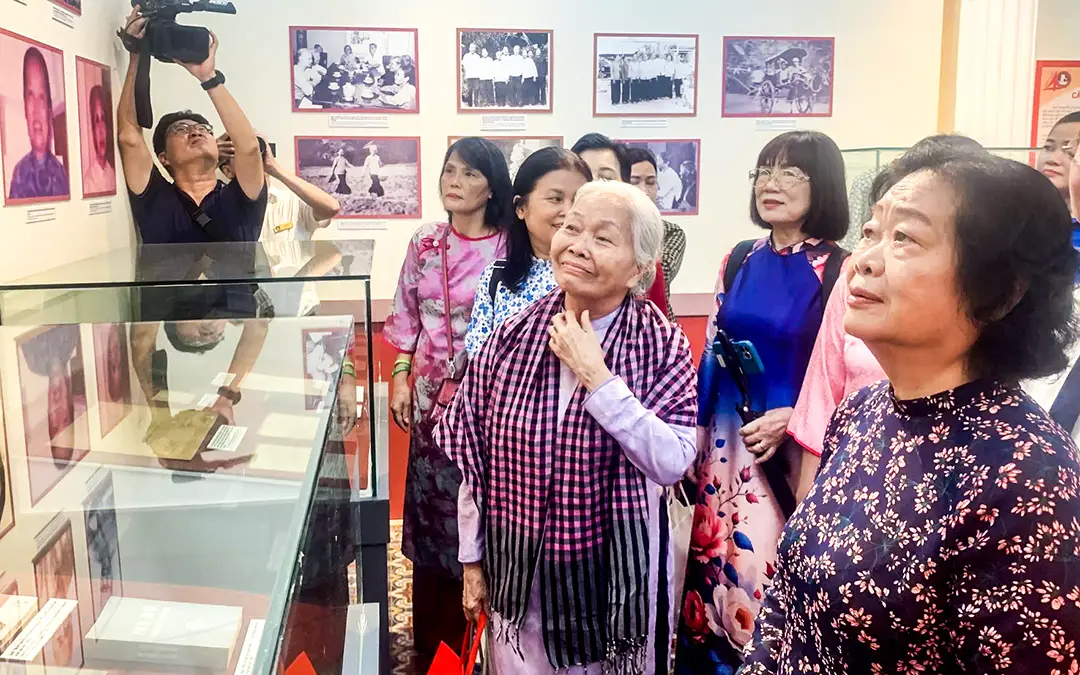
Objects that women and their families had preserved became part of the future collection. They made it possible to tell the story of the war through people who carried messages, hid comrades, waited for loved ones and raised children. The museum also made room for everyday work, the wedding customs of different ethnic groups and clothing. Family, the country’s history and the culture of dress became the three main themes of the permanent exhibition.
Định died on 26 August 1992. The museum opened to visitors on 20 October 1995, when she had been dead for three years. Among the exhibits connected with her is the bag in which, during the last year of her life, she carried money donated for its construction.
Comments
Read also
All articles
Health in Vietnam: Insurance, Hospitals, Pharmacies and Emergency Care
A practical health guide for Vietnam: emergency numbers, hospitals, pharmacies, travel insurance, animal bites, fever and upfront payments.
Ho Chi Minh City: What to See in 3–4 Days, Where to Stay, What to Eat and How to Get Around
A practical Ho Chi Minh City guide for 3–4 days: where to stay, what to see, what to eat and how to navigate the city.
Vietnam in 14 days: three routes without racing across the country
Three workable two-week routes through north, central and south Vietnam: nights, transfers, weather buffer and booking order.
A hotel of fantasies: how a Vietnamese revolutionary’s daughter built Crazy House
Concrete trees, family keepsakes and a building project that became a life’s work.

From Mivina to Vinpearl: How a Billionaire from Kharkiv Changed Vietnam
Can instant noodles make you enough money to build your own Disneyland on a tropical island? Pham Nhat Vuong went from trading in Moscow and…
How Much Does One Month in Vietnam Cost? 2026 Travel and Living Budget
How much does one month in Vietnam cost? Plan 18–25 million VND for a simple monthly lifestyle, or 28–40 million for more comfort. Compare housing,…