A hotel of fantasies: how a Vietnamese revolutionary’s daughter built Crazy House
In Da Lat there is a hotel where tour buses bring people who have no intention of checking in. They buy admission tickets, climb narrow staircases, cross from one roof to another and wait for their turn to take photographs. You can book a room here too, but for many people it is enough simply to wander through a hotel that looks like an enormous enchanted forest.
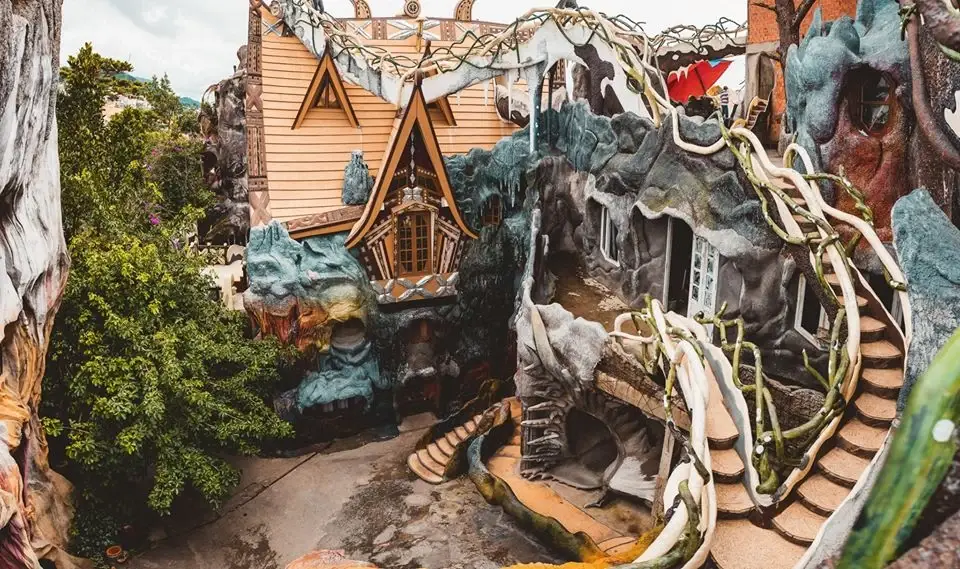
Crazy House in Da Lat: concrete trees, towers and walkways. Photo: Official Crazy House website.
This concrete forest was conceived by Đặng Việt Nga, the daughter of a leader of the Vietnamese revolution, who studied architecture in Moscow. She called her home Hằng Nga Villa. Visitors gave it another name: Crazy House. It suited the place so well that it stuck.
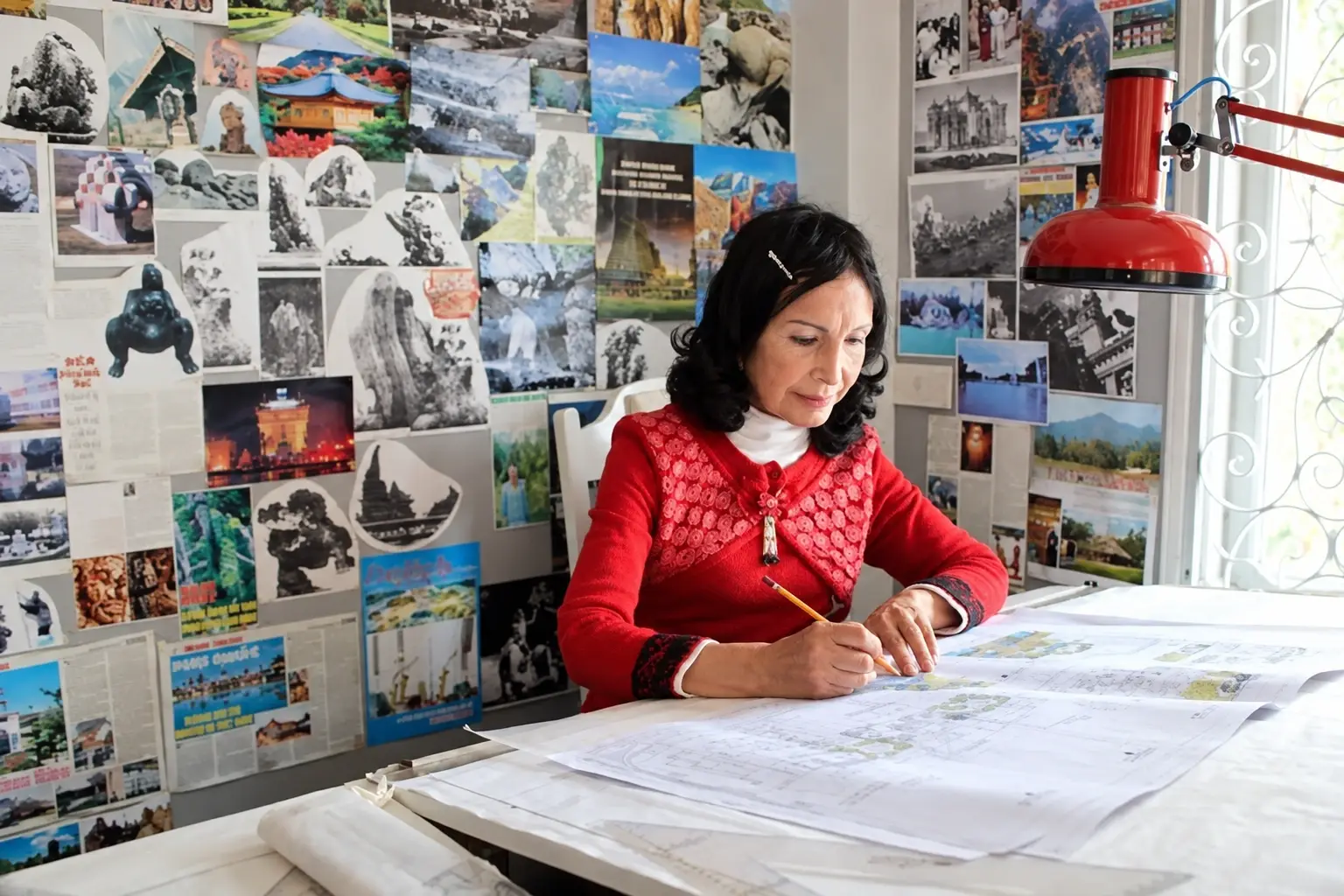
Đặng Việt Nga working on architectural drawings. Source: Techz.
A night inside a tree
In an ordinary hotel, a staircase helps you reach your room. Here it becomes an adventure in its own right: it curves, narrows and turns into a branch stretched between buildings shaped like trees. The courtyard falls away beneath your feet, new trunks rise beside you and crooked windows open in the walls. From a distance, the complex resembles several enormous trees whose roots and branches have grown together, leaving hollow spaces inside.
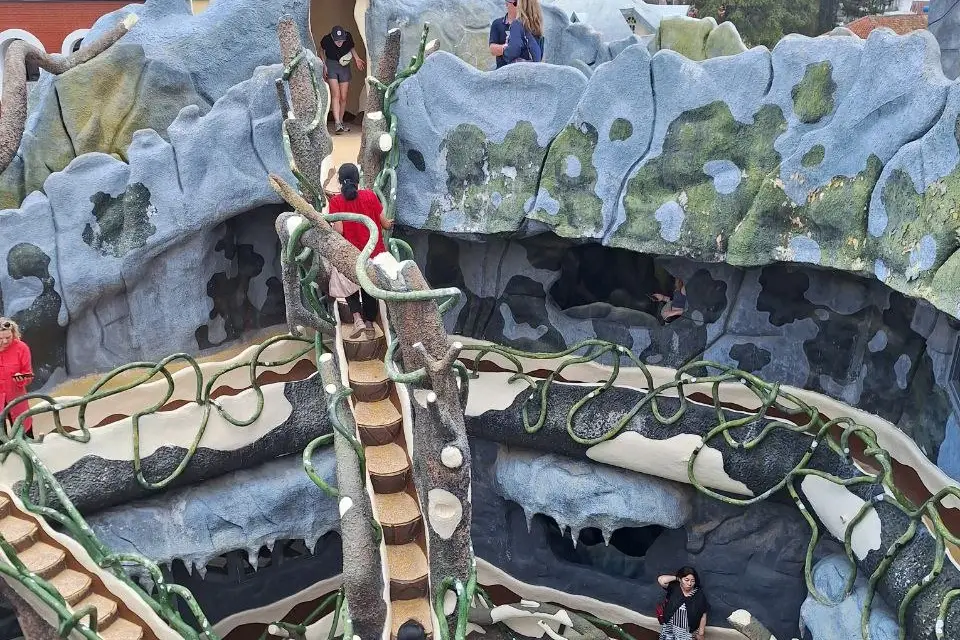
Visitors climb these narrow staircases between concrete trees. Photo from the author’s personal archive.
These hollows contain real hotel rooms with beds, bathrooms and fireplaces. Each has its own name: Bear, Tiger, Kangaroo, Bamboo. A Russian guest will easily recognize a familiar animal in the Bear Room: according to the complex's explanation, it represents Russia, while the Bamboo Room represents Vietnam. Guests can stay overnight after the daytime visitors leave and the walkways between the trees fall silent.
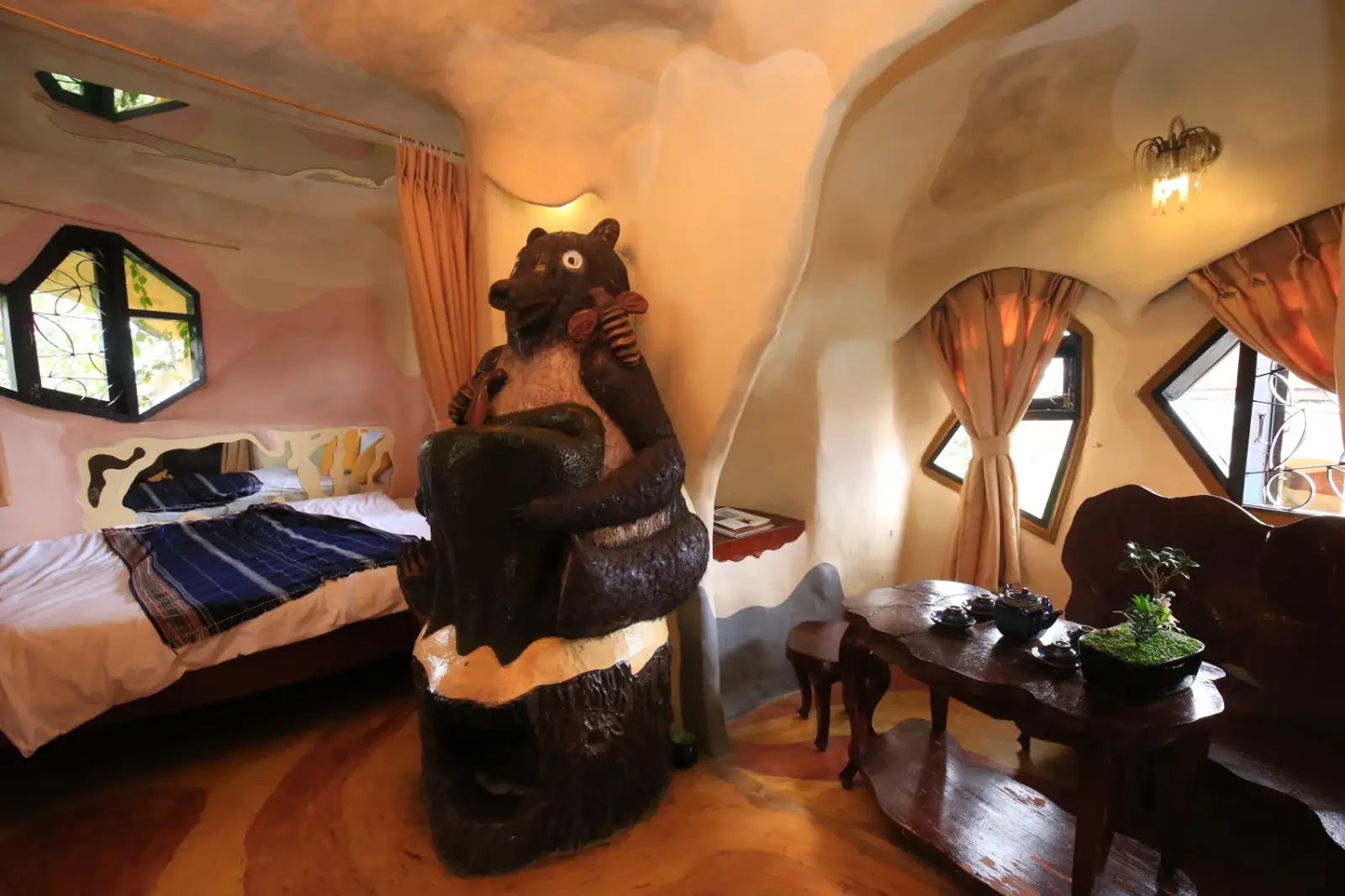
The Bear Room at Crazy House. Photo: Official Crazy House website.
The world Việt Nga imagined extends beyond the forest. In one building, shaped like a rocky mountain, she created Ocean on the Plateau, a marine space with three-dimensional murals. On the lower floor is a stage where, according to the house's official guide, the owner and her friends used to read poetry, drink tea and dance. Beside the sea, two gardens appeared: Eden and Paradise.
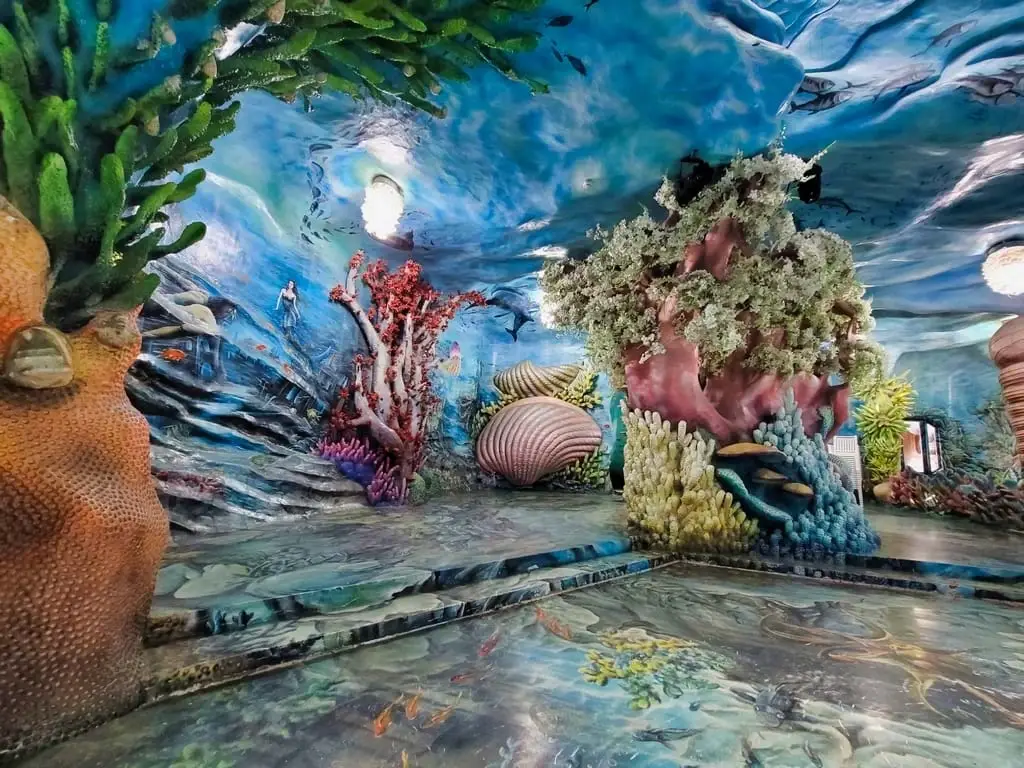
Ocean on the Plateau: a marine interior with corals and a painted ceiling. Photo: Crazy House / Người Đô Thị.
There are some rather unsettling things in the Garden of Eden: enormous hands reaching out of a wall and human figures piled on top of one another. An owl with grapes sits at the top of this human pyramid. In the creator's explanation, the lower figures represent those whose labour sustains society, while the owl represents those who receive its finest fruits. Among the flowers and ponds, Việt Nga also found room to speak about injustice.
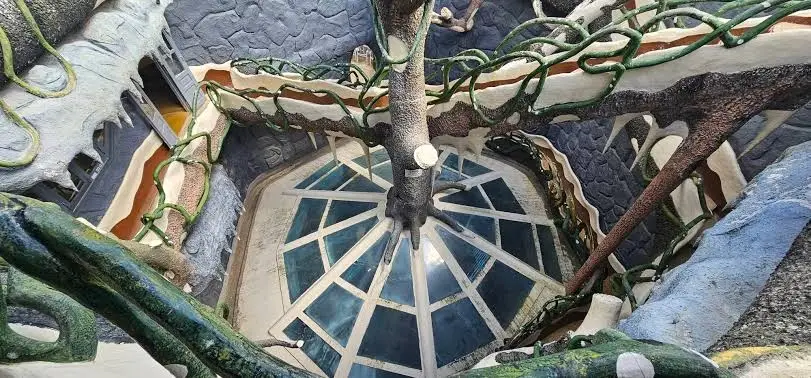
A view down onto the walkways and glass roof inside Crazy House. Photo from the author’s personal archive.
When she began building Crazy House in 1990, she conveyed her ideas through a series of paintings. The images helped explain the shapes she wanted to create. Concrete proved a convenient material: relatively inexpensive and pliable enough for these flights of imagination. Yet for all the freedom of her drawings, structural requirements remained: the house had to stand firmly and support the people inside it.
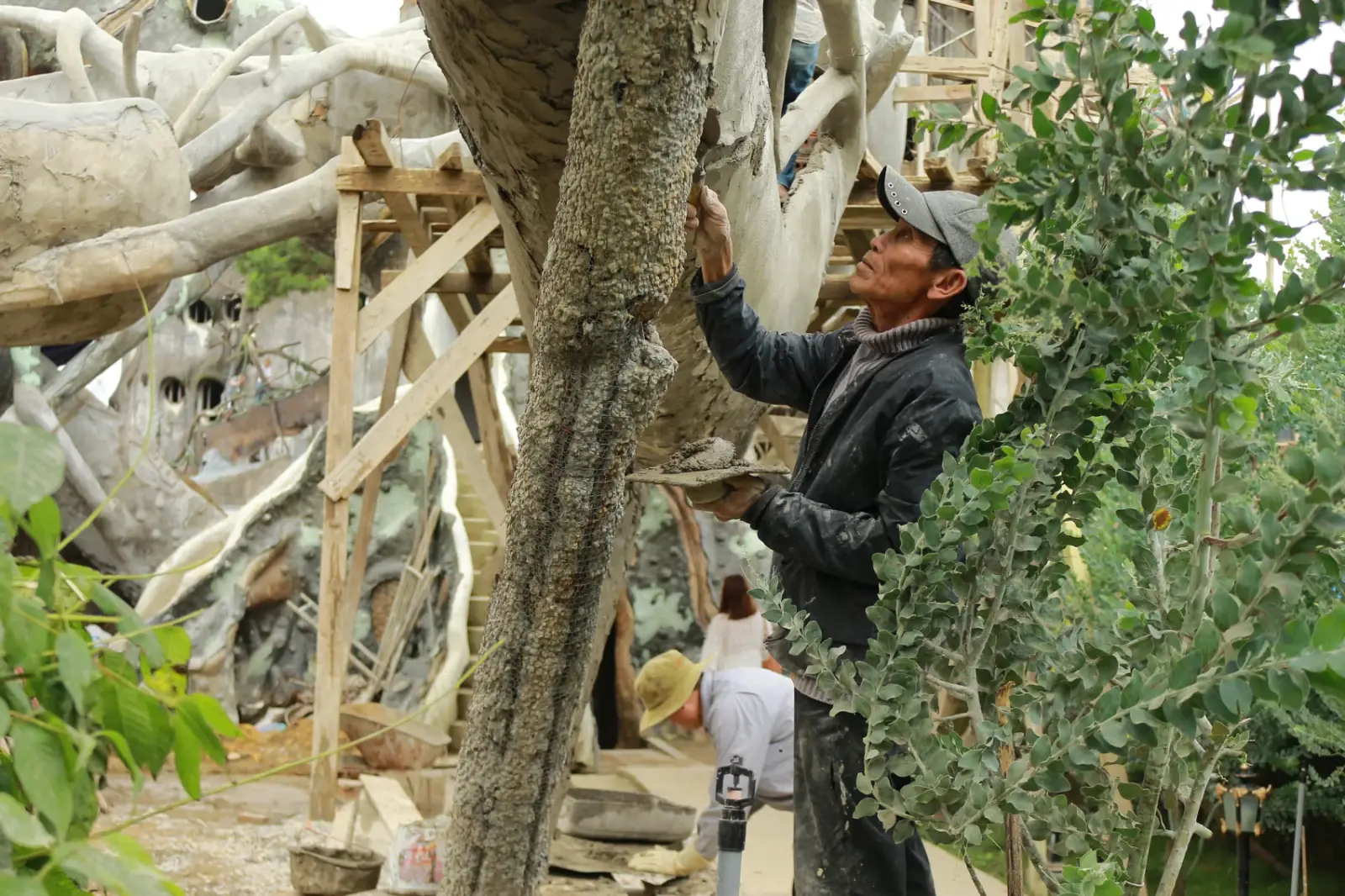
Work on a concrete tree, from the construction history of Crazy House. Photo: Official Crazy House website.
A gift from Hồ Chí Minh
Among the caves, trees and fantastical walkways is a room dedicated to the architect's parents. It holds family photographs, books and keepsakes. Above them is a glass roof shaped like a spider's web, with the sky visible through it. Even for a family memorial, Việt Nga found a place within the architecture she had imagined.
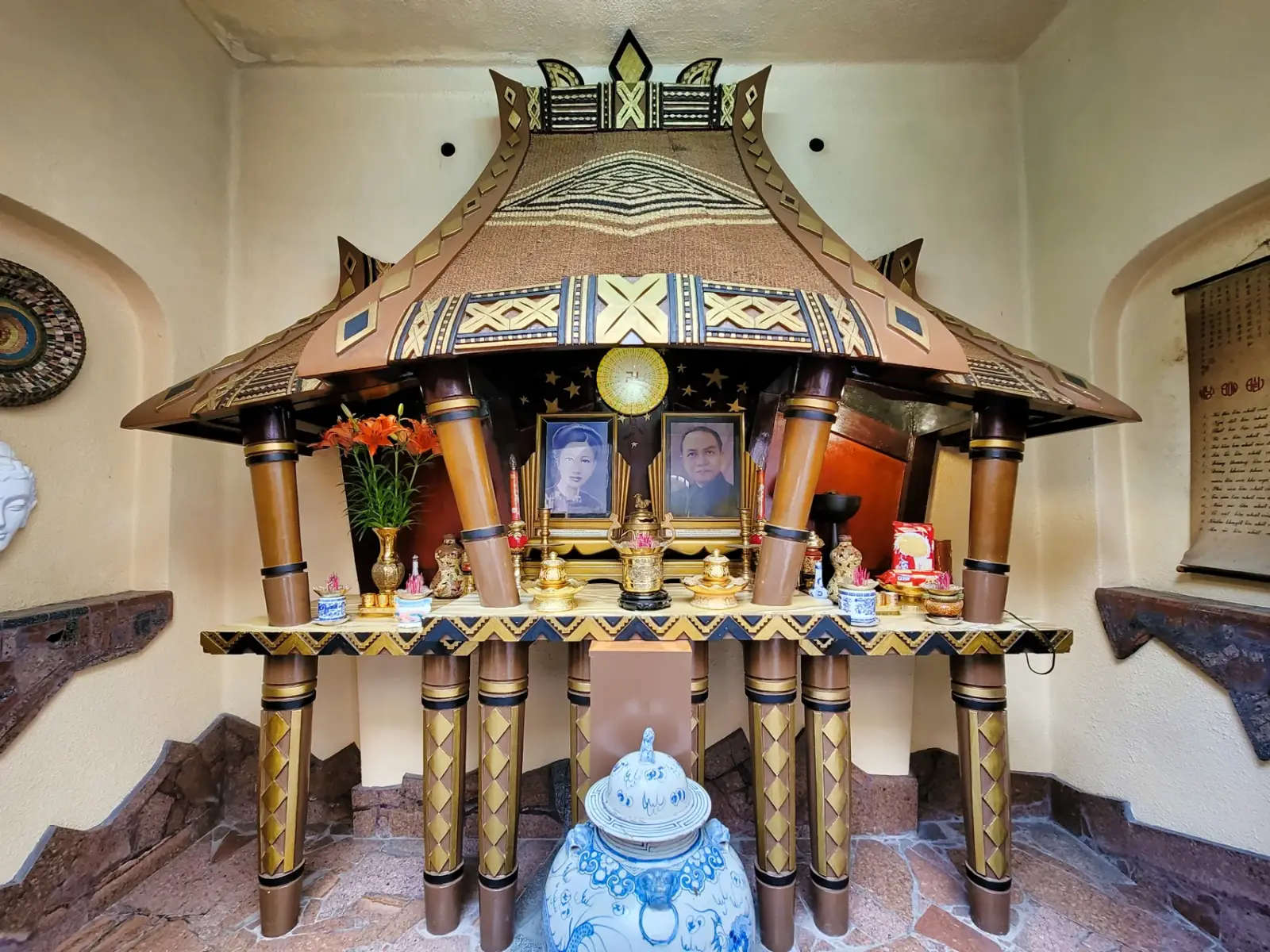
The room commemorating Việt Nga’s parents at Crazy House. Photo: Official Crazy House website.
Her father's name was Đặng Xuân Khu, but he entered history under his revolutionary name, Trường Chinh. He was an associate of Hồ Chí Minh and general secretary of the Communist Party.
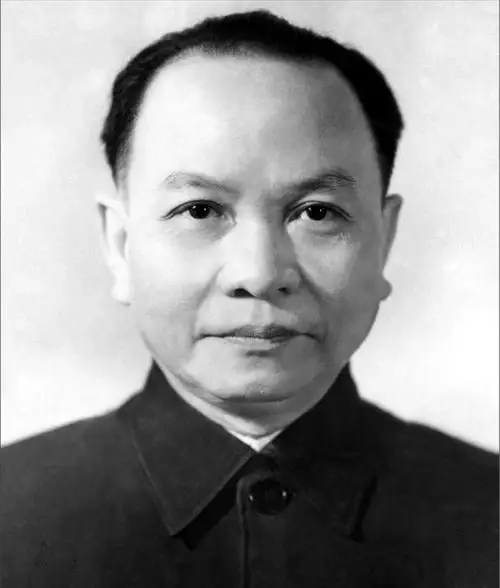
Trường Chinh, Việt Nga’s father and a leader of the Vietnamese revolution. Photo: Ministry of Culture, Sports and Tourism of Vietnam.
Việt Nga was born in Nam Định in 1940. While her father worked underground, she lived with her mother and his parents. Her first meeting with her father stayed with her for life: they met when she was five. In 1945 the little girl moved with her family to Hanoi, and later came life in the Việt Bắc resistance zone.
There, at the age of seven, she sang for Hồ Chí Minh. Later she received a gift from him: a beautiful blue quilted jacket. It was a little too big, but Việt Nga wore it anyway and went out to the gate to show it off. Some time later, her father suggested giving the jacket to Hải, a boy messenger of about twelve: it would fit him properly.
Việt Nga obeyed, although she was very sorry to part with the gift. Hải initially hesitated to accept it, and her father had to persuade him. Decades later, her memories still held the jacket's colour, the joy of owning it and the disappointment of having to give away something so lovely.
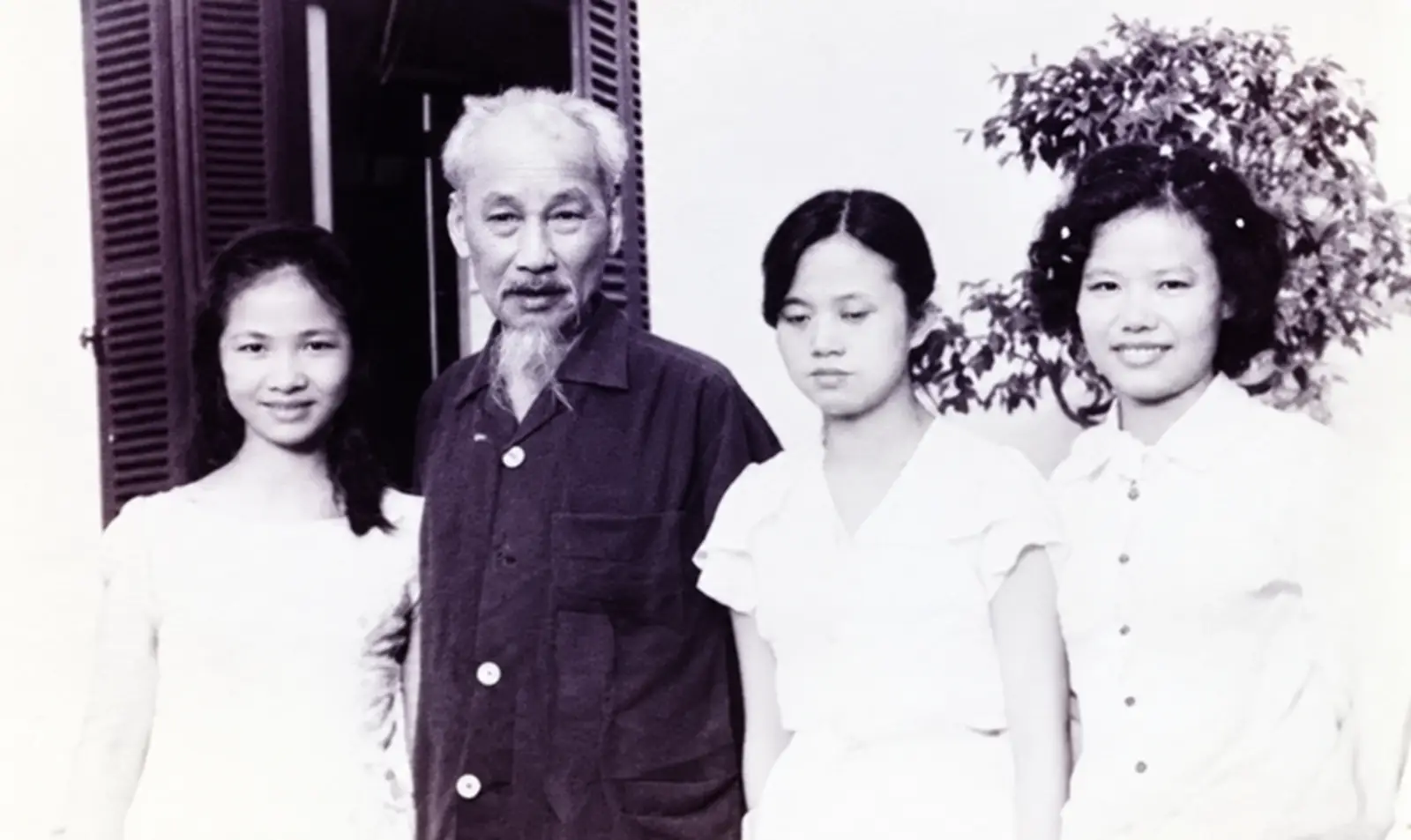
Việt Nga (left) with Hồ Chí Minh and friends. The source gives no date. Photo: Công an Nhân dân.
From Moscow into a fairy tale of her own
Việt Nga went to the Soviet Union while she was still at school. She later studied architecture in Moscow, graduated in 1965 and returned a few years later to work on her dissertation. In 1972 she received her academic degree. Back home, she worked at design institutes associated with the ministries of construction and culture.
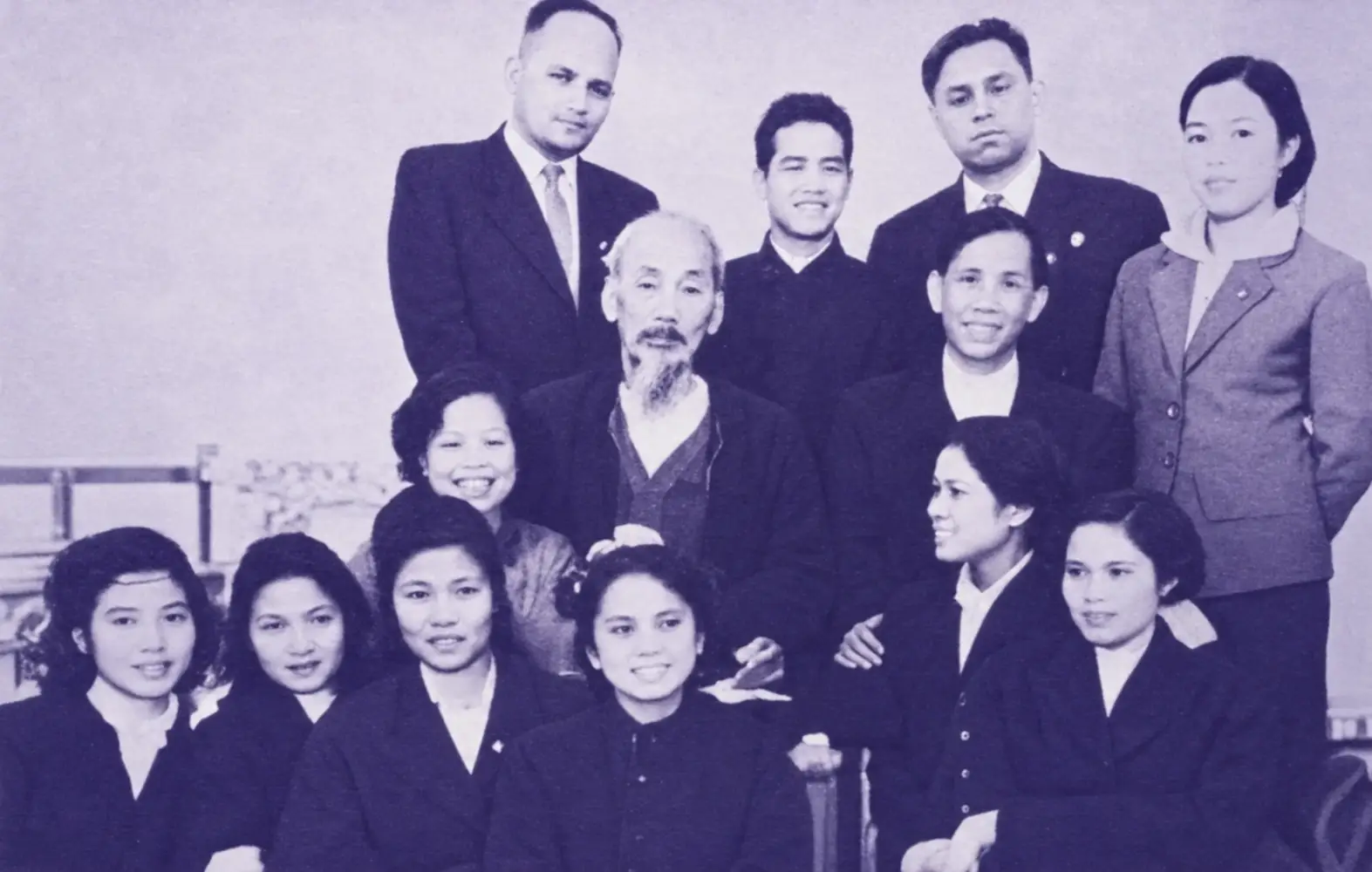
Việt Nga (second from left) with Hồ Chí Minh, Lê Duẩn and friends in the USSR, 1961. Photo: Công an Nhân dân.
For someone who sees only the fanciful turrets of Crazy House, this may come as a surprise. Its creator had years of professional education and work on government projects behind her. In interviews she explained that such work left little room for imagination. In her own house, she wanted to give it free rein.
Travellers' recollections of Crazy House contain another recognizably Russian detail: a Zhiguli parked in the garage. Visitors noticed it and wrote about it. Among the concrete roots and giant spiderwebs, an ordinary Soviet car looks almost as unexpected as the building itself among Da Lat's villas. Vietnam has, in fact, preserved an entire Russian neighbourhood with Soviet five-storey apartment blocks, in the coastal city of Vũng Tàu.
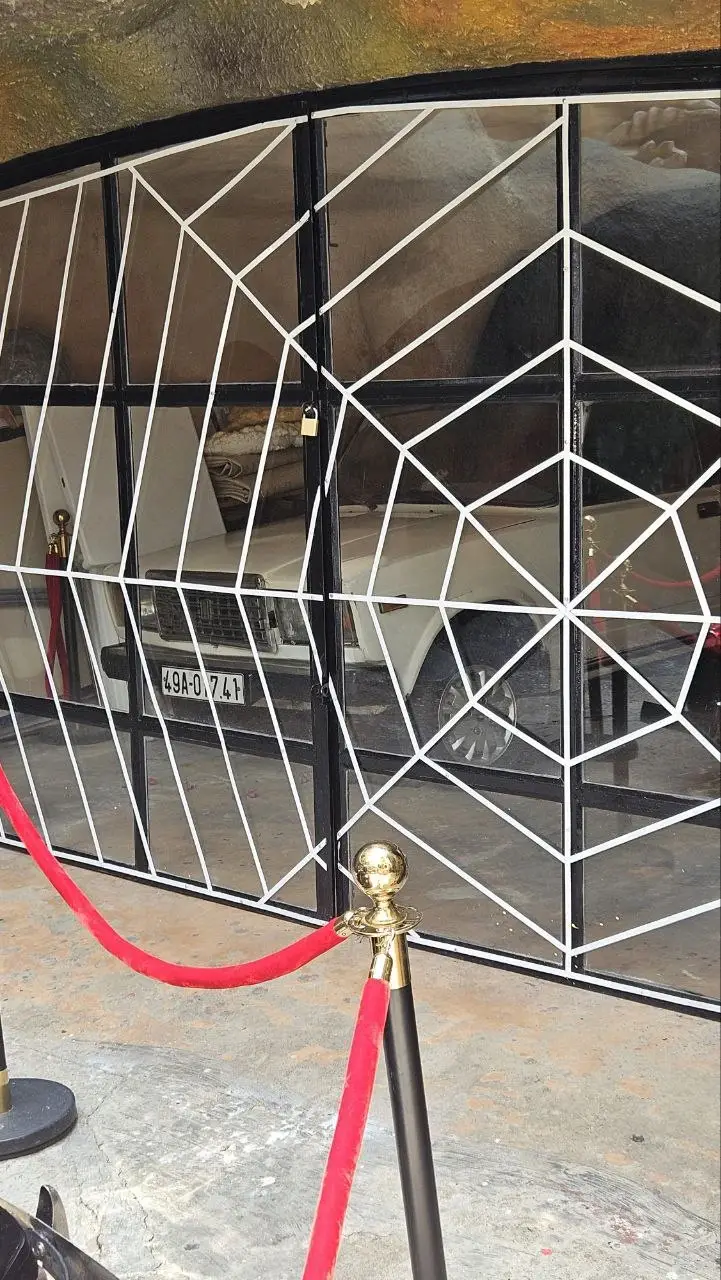
A Zhiguli in the Crazy House garage. Photo from the author’s personal archive.
The fairy-tale walkways may bring to mind woodland huts and enchanted castles. Việt Nga spent a substantial part of her youth in the USSR, but explained her own vision above all through her relationship with nature. People had destroyed too much, she said, and she wanted to bring them closer to the natural world. Putting a person inside a tree was her architectural way of doing that literally.
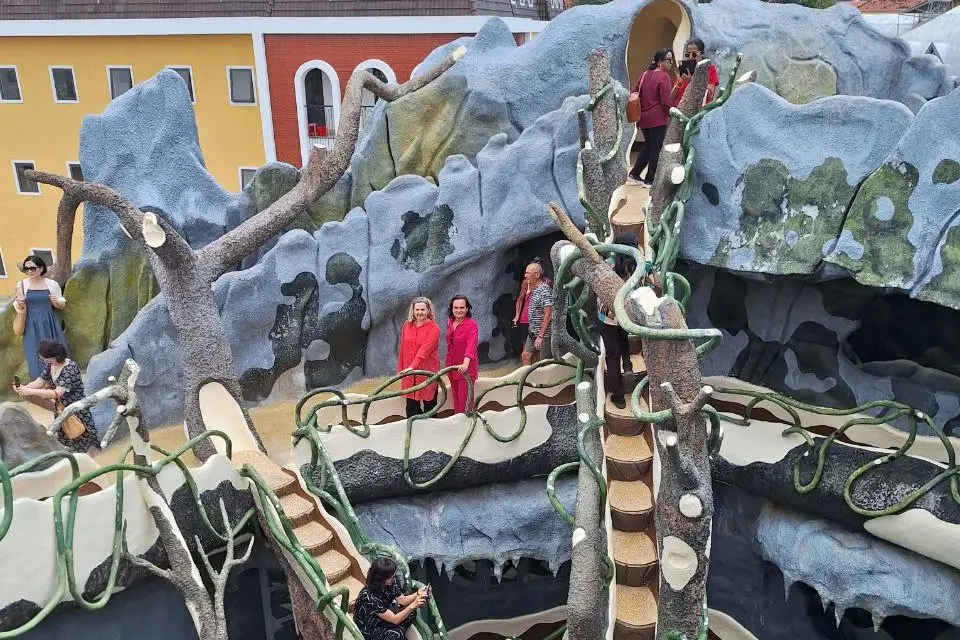
Staircases and walkways between the Crazy House buildings. Photo from the author’s personal archive.
Along the branches in high heels
In 1983 Việt Nga moved to Da Lat with her young son. This mountain resort came into being largely thanks to the recommendations of Alexandre Yersin. She had liked the city on an earlier work trip: its cool climate, greenery and people. A few years later, construction of her own house began here.
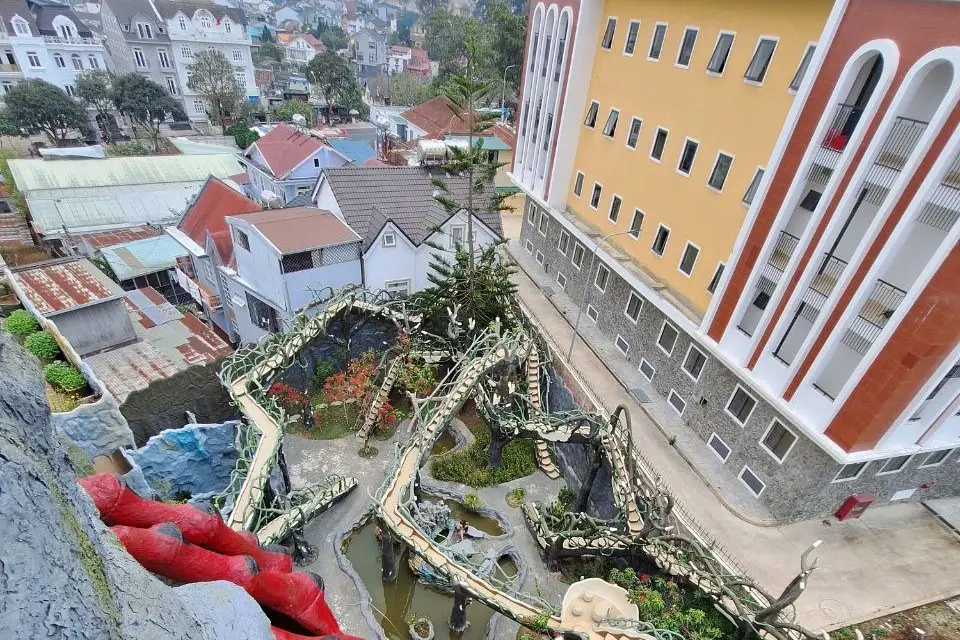
A view of Da Lat from the upper walkways of Crazy House. Photo from the author’s personal archive.
According to a Thanh Niên report, she rented the original plot of about a thousand square metres and took out a bank loan for construction. Visitors soon appeared. In an interview with another newspaper, Việt Nga recalled that people became interested in the house when only a few ponds and mushrooms had been completed. That was when she thought of charging admission and using the money to continue the work.
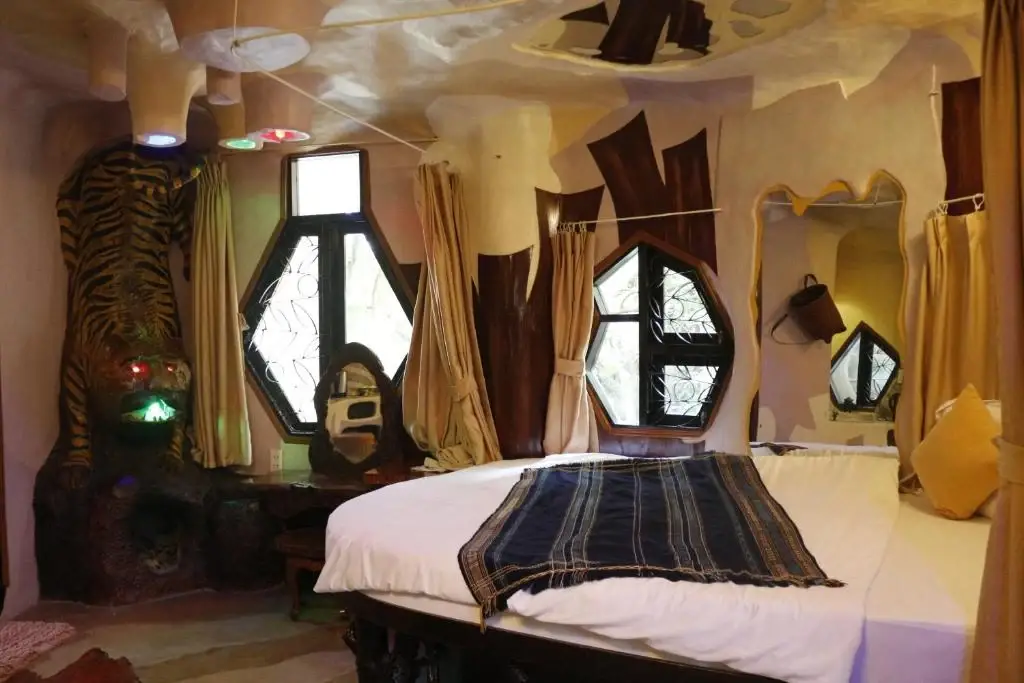
The Tiger Room at Crazy House. Photo: Official Crazy House website.
Her life changed along with the house. By 2022 construction had been going on for more than thirty years. A Thanh Niên journalist found the 82-year-old owner in high heels, briskly climbing up and down spiral staircases and directing the workers. She chose her outfits carefully, wore long dresses, hats and scarves, and loved music and dancing. Asked where she found the energy, she replied that working made her feel healthier.
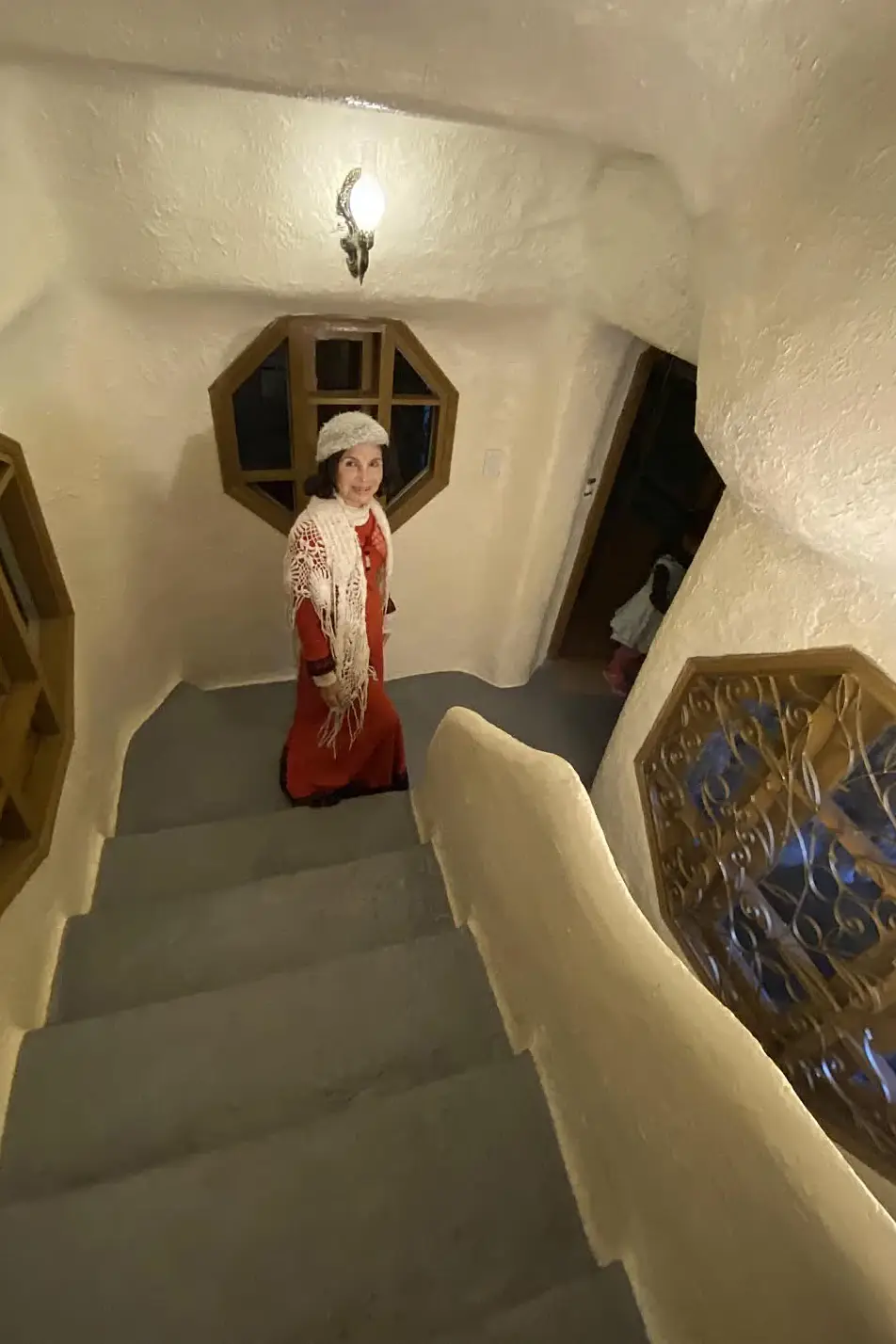
Đặng Việt Nga on a staircase in her house. Photograph published in 2022. Photo: Lê Vân / Thanh Niên.
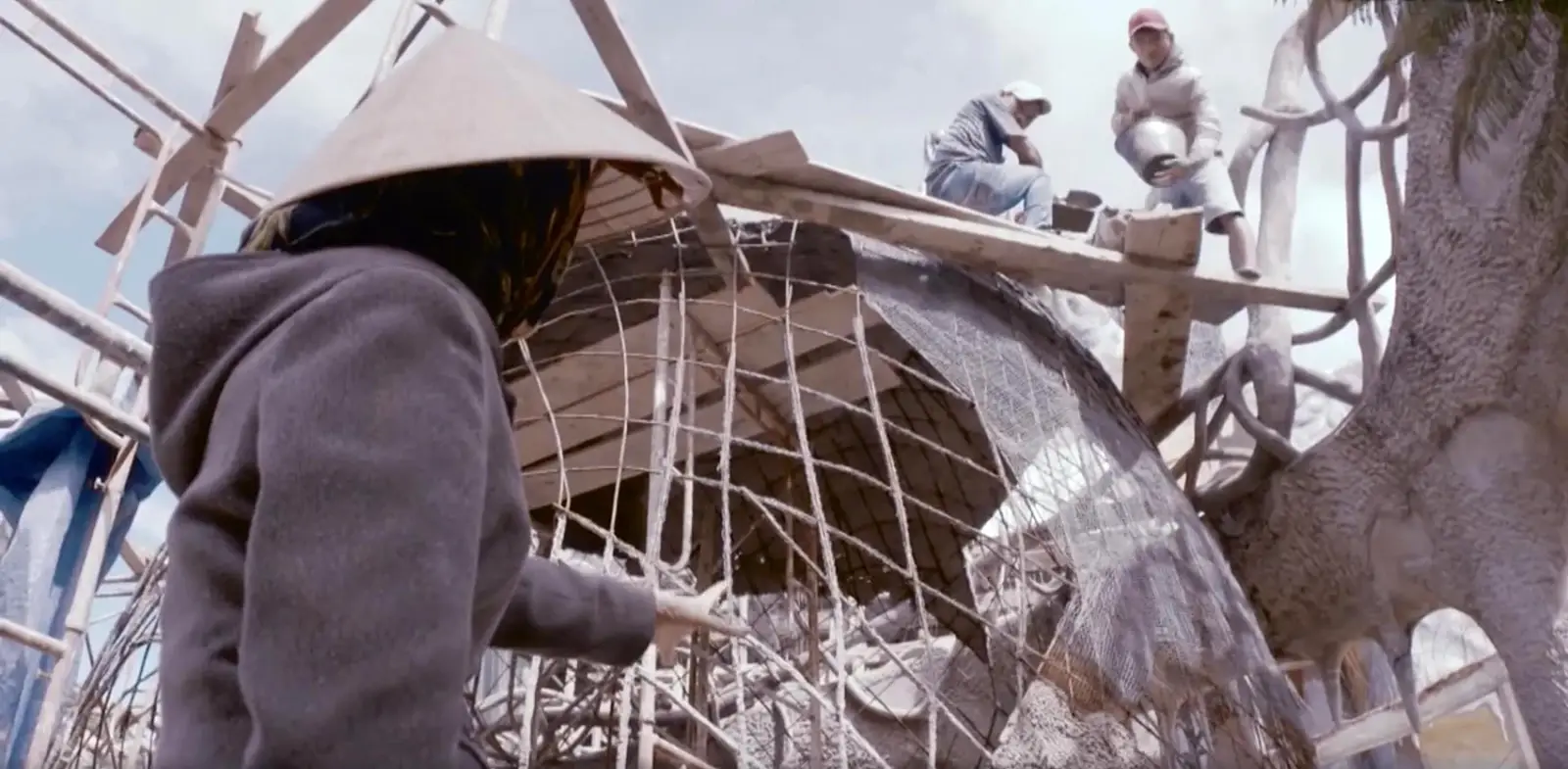
Việt Nga at the Crazy House building site. Thanh Niên report, 2022. Photo: Lê Vân / Thanh Niên.
By then her son was handling the business side of the complex, while Việt Nga continued to imagine new sections and oversee repairs. She said that money never stayed with her: as soon as it arrived, it went into construction. But even this building project encountered a limit: there was no free land left. New ideas had to reach upwards.
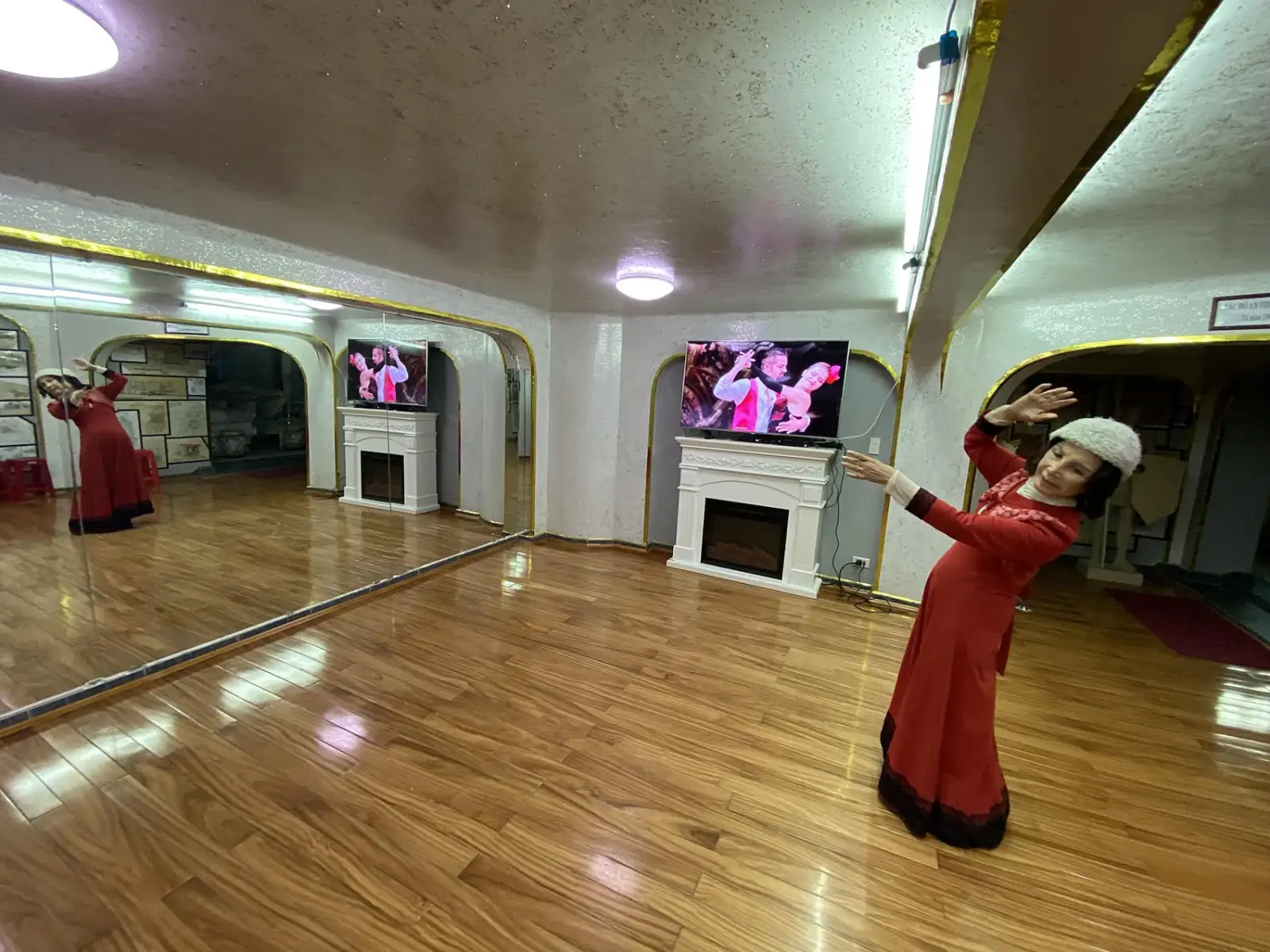
Việt Nga in the Crazy House dance hall. Photograph published in 2022. Photo: Lê Vân / Thanh Niên.
The house that could have been demolished
By that point Việt Nga had lived through a long period of uncertainty. In February 2008, VnExpress reported that the Lâm Đồng provincial authorities had finally issued her a certificate of ownership for the structure. Eighteen years had passed since construction began, and throughout that time the house had faced the threat of demolition. Previously, the authorities had refused to recognize its design scheme and register ownership.
The fear of losing the house had a very real basis. Another experimental building in Da Lat had already been demolished: the House of a Hundred Roofs by architect Lữ Trúc Phương. The authorities cited fire safety problems with the structure, which was made of lightweight materials. Crazy House was built differently, but the example showed that popularity with visitors did not in itself guarantee a building's survival.
In a 2009 interview with Thanh Niên, Việt Nga said that at one point the situation became so serious that she had to write to a senior national leader asking for help. According to her, this helped the house survive. The publication does not name the recipient.
Official recognition came with an explanation that seemed entirely in keeping with the owner's vision: the authorities considered Crazy House an unusual experimental work of art. The house survived, received its papers and kept growing.
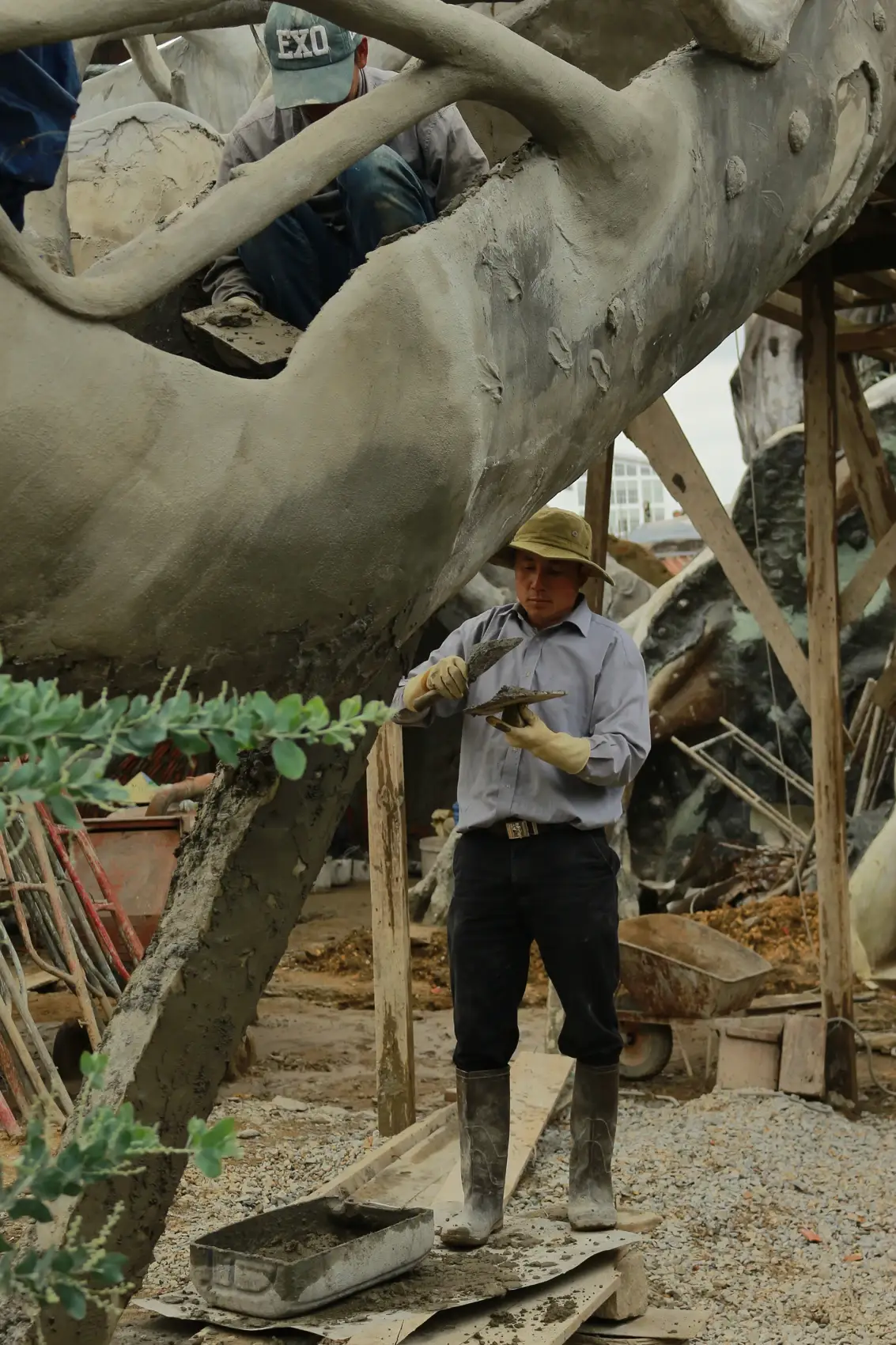
The concrete roots and trunks are shaped by hand. Photo: Official Crazy House website.
A hundred thousand guests and “kindergarten crafts”
Today Crazy House draws enough visitors for queues to form at the best photo spots. According to an estimate cited by VietNamNet, around a hundred thousand people come each year. The complex remains a tourist attraction, a hotel and its creator's family home. In 2026 Việt Nga turns 86.
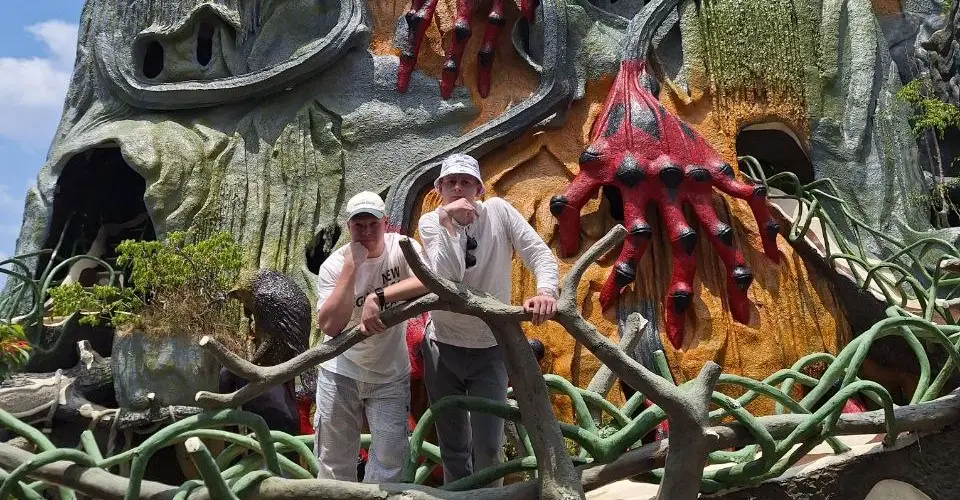
A fantastical Crazy House facade with enormous red hands. Photo from the author’s personal archive.
Yet success has not made opinions of her work unanimous. In one published review, a visitor calls the house “bad taste” and compares it to “crafts by a kindergarten graduate”. She disliked the figures, the staircases and the crowds. Such reactions exist alongside the enthusiastic accounts.
Similar words could be heard long before today's travel platforms appeared. As early as 2006, Việt Nga said that her unusual solutions were criticized for their complexity. At the same time, visitors were already leaving messages in the guestbook thanking her for taking them back to childhood.
In the 2006 interview she was also asked about loneliness among such strange buildings. She replied that there was no time for sadness: she wished she had extra hands so she could finish the villa by 2010. But Việt Nga continued building after that deadline too. The complex gained a marine space, gardens and new walkways. Later, her son explained that Crazy House would probably never be completely finished: it changes like a living creature. In 2026 the house is already 36 years old, and visitors still climb its concrete branches to see what she has dreamed up.
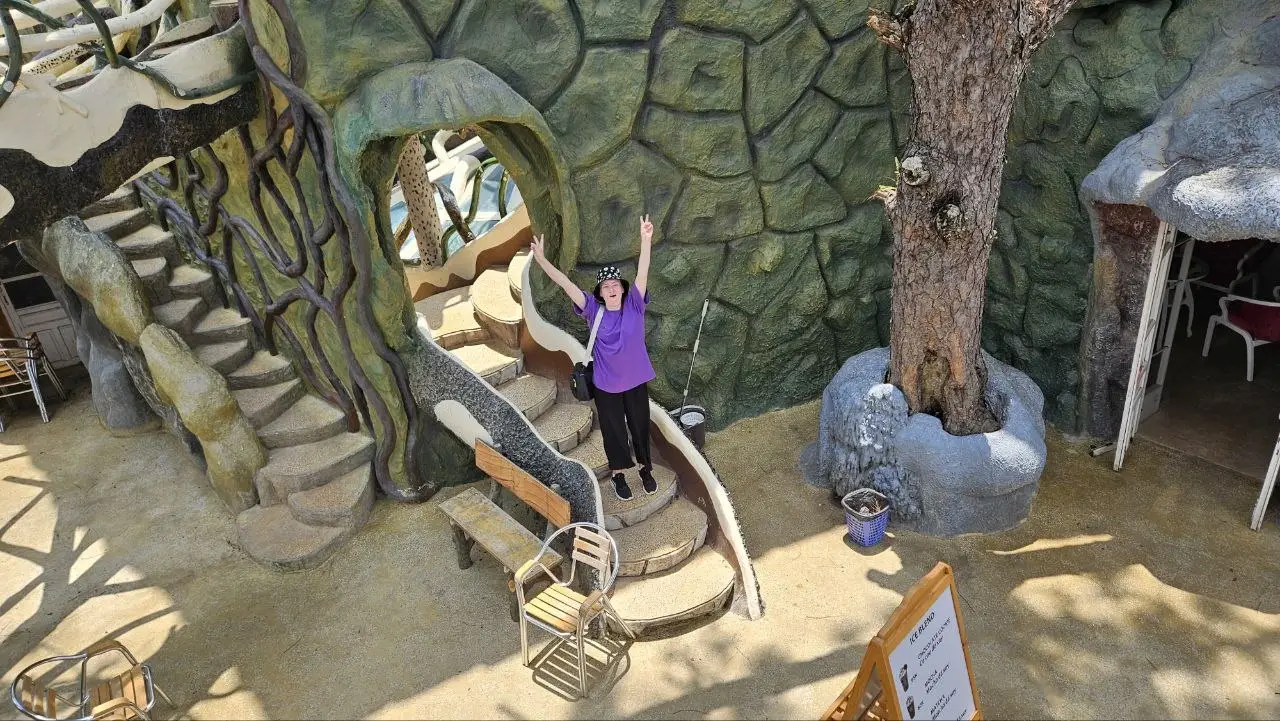
Among the staircases and concrete trees of Crazy House. Photo from the author’s personal archive.
Comments
Read also
All articles
Vietnamese Coffee: How a French Import Became a National Habit
How coffee arrived in Vietnam, why the country became the world’s second-largest exporter, which drinks to order, and where to try the best coffee in…

Vung Tau, Soviet-style: how oil workers built a Russian town inside Vietnam
The story of Soviet oil workers, Vung Tau’s Russian neighborhood and the White Tiger field that transformed Vietnam’s economy.

Da Lat Events
Explore Da Lat sunrise concerts, live music, flower festivals and creative events. Browse current announcements or publish your own event for free.

Blood Oaths, Fire-Breathing Dragons and Hidden Mechanisms: The Story of Vietnamese Water Puppetry
How a rainy-season village pastime reached the imperial court and won over audiences around the world.

Operation Babylift: what became of Vietnamese children taken from home
New families overseas and parents left in Vietnam. What was the price of being saved?

The Bird That Drove the World Crazy: The Vietnamese Creator of Flappy Bird
The world’s most popular mobile game was earning tens of thousands of dollars a day. Why did Nguyen Ha Dong remove Flappy Bird at its…