Operation Babylift: what became of Vietnamese children taken from home
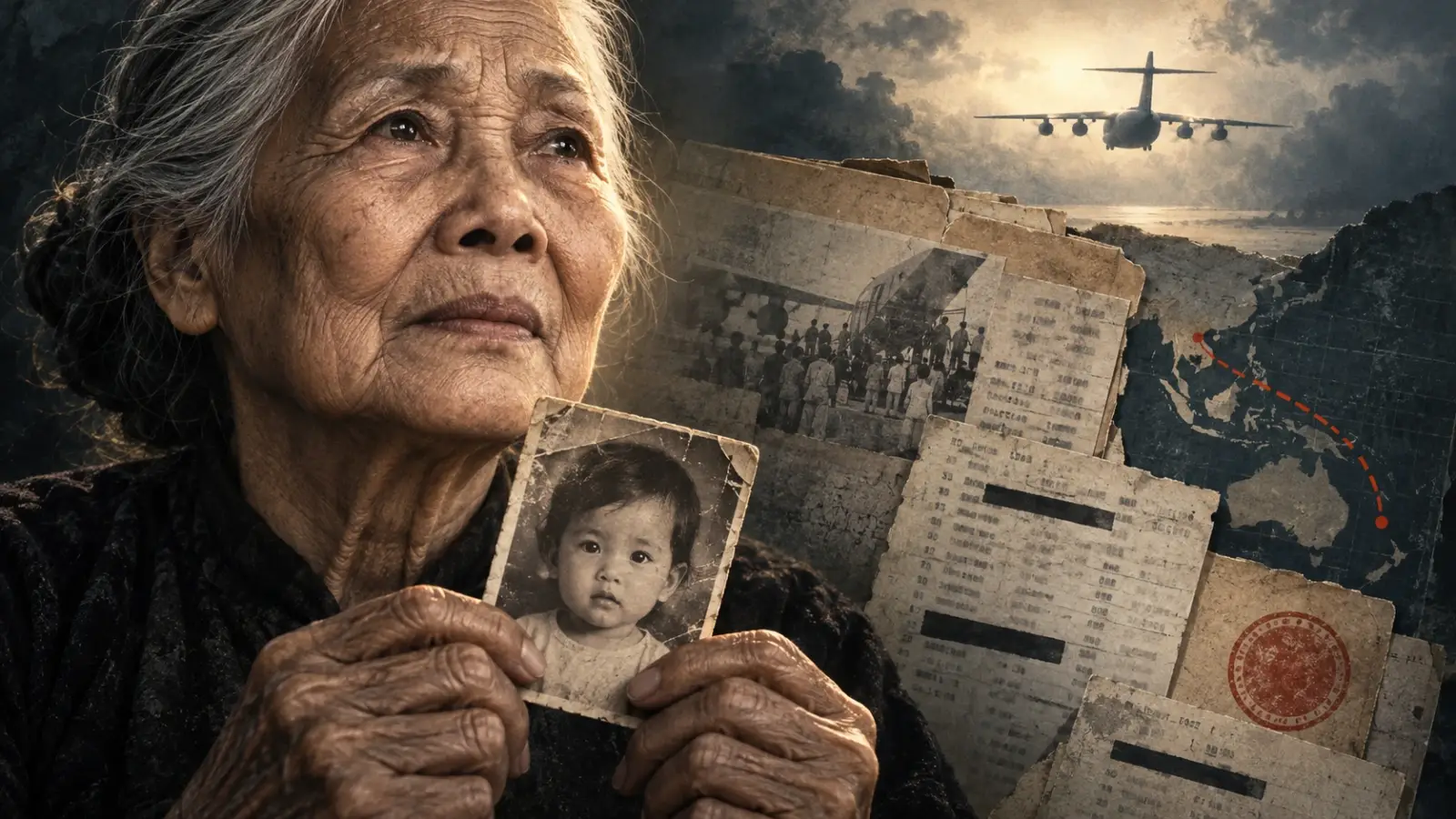
In the spring of 1975, the Vietnam War was nearing its end. North Vietnamese forces were approaching Saigon, the capital of South Vietnam. People were trying to leave the city, while staff at orphanages and charitable organizations looked for ways to evacuate children. On April 3, US President Gerald Ford announced their evacuation. The operation was named Babylift.
Its aim was to protect children from the war and place them with adoptive families abroad. Military and civilian aircraft carried thousands of young passengers out of Vietnam—infants and older children. Families were waiting for them in the United States, Australia and other countries.
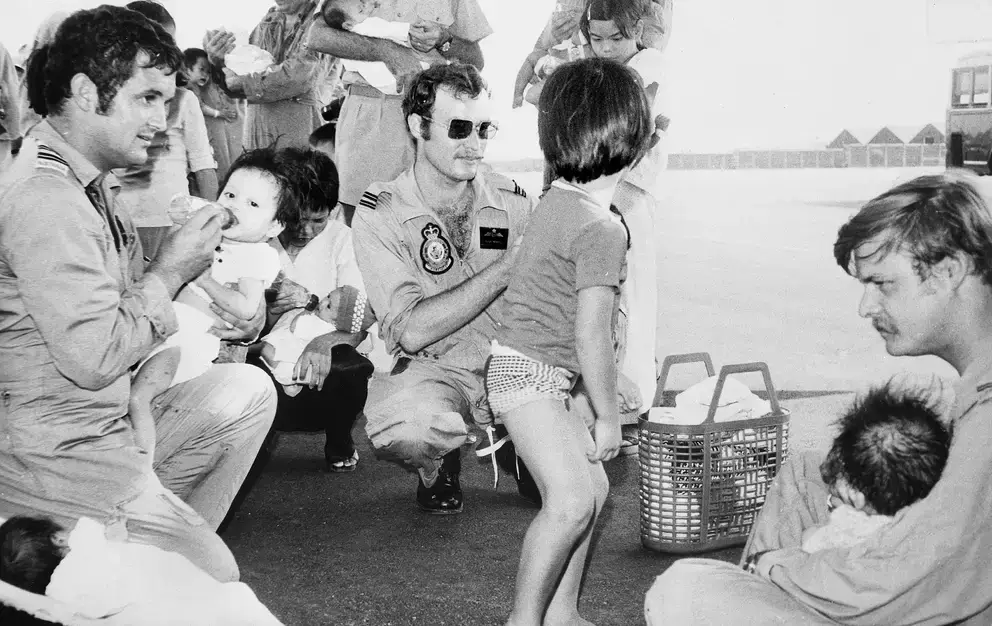
Reports about the operation described the children as orphans. Yet some still had living parents in Vietnam. Families placed children in orphanages when they could no longer provide food, care and safety themselves. For parents, this could be a temporary arrangement: get through a difficult period, then bring their son or daughter home. Some agreed to let their child leave, expecting to join them overseas later. Not everyone understood that adoption lay ahead—and possibly a lifelong separation.
The flight from Saigon
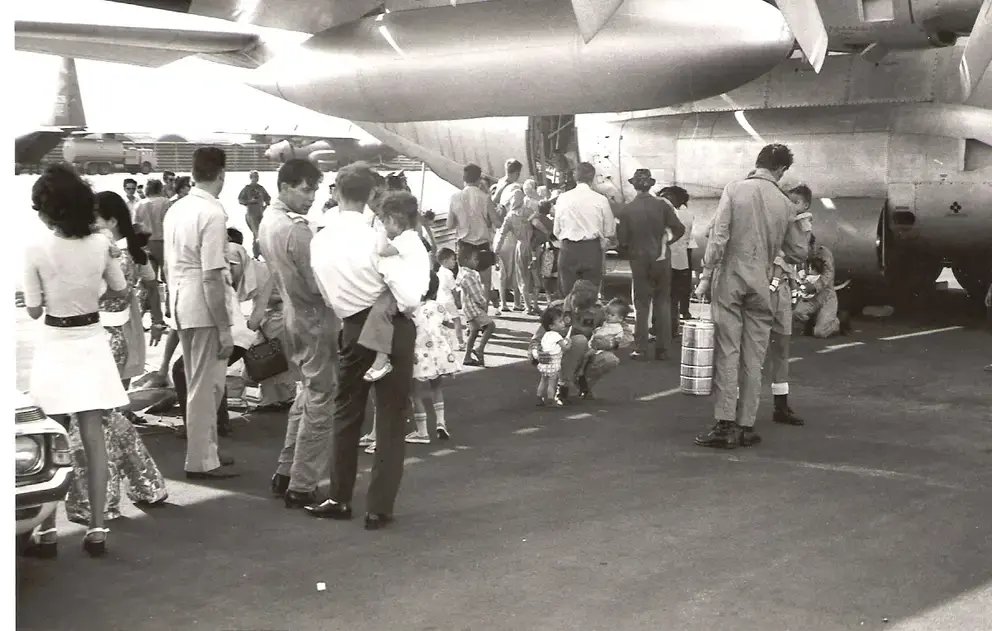
On April 4, 1975, the first military flight of Operation Babylift was being prepared at Tan Son Nhut airfield in Saigon. The children were to be taken to the American Clark Air Base in the Philippines, then sent onward to the United States. Among the passengers were infants carried in people's arms and older children able to board on their own. Medical staff and volunteers accompanied them; employees of American institutions were also leaving Vietnam on the flight.
A C-5A Galaxy was assigned to the flight—a huge military transport aircraft usually used to carry military equipment. It was not equipped for medical evacuation, so the crew and medical team had to work out how to accommodate the children and the adults accompanying them. There were seats in the upper compartment, but not enough room for everyone: some children had to be placed on the floor of the cargo compartment.
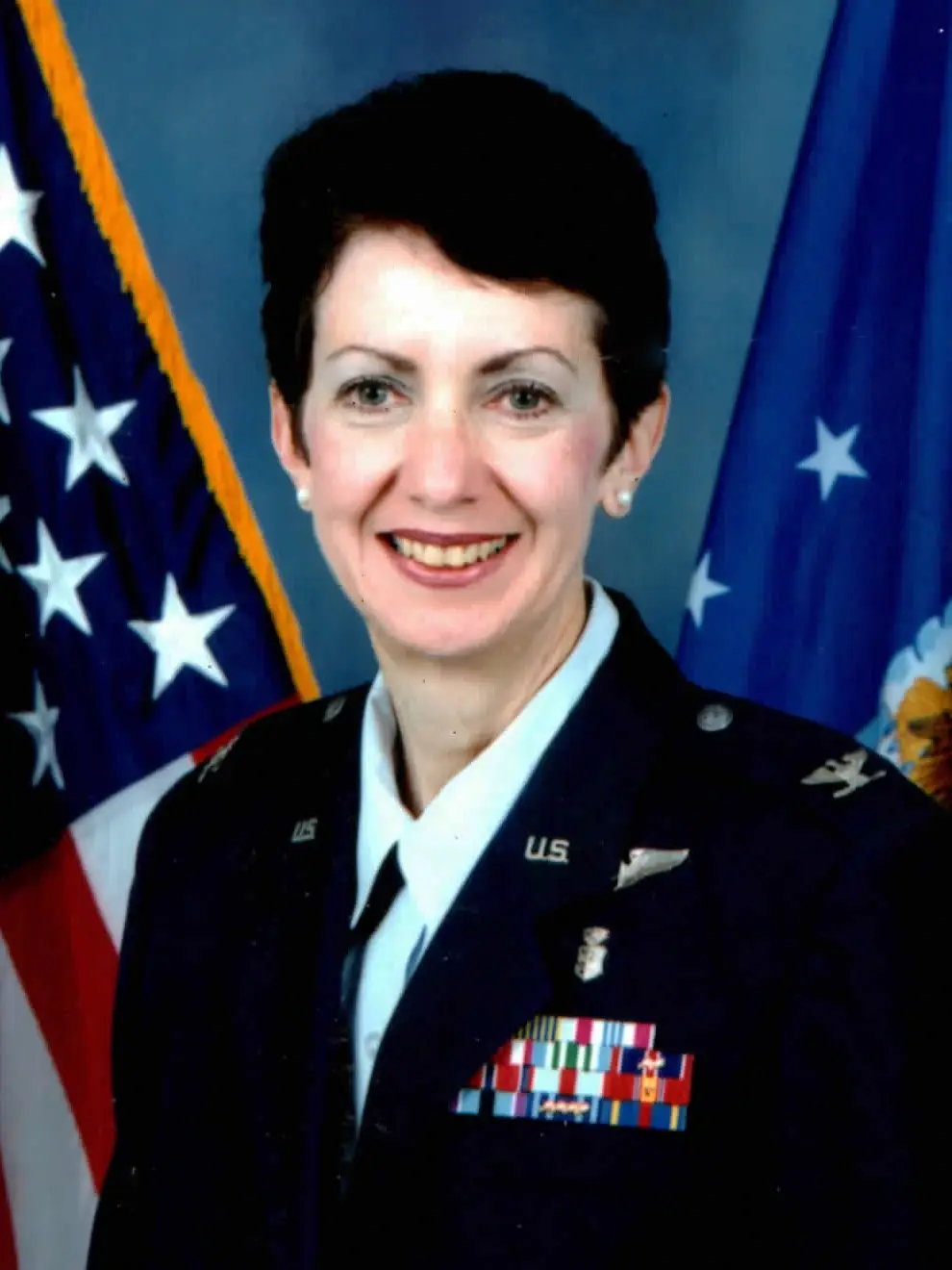
The aircraft commander was Captain Dennis Traynor, whose second child had recently been born. Asked before the flight what would be needed to transport the children, he listed things familiar to any parent: milk, juice, blankets and diapers. Air Force nurse Regina Aune led the medical team.
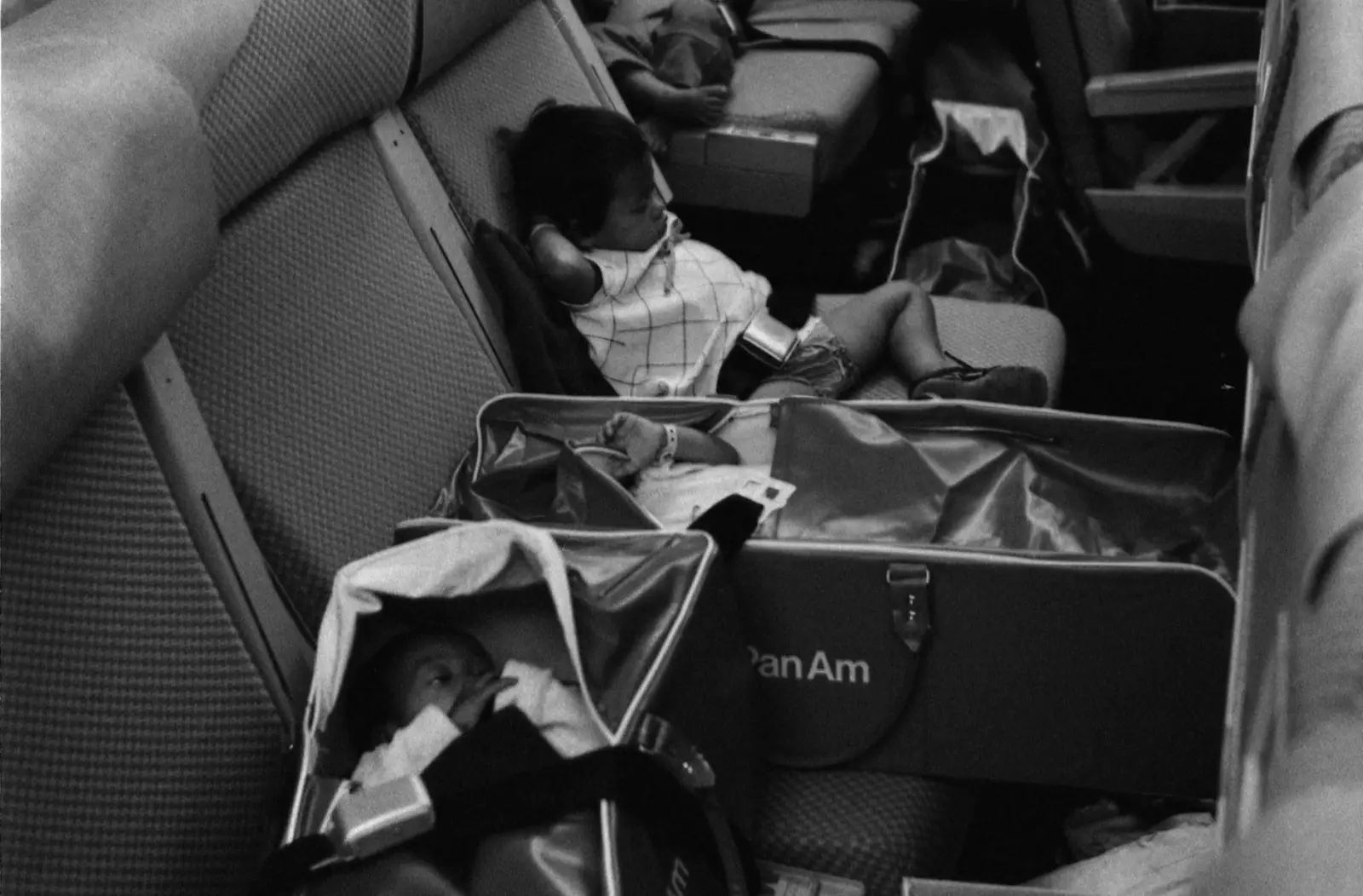
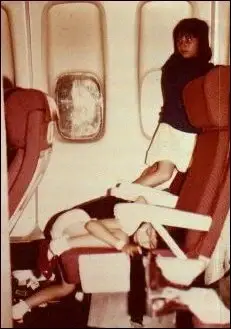
The infants were passed from hand to hand onto the aircraft, placed two to a seat and secured with belts. Below, the women accompanying the children settled beside them, using blankets, pillows and cargo straps. More than three hundred people were aboard when the aircraft left Saigon and headed for the Philippines.
One of the escorts felt unwell, and Regina went up to the upper compartment to fetch medicine. There she was caught by a sudden loud bang: mist and dust filled the space, objects flew through the compartment, and cold air rushed into the aircraft. When the mist cleared, she saw that the stairs she had just climbed were gone. Through a rupture in the fuselage, she could see the sea far below. Children remained in the lower compartment, which she could no longer reach. The aircraft was rapidly losing altitude.
Captain Traynor turned the aircraft back toward Saigon, trying to return to the airfield. But the cargo door, torn away from the aircraft, had damaged the control systems, and the pilots could barely control it. By adjusting engine thrust, they tried to keep it airborne while medical staff and escorts secured the children and prepared for an emergency landing. Screams came from the lower compartment; it was no longer possible to help everyone still there.
The aircraft fell short of the runway. It struck the ground in a rice field, bounced into the air and broke apart after a second impact. The lower cargo compartment, where children and adults were gathered, was crushed. The upper compartment remained much more intact, and many of the infants lying there survived.
The impact threw Regina along the aisle. Despite fractures in her foot and a vertebra, she joined other survivors in carrying children out of the wreckage. Outside, people sank knee-deep into the mud of the rice fields. Helicopters arrived at the crash site, and the babies were carried to them to be taken back to Saigon. Regina kept helping until she lost consciousness. She woke up on the floor of a helicopter.
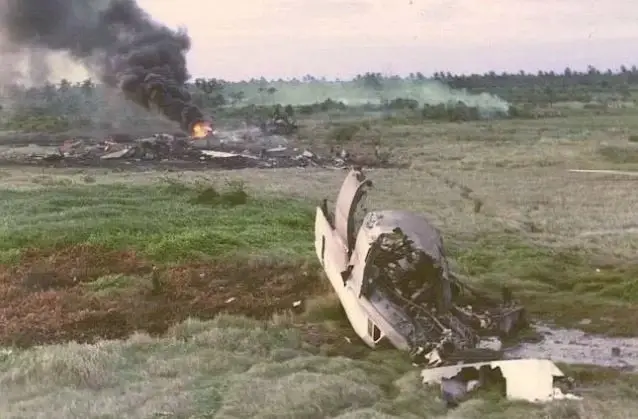
The crash killed 138 people; 176 survived.
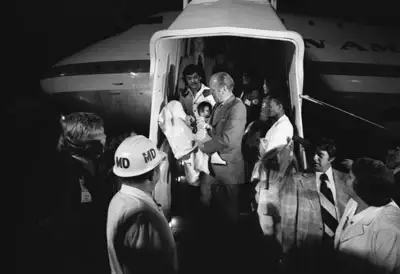
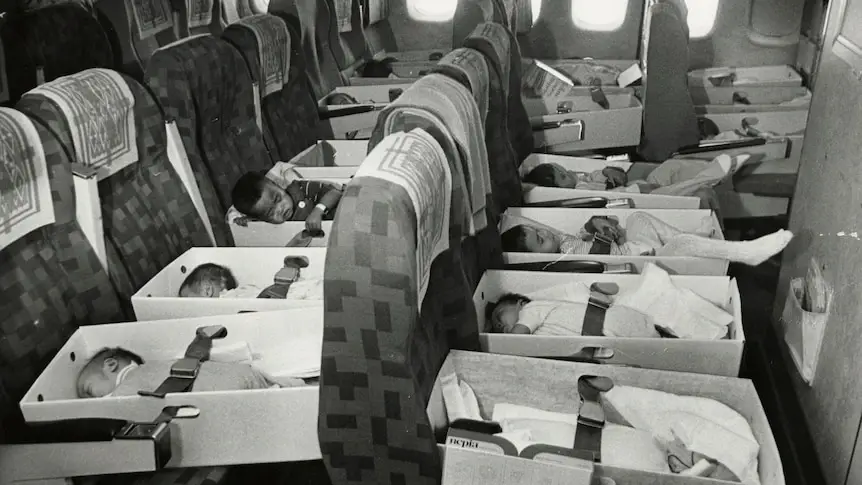
The evacuation continued on other aircraft, while the rescued children received treatment and were prepared for the rest of their journey.
Erin Lockhart
Little Erin Lockhart was also on this flight. After being rescued, she was sent to the United States, where the Lockhart family adopted her.
Erin grew up in Northern Virginia and California. From an early age, her adoptive parents told her about Vietnam and her adoption, keeping letters, photographs and newspaper clippings connected with her arrival.
Among those photographs were two black-and-white pictures from a Vietnamese orphanage. In one, Erin was being held by a nun who had helped find a family for her. In fourth grade, the girl wrote about her past for a school writing competition and won first place.
After high school, Erin went to Virginia Tech to study communications, and later earned a master's degree in business at Webster University. She married, worked within the US Department of Defense, took photographs and produced informational materials. In an open letter to Vietnam War veterans, Erin described the opportunities her life in America had given her: education, work and the people she had met along the way.
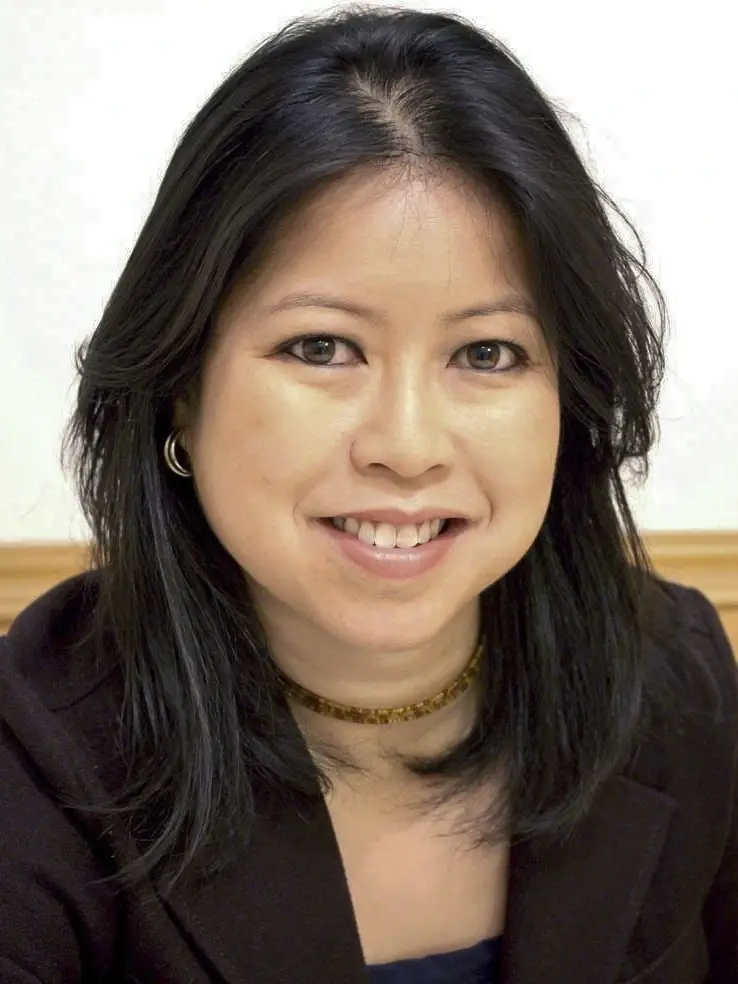
After graduating from university, she found an online article about Regina Aune—the nurse who had carried children out of the wrecked aircraft. In 1997, Erin managed to track her down and call to thank her for saving her.
Regina later recalled being lost for words during that conversation. The infants had been passed into her arms during boarding, then sent onward after the crash. For years, she had not known where they were growing up or how their lives were unfolding.
The women stayed in touch, and in the early 2000s both were in New Mexico, where Regina was serving and Erin was working. They began meeting more often and grew close. Regina's children welcomed Erin into the family, and gradually she began calling the nurse her second mother.
Devaki Murch
In 2015, Erin and Regina published a book together about Operation Babylift. Among its readers was Devaki Murch—another girl who had survived the crash. She had grown up in a loving adoptive family and recognized her own feelings in Erin's account. Devaki found the author online, and the women later met.
Devaki was nine months old when she was taken out of Vietnam. A family had been chosen for her back in January 1975, and they spent several months in Hawaii waiting for her arrival. Only as an adult did she think about what her future mother must have gone through: waiting for news that the child had boarded an aircraft, learning of the crash and waiting again—this time to find out whether the girl was alive.
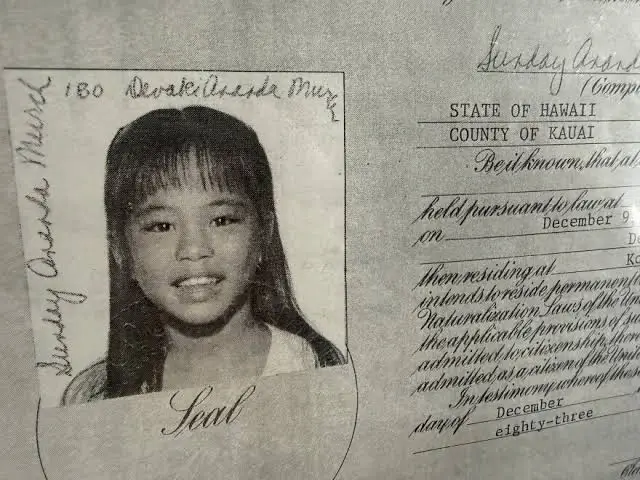
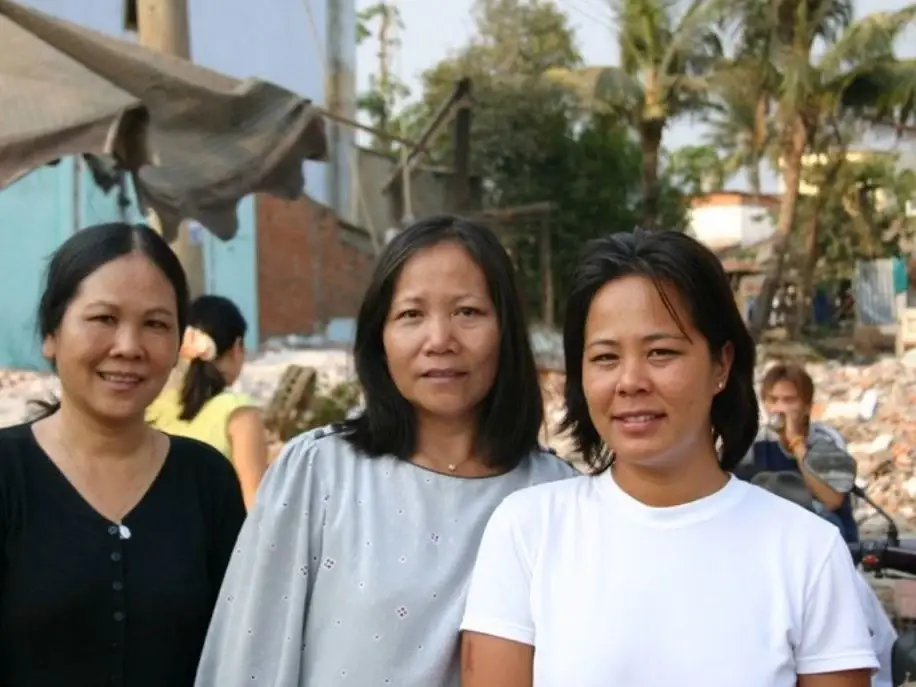
Devaki's family did not hide her origins, and she grew up knowing how many people had helped her survive. Later, she returned to Vietnam with other adopted children and women who had once helped them leave. There they met carers who still remembered the infants they had looked after during the war. For the first time, Devaki found herself among people who looked like her. She studied their photographs together in surprise: she had hardly ever noticed such a resemblance before.
In the spring of 2024, Devaki visited a nun in Colorado who had worked with Vietnamese children. They discussed how to preserve her memories and discovered that boxes of documents were stored in the basement of the house. Among letters, photographs and personal files were passenger lists from the first Babylift flight. On the survivors' list, Devaki found herself under the name Mimosa—the name she had been given at the orphanage.
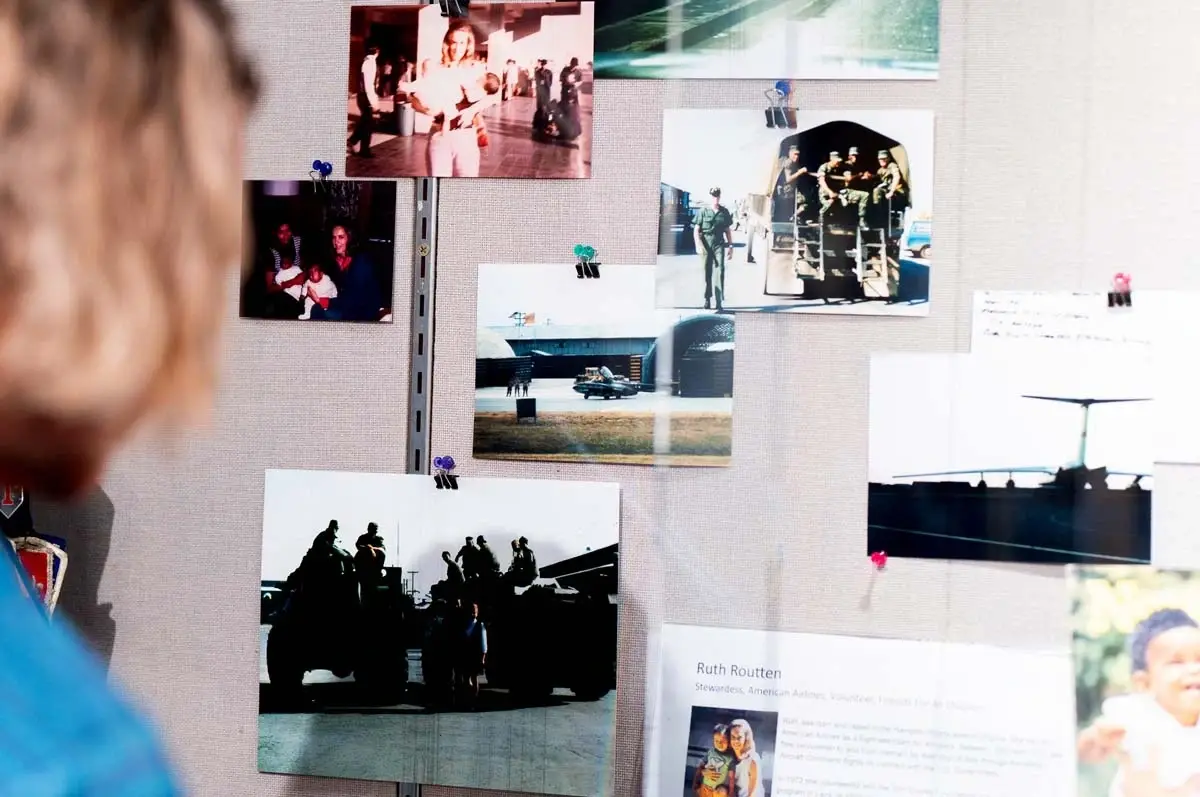
Erin's name was not on the lists they found. After hearing this from Devaki, she asked her adoptive mother how her parents knew she had survived the crash. Her mother explained that when they adopted her, they had been told the girl had been on the aircraft that crashed and had survived. Erin had grown up with this story, but the documents they found could not confirm it. Perhaps her name had been left off the lists; perhaps she had left Vietnam on another flight. Erin decided not to seek further proof.
Devaki continued working with the archive, helping other adopted children obtain information about themselves. For decades, the letters, photographs and records had remained in boxes; now the people whose lives began on those pages could read them.
The exhibition in Boulder
In the spring of 2026, Devaki organized an exhibition in Boulder of the documents she had collected. Maps hung on the walls, with threads connecting Vietnam to the countries where the evacuated children had grown up; folders containing their personal files lay on tables. One visitor was a young man whose father had left Vietnam on a Babylift flight at the age of nine and, half a century later, was living in Las Vegas.
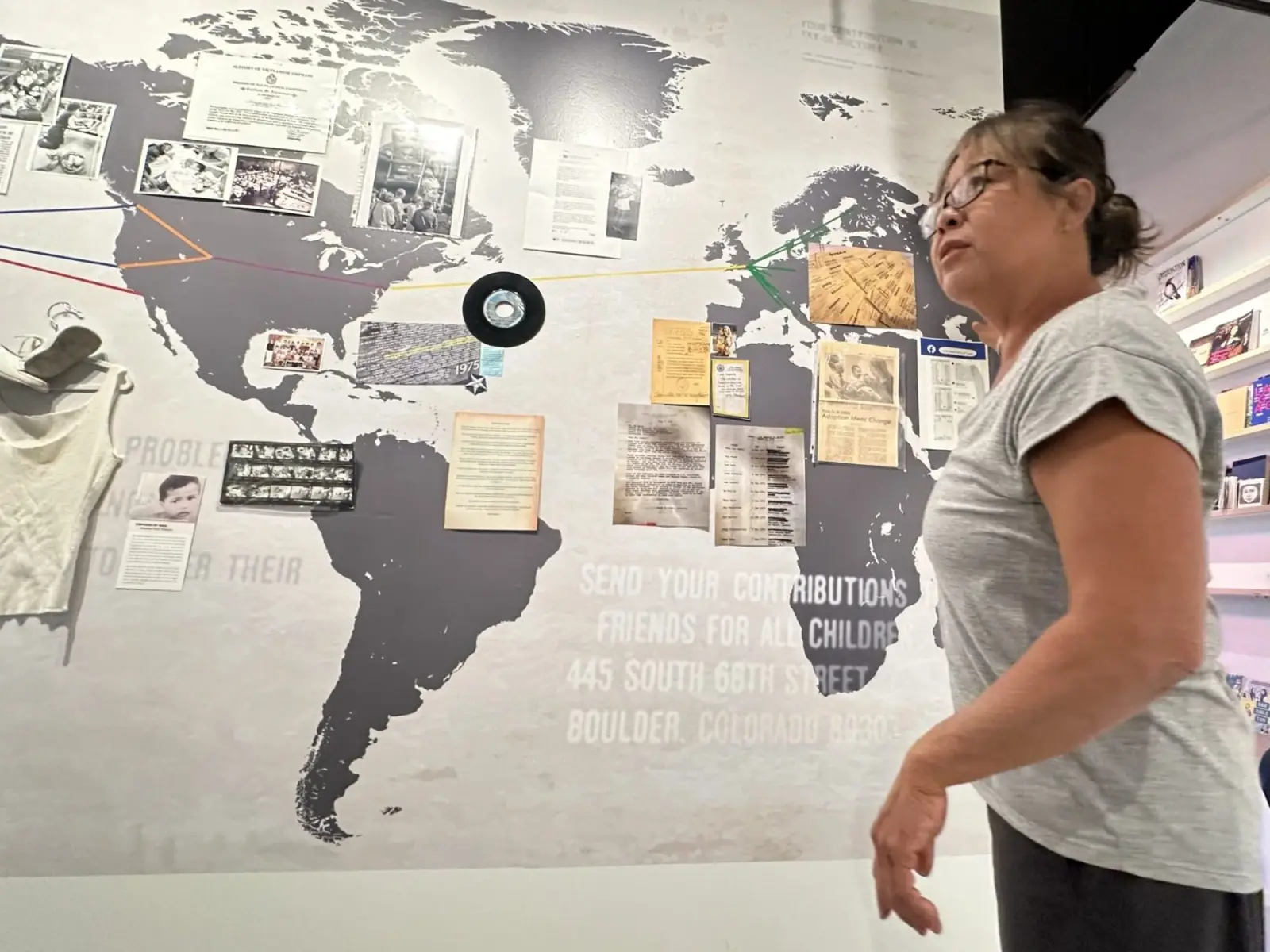
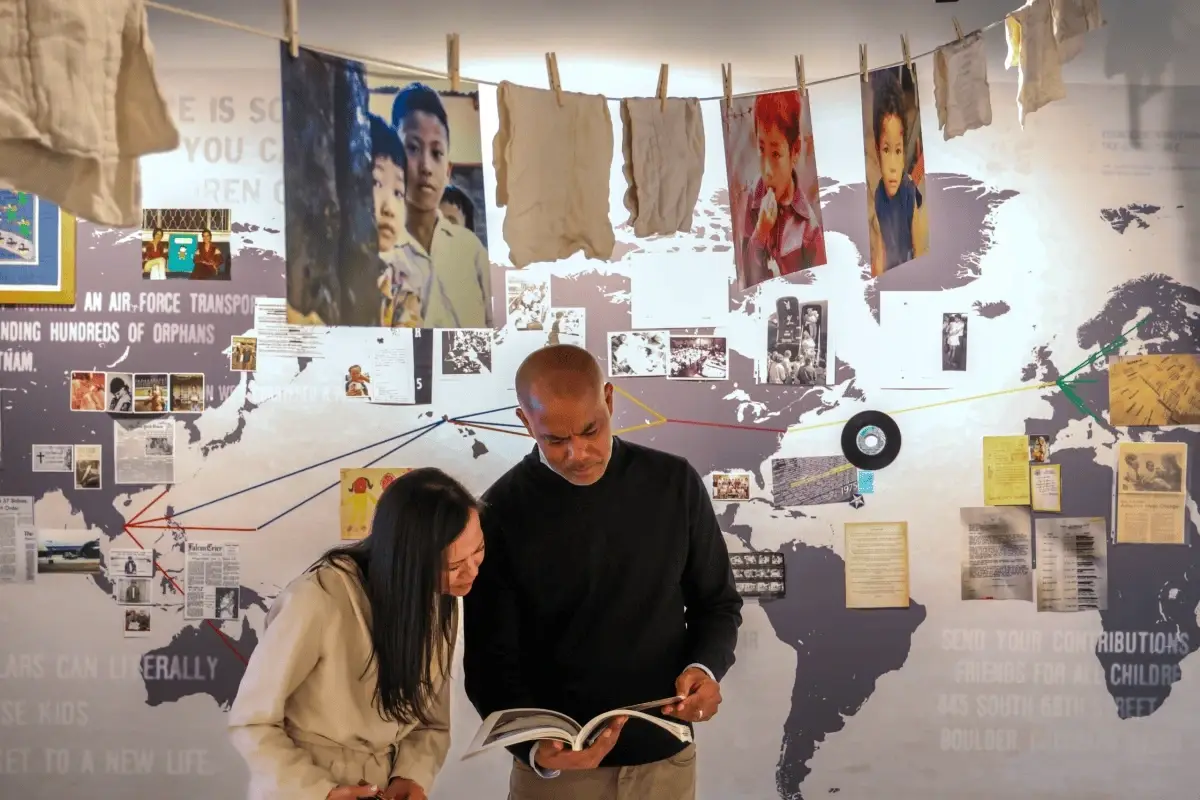
Devaki noticed the young man beside the folders and approached to tell him about documents that had previously been inaccessible to many adopted children. During their conversation, she opened one of the folders and unexpectedly found his father's file. The young man called him immediately to tell him about the discovery. The following weekend, his father flew from Las Vegas to Boulder.
There, the nun who had been helping Devaki sort the archive showed the visitor his personal file and told him everything she knew about his past. Among the papers was a childhood photograph he had never seen before.
Le My Huong
The gathering in Boulder also included a discussion about finding relatives. Representatives of Con Tìm Mẹ—an organization helping children and parents separated by war find one another—had offered to lead it. The organization is led by Le My Huong, who was taken to Australia during Babylift.
Huong was five, and her brother was three. Through the rear window of a white car, the children watched a crying woman they called their mother. She had told them they were going on holiday. They would next meet almost thirty years later.
In Australia, the brother and sister joined a family that already had two boys. Huong spoke no English, everything around her was unfamiliar, and more than anything she wanted to go home. Until she was eight or nine, the girl cried before going to sleep. Her adoptive parents told her that her Vietnamese mother had died.
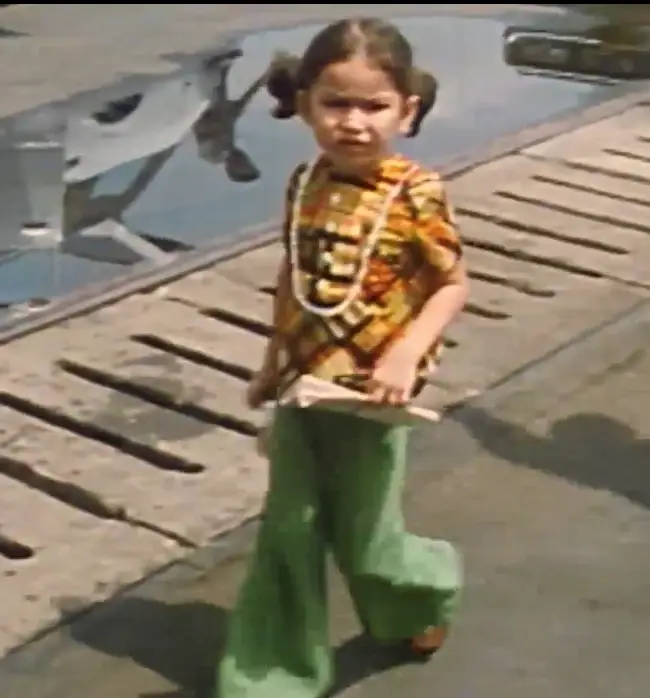
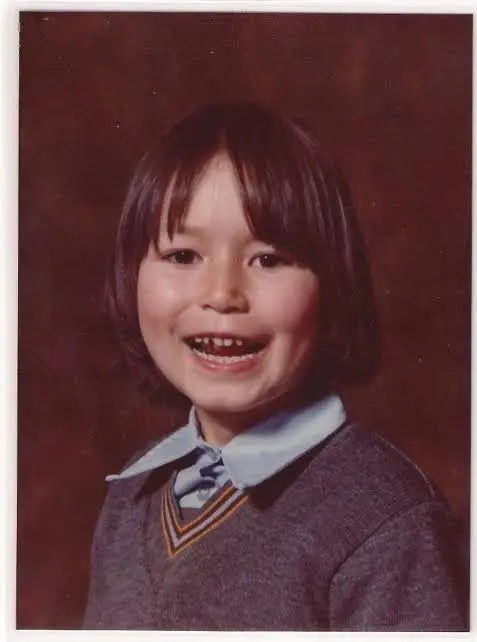
At fifteen, Huong lost her adoptive mother. While sorting through family papers, she found letters from Vietnam and a return address. She wrote to it and received a brief reply by fax: her mother was alive and delighted to hear from her. They began exchanging letters, but the emotions were too difficult for the teenager. Huong was only able to resume her search as an adult.
For several years, she helped orphaned children in Zambia, and after returning to Australia she underwent a rehabilitation program for alcohol and drug dependence. In March 2004, Huong went to Can Tho, where she had spent her early childhood. An acquaintance recognized her and called the woman she had parted from before leaving. The woman arrived ten minutes later.
Huong recognized relatives' faces and the lane near her former home, and recalled her childhood. She stayed in Vietnam, bought a house and helped the family. She taught English, worked with children and later adopted two boys.
In 2018, while Huong was at the gym, calls began arriving from unfamiliar numbers. Then came a message: her mother was Ho Thi It. The calls continued at home. Huong handed the phone to a woman she believed was her cousin. After listening to the caller, the woman said they were not related.
Ho Thi It told a different story. After a difficult birth and bleeding, she had asked a friend to look after the baby temporarily. When the girl was three months old, the friend moved away and cut off contact. This was the woman Huong had regarded as her mother since childhood.
It's granddaughter helped find her daughter: she had seen a documentary about Huong's return to Vietnam. The family managed to find her phone number, and a DNA test confirmed their relationship.
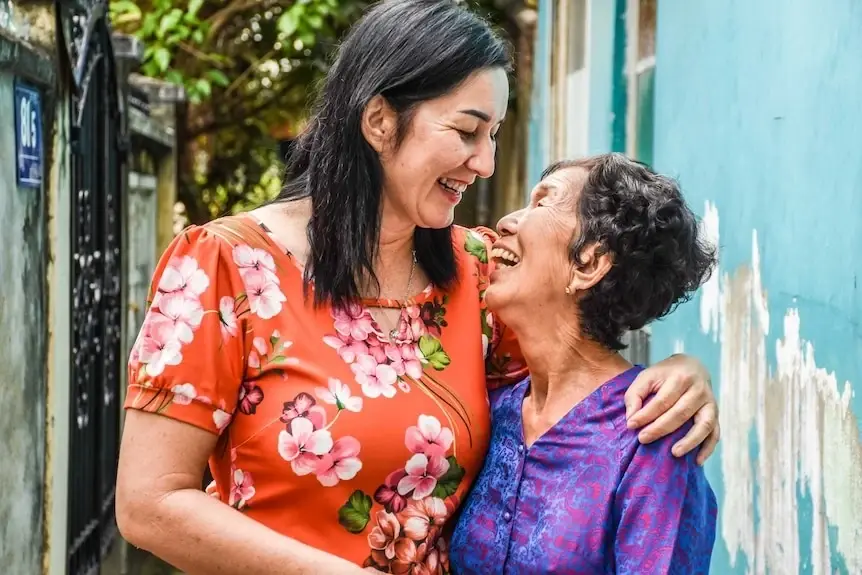
Huong cried for several days. It was particularly painful to realize how many years she had lived with a false understanding of her family. After meeting It, she began living with her and her two sons, who now had a grandmother.
Her own experience also shaped her work at Con Tìm Mẹ. Huong helps others search for relatives and insists that family relationships be confirmed through DNA: familiar faces, memories and even surviving papers may tell only part of the story.
Heidi Bub
Heidi Bub also hoped that meeting her birth mother would help her find a family. In America, the woman who had adopted her had cut off their relationship. That loss remained painful even after Heidi married and had two daughters. When a letter from Vietnam turned up in her adoption documents, she learned that her birth mother had also tried to find her.
The girl had been named Mai Thi Hiep at birth. Her Vietnamese mother, Mai Thi Kim, feared for her six-year-old daughter, whose father was an American serviceman: before the advance on Saigon, rumors circulated that children of mixed ancestry would be killed. In the spring of 1975, Kim placed her child in an orphanage, from which the girl was evacuated through Babylift.
In America, Hiep was adopted by a single woman, Ann Neville. Under the name Heidi, she grew up in a small Tennessee town, attended church, played softball and invited friends for sleepovers. Her adoptive mother wanted her daughter to become entirely American and not speak about her origins. Heidi did not know Vietnamese.
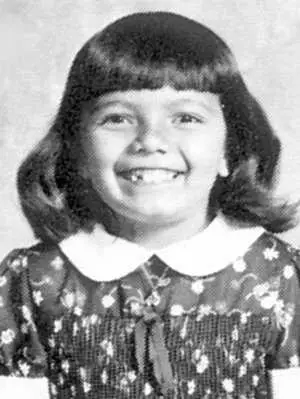
Her relationship with Ann ended when she was already in college. During a visit home, Heidi arrived ten minutes later than the time her mother had set and found the door locked. After spending the night with a friend, she returned, but Ann told her to leave. Attempts to reconcile came to nothing.
In March 1997, Heidi traveled to Da Nang. Her birth mother met her at the airport, hugging her and crying. After twenty-two years apart, Kim wanted to be beside her daughter all the time. At first, Heidi welcomed this affection, but the constant attention soon began to weigh on her. She missed her husband and her young daughters, who had stayed in America.
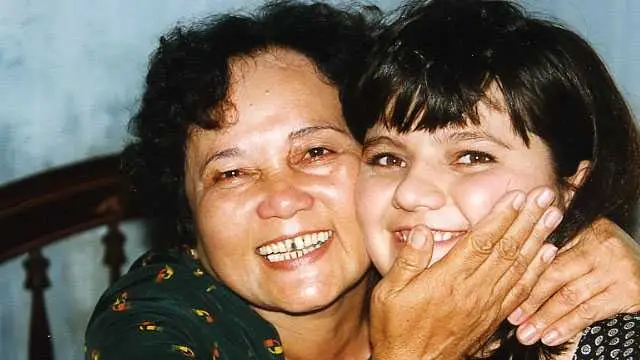
Gradually, it became clear that her relatives had other hopes for her visit as well. One sister asked for help paying for her children's education. Before Heidi left, her brother Tinh raised the subject of their mother: could Heidi take her to America or send money for her support?
In Vietnam, caring for aging parents traditionally falls to their adult children: the family often provides both everyday care and the means to live. Heidi's brothers and sisters were already sharing this responsibility and expected help from the sister living overseas. To her, however, the people she had spent only a few days with were still just becoming close.
The conversation ended in tears. Heidi left the room: she had come to meet her mother, and understood the requests for money as a demand to support the family. Tinh explained that nobody was forcing his sister and that she was free to refuse. Kim did not want to pressure her daughter either, and said that their language barrier and different lives had prevented them from understanding each other.
After returning home, Heidi found it difficult to read letters from Vietnam: new requests for help brought her back to the painful conversation. Contact became infrequent. Still, Heidi said she was glad the meeting had happened—she had seen her birth mother and come to know her family.
Guillaume
Among those helped by Le My Huong's organization was Guillaume—a Vietnamese boy who grew up in France. He too survived the crash of the first Babylift aircraft and was then placed with an adoptive family. His parents told their young son that he had fallen from the sky straight into their car through its open sunroof.
Behind that childhood story lay a past Guillaume knew almost nothing about. At school, he was teased as a “little Chinese boy,” and for a long time he wanted to be white, like those around him. When his daughter was born in 2001, he wanted to pass on the Vietnamese part of his history to her too. But first he had to discover it himself.
In 2004, Guillaume visited the orphanage he had been taken from and met a nun who had cared for him as an infant. She remembered the child, but advised him against searching for relatives: according to her, there was nothing to find. Guillaume returned from his first trip discouraged.
A new opportunity appeared in 2020: a DNA test helped him find a relative, Anne-Catherine, who had also been adopted in France after Babylift. Five years later, she went to Vietnam and met her family. A televised appeal by Le My Huong had helped: Anne-Catherine's sister responded and took a test.
During the reunion, Anne-Catherine spoke about Guillaume. Her sister began calling relatives, and by morning they had found a woman who might be his mother.
In January 2026, Guillaume and his wife traveled to meet her. With only a few minutes left before their arrival, confirmation of their relationship came through. A large family was waiting for them at the house.
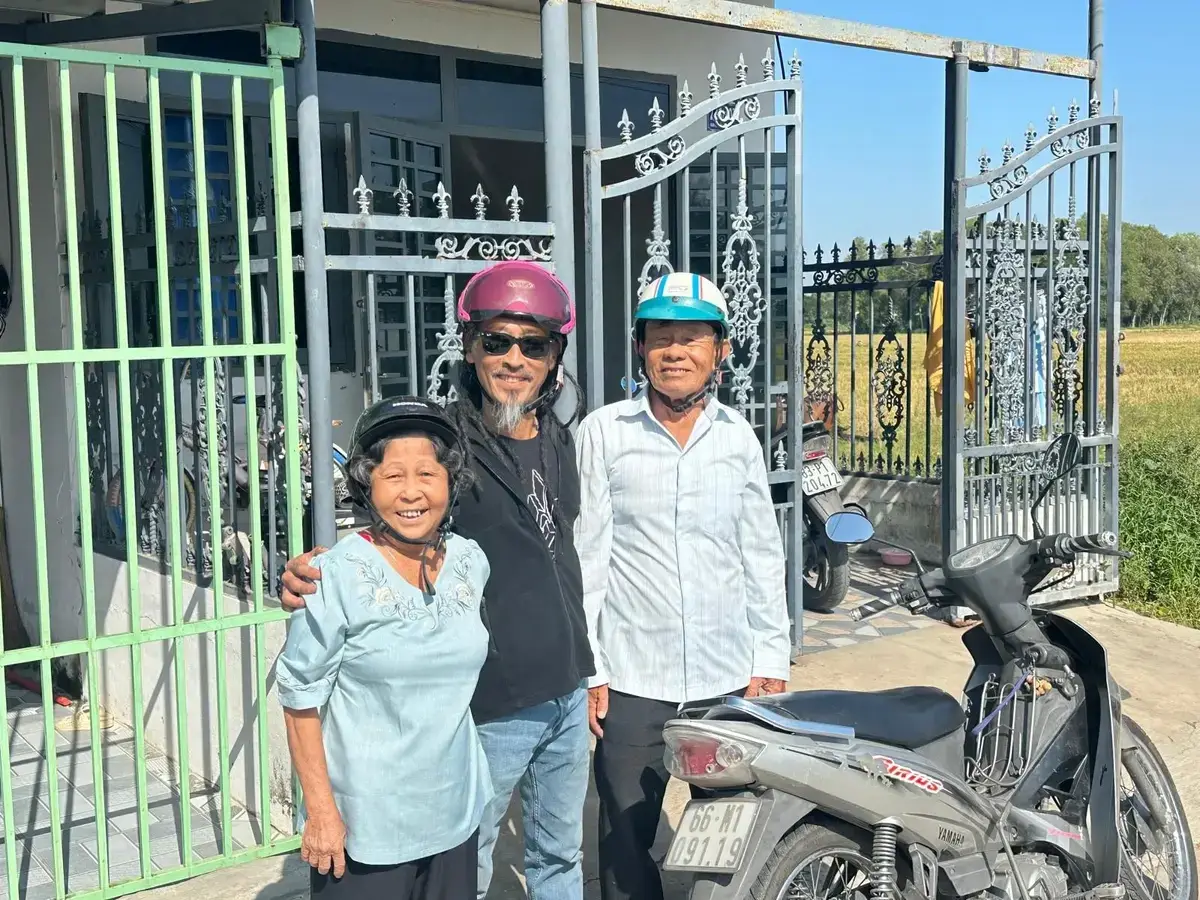
His mother explained that Guillaume's father had died in the war before his son was born. After a difficult birth and bleeding, she feared she might die and took the infant to nuns in Soc Trang. Once she recovered, she returned for him, but was told that the child had been flown abroad. They did not tell her to which country.
Guillaume grew up wondering why he had been left behind. His mother lived without knowing where her son had been taken, hoping he would return one day. Only when they met did she learn that the infant had survived a plane crash: an interpreter explained it to her.
After the reunion, Guillaume spent three weeks with his relatives. In a later interview, he said his mother called him several times a day, and called his wife too. They continue getting to know one another and building the relationship they had never had the chance to build before.
The search continues
In 2026, Devaki Murch continues sorting the archive and returning documents about their past to the now-grown children of Babylift. Le My Huong and her organization, Con Tìm Mẹ, help separated families search for one another, comparing surviving information with DNA test results.
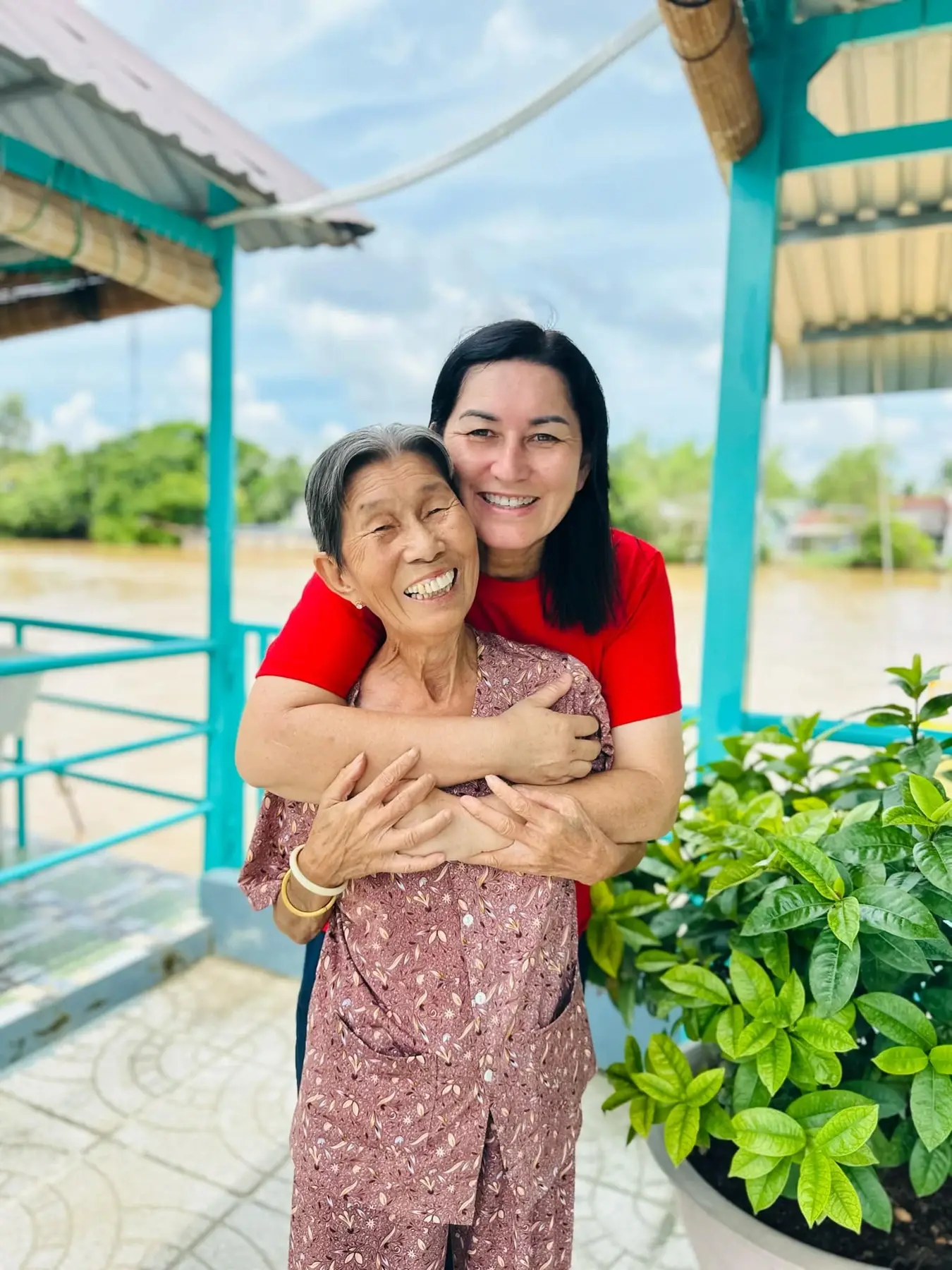
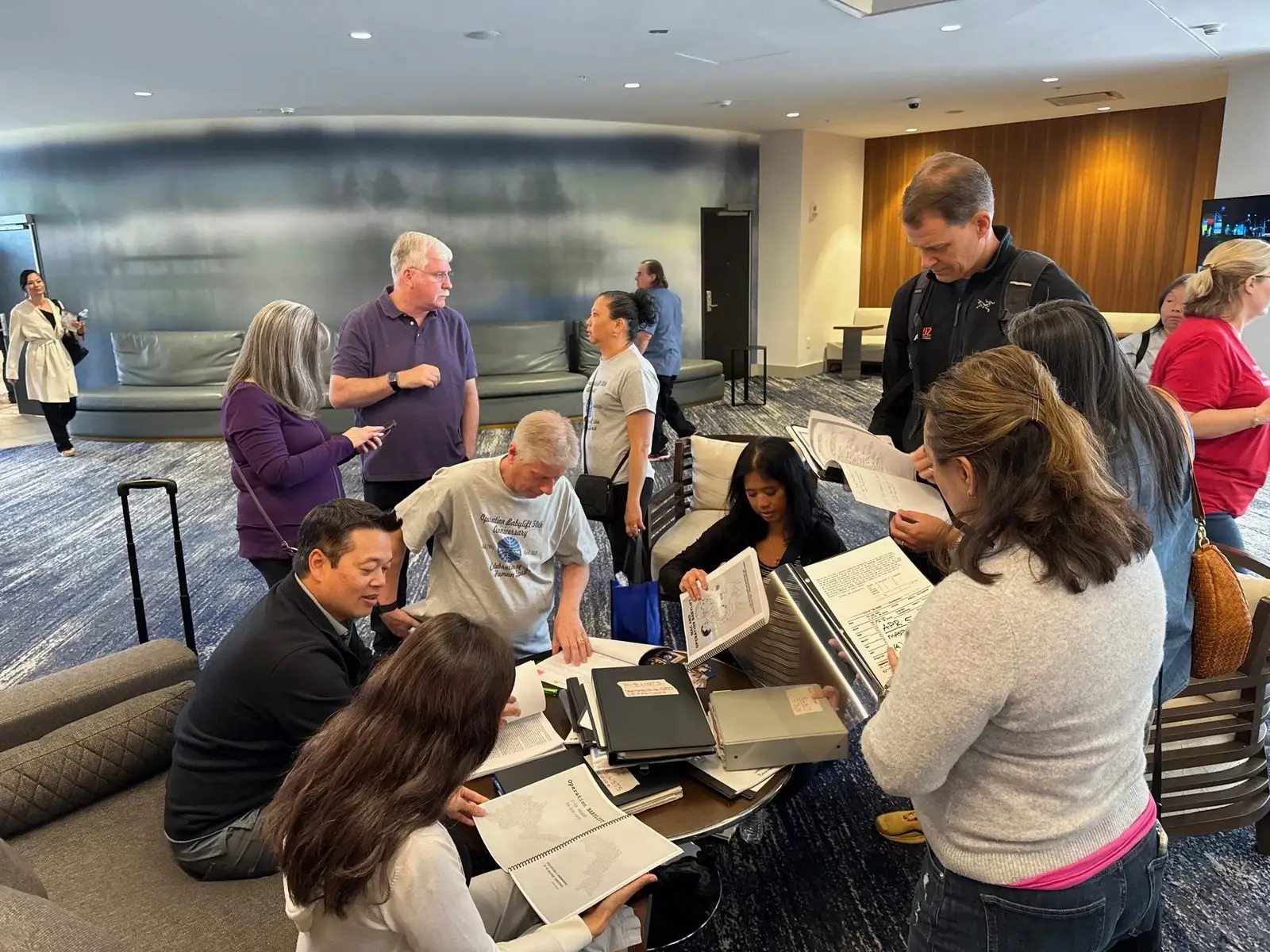
Some mothers are still waiting for their children—Guillaume only met his mother in January 2026. With each passing year, there are fewer opportunities like this, but searches continue even after parents die: brothers, sisters, nieces, nephews, family memories and photographs remain. For someone who has known almost nothing about their origins all their life, meeting them can mean meeting their own family for the first time.
Comments
Read also
All articles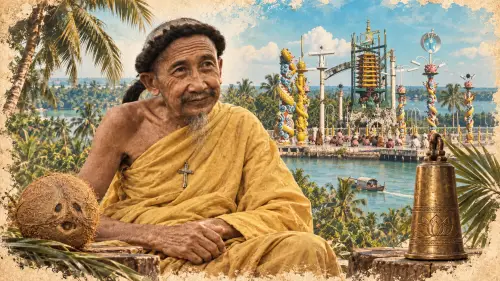
No Sex, Music or Weapons: Life in the Coconut Kingdom During the War
A French education, a religion of his own and an island in the middle of the Mekong: the story of Nguyễn Thành Nam and the…

Best Beaches in Vietnam: Where to Go by Month and Which Destination to Choose
Vietnam has almost 3,300 km of coastline, but there is no single nationwide “beach season”. In winter, the most reliable beach weather is usually found…
Long Son Pagoda and the White Buddha in Nha Trang: what to see and how to get there
From a small thatched temple to a giant Buddha on the hilltop.
Ho Chi Minh City: What to See in 3–4 Days, Where to Stay, What to Eat and How to Get Around
A practical Ho Chi Minh City guide for 3–4 days: where to stay, what to see, what to eat and how to navigate the city.
Tram Huong Tower in Nha Trang: why it is not a lotus and what is inside
Why the tower changed colour, what was displayed inside and how to visit.

Po Nagar Towers in Nha Trang: the goddess who outlived her kingdom
The story of the Mother of the Land and why people still bring her offerings.