Po Nagar Towers in Nha Trang: the goddess who outlived her kingdom
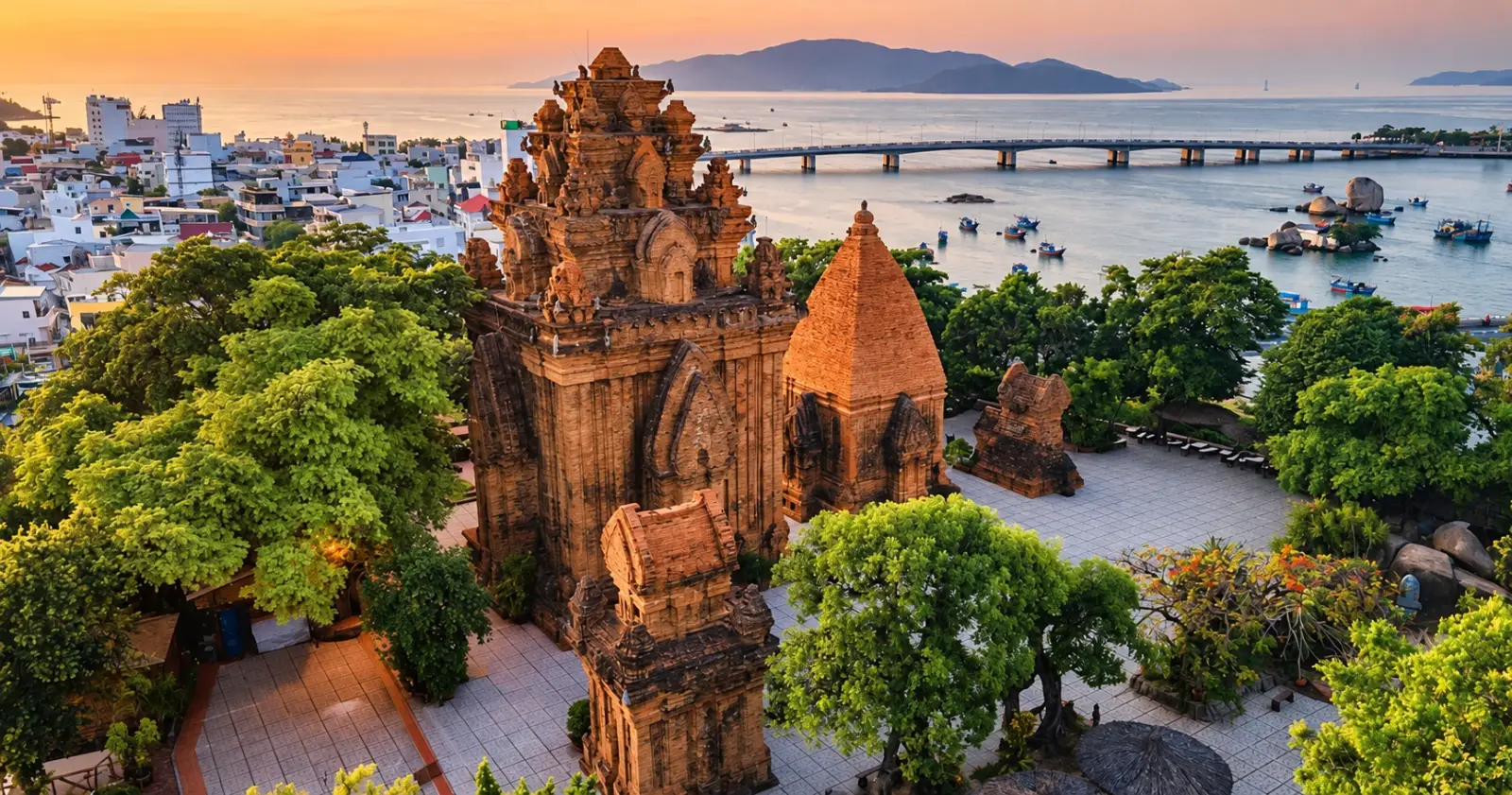
In Nha Trang, among roads, shops and modern houses, stand brick towers more than a thousand years old. They were built by the Cham, a people who once ruled these lands. Since then rulers have changed and an entirely different city has grown around them, yet people still bring offerings to the ancient temple.
These are the Po Nagar Towers. They are named after the goddess whom the Cham regarded as the Mother of the Land. People believed that she created their land, taught them to grow crops and made sure they had food and prosperity.
Later, Vietnamese people began settling here. They too came to honour Po Nagar as the guardian of the land, but called her by another name: Thien Y A Na.
The area around present-day Nha Trang was called Kauthara. It belonged to the Cham world: the states collectively known as Champa, which occupied much of the coast of what is now central and southern Vietnam.
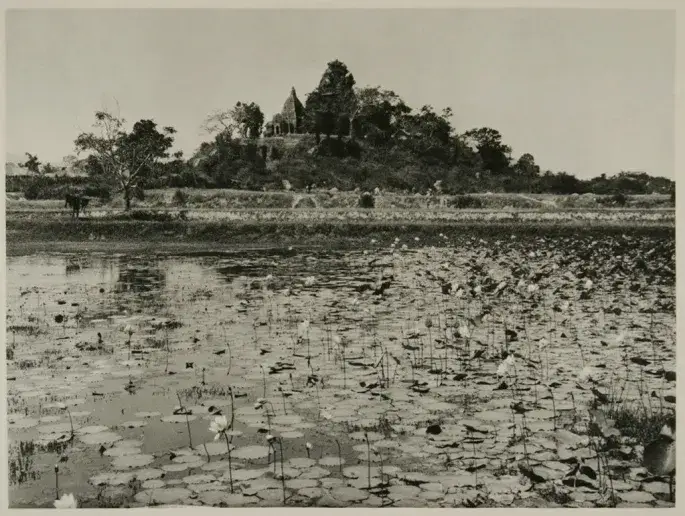
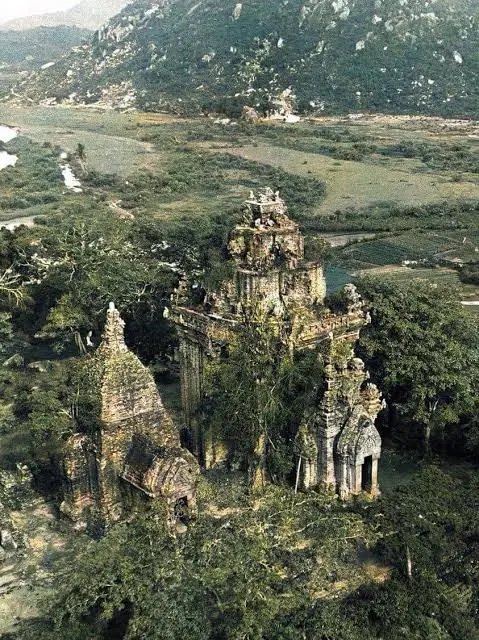
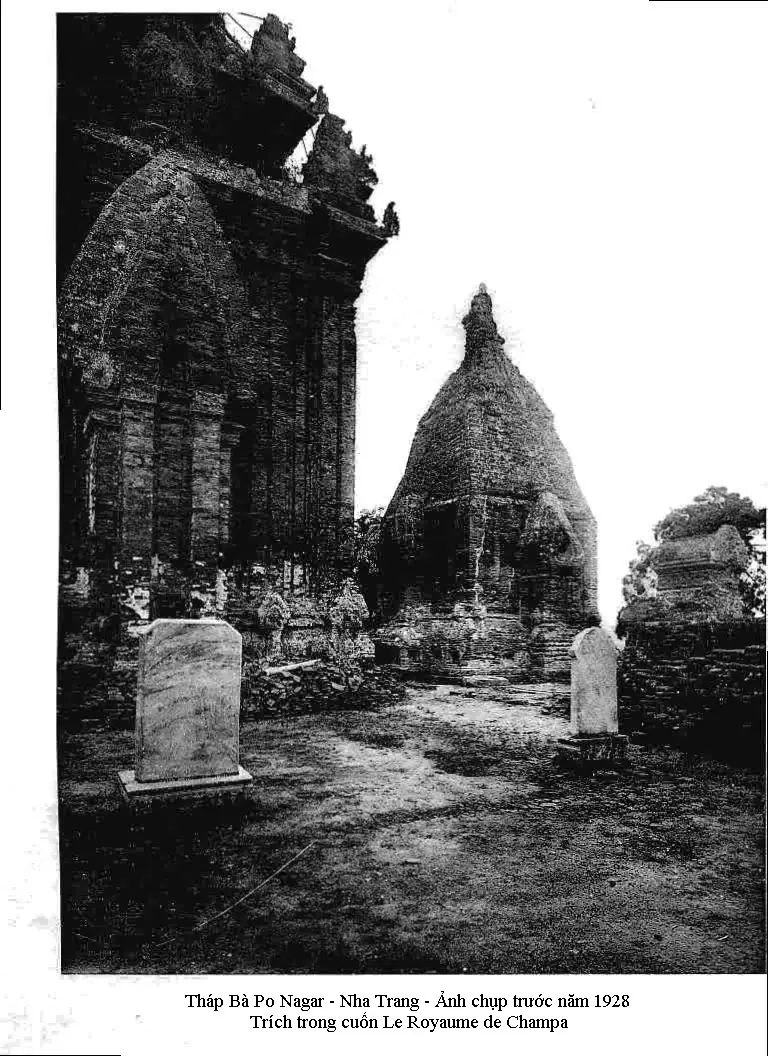
The Cham worshipped Hindu gods, but Po Nagar held a special place. According to tradition, she emerged from clouds and sea foam. Temples were built for her on the hill beside the river, rulers brought gifts, and the names of donors and their offerings were recorded in stone. The sanctuary took shape over several centuries, roughly from the eighth to the thirteenth: new towers were erected, while older ones were restored and rebuilt.
The Vietnamese adopted the local goddess but explained her origins differently. In their legend she lived among people: she was an adopted daughter, married, had children and returned to her homeland.
According to this story, melons began disappearing from the plot of an elderly, childless couple. The husband decided to lie in wait for the thief and discovered a girl gathering the fruit. The couple took her in and raised her as their daughter.
One day during a flood, the girl began making little mountains out of stones and decorating them with flowers. Her adoptive father grew angry and scolded her. After their quarrel, the girl turned into a log of agarwood. The floodwaters picked it up and carried it out to sea. Agarwood is prized for its fragrance and used to make incense. It also gives its name to Tram Huong Tower on Nha Trang’s waterfront.
With this story, Vietnamese worshippers came to the sanctuary the Cham had built long before their arrival. Devotion to the goddess continued, although people could now tell different stories about where she came from.
A statue of Po Nagar still stands in the main tower today. She wears ceremonial robes, making it difficult to see the whole stone figure. Before going inside, though, it is worth learning how she came to be here.
A golden statue of the goddess once stood in the temple. Ancient inscriptions tell us that it was installed in 918, but remained for only about thirty years. Kauthara was attacked by an army of the Khmer people, from the territory of present-day Cambodia. The invaders carried away the golden goddess.
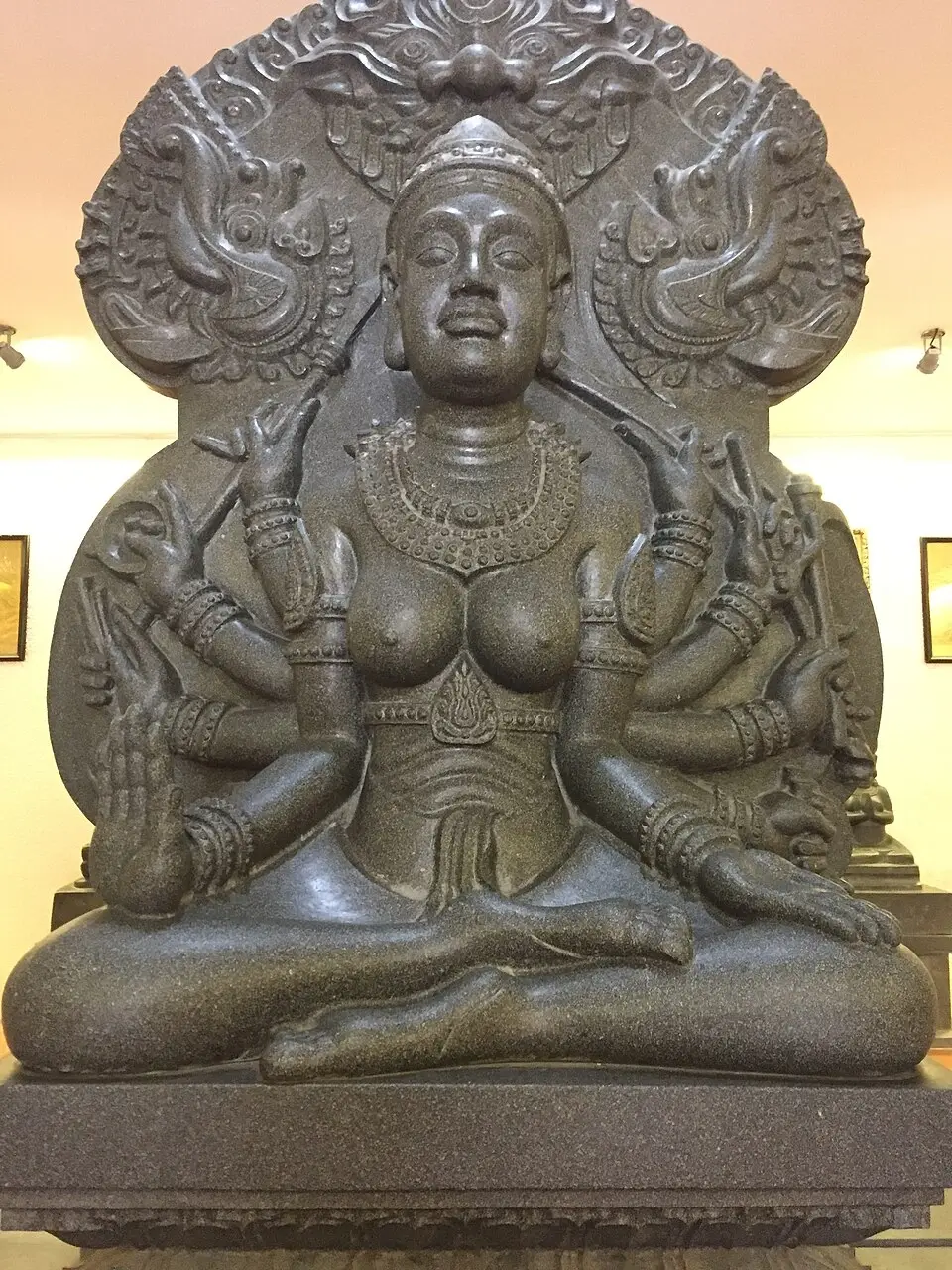
A replacement was installed only fifteen years later. The Cham ruler Jaya Indravarman ordered Po Nagar to be carved in stone.
This stone statue remains in the temple today, though it too has suffered over a thousand years. By the early twentieth century it had lost its head and two hands. The head was later restored.
To see the goddess’s figure without the robes covering it, visit the exhibition room. It contains a full-size replica, showing all ten arms and the objects she holds.
The easiest place to begin exploring the complex is below, beside the brick columns. Today they stand in the open air. This was once the mandapa, a hall where worshippers prepared for rituals before climbing to the temples. Researchers believe there was a roof above the columns; recesses that may have held beams survive on the supports.
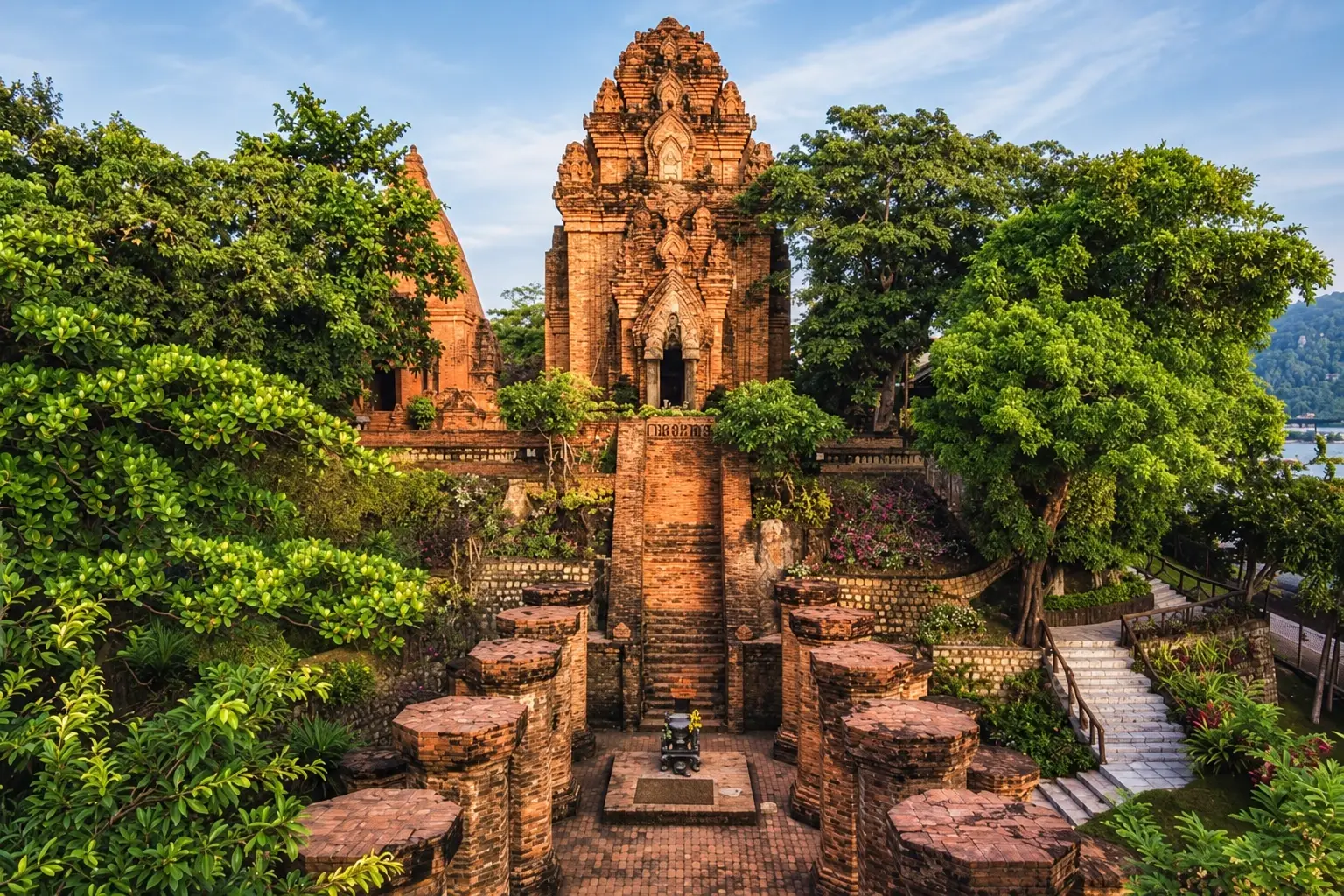
From here the main tower is clearly visible. It is about 23 metres high. Its upper tiers grow progressively smaller, as though several miniature versions had been placed on top of the large tower.
Before entering, look up: Shiva is dancing above the doorway. He has four arms, musicians stand beside him, and the sacred bull Nandin is beneath his foot. Ancient writing survives on the stone pillars by the door.
The doors have a trick of their own. Walk around the tower: there are openings on different sides, but the only entrance is on the east. The others are false doors, forming part of the decoration of the walls.
Beyond the real doorway lies the goddess’s sanctuary. Here it is worth putting away your camera, letting people with offerings pass and waiting a little. After the stories of kings, lost gold and ancient inscriptions, it is particularly interesting to see the temple continuing its everyday life. Someone steps in for a few minutes, joins their palms before the goddess and goes back into the city.
Practical information for your visit
Location and getting there
Search your map for Po Nagar Cham Towers, Tháp Bà Ponagar or Tháp Bà Pô Nagar: these are all names for the same complex.
Address: 61 Hai Tháng Tư — 2 Tháng 4 Street, Cu Lao Hill, on the north side of Xóm Bóng Bridge across the Cai River. From Nha Trang’s central beach area, a taxi or a car booked through an app is convenient. Select the complex itself on the map: the administrative district name in older guides may differ from the current one.
Do not confuse the towers with the Tháp Bà mud baths: use the full name Po Nagar Cham Towers when booking a car.
Opening hours and tickets
According to information available on 17 October 2026:
Opening hours: 06:00–17:30. These are the hours listed on Khanh Hoa’s official tourism portal. Other guides give different times, so check again if you plan to arrive late. Official listing.
Standard admission: VND 30,000 per person. Certain categories of visitors qualify for free entry; ask at the ticket office about eligibility. Official admission fee and exemptions.
How long to allow and when to visit
Allow one to one and a half hours for an unhurried visit including the exhibition room. Morning and late afternoon are more comfortable for walking around the outdoor grounds. Bring water, a hat and shoes with non-slip soles.
The complex is on a hill and there are stairs along the way. Bear this in mind if you have a pushchair or are accompanying someone who finds steps difficult. Use the side staircase to climb up: the old direct route from the columns is very steep.
Clothing and conduct
Shoulders and knees should be covered. Free cover-up robes are provided for visitors, but arriving in suitable clothing is more convenient.
Inside, remove your hat, speak quietly and follow the attendants’ instructions on footwear and photography. Do not touch statues, altars or old carvings. Do not block worshippers’ passage, and ask permission before photographing someone carrying offerings.
The Po Nagar Festival
The main traditional festival days are the 20th–23rd days of the third lunar month. Their dates in the Gregorian calendar change each year, and the full programme may extend over more days.
Rituals, offerings and the changing of the goddess’s robes take place during the festival. If you would like to attend, check the programme for that particular year. An ordinary day is more convenient for an unhurried look at the towers.
Comments
Read also
All articles
Tet in Vietnam: How to Experience the Country’s Biggest Holiday and Plan Your Trip
Tet is one of the best — and at the same time one of the most inconvenient — periods for a first trip to Vietnam.…
No Sex, Music or Weapons: Life in the Coconut Kingdom During the War
A French education, a religion of his own and an island in the middle of the Mekong: the story of Nguyễn Thành Nam and the…

Where to celebrate in Nha Trang: a tiny chef, Korean saunas and dinner on the water
Six ideas for a special day, from a memorable dinner to saunas and a lakeside picnic.
Edible bird’s nests: who first thought of eating them, and why are they so expensive?
From perilous cave harvests to gift boxes worth millions of dong.
Long Son Pagoda and the White Buddha in Nha Trang: what to see and how to get there
From a small thatched temple to a giant Buddha on the hilltop.
Mekong Delta: How to Plan Your Trip and What Is Actually Worth Seeing
The Mekong Delta is not a single attraction near Ho Chi Minh City. It is a huge region of rivers, canals, rice fields, orchards and…