No Sex, Music or Weapons: Life in the Coconut Kingdom During the War
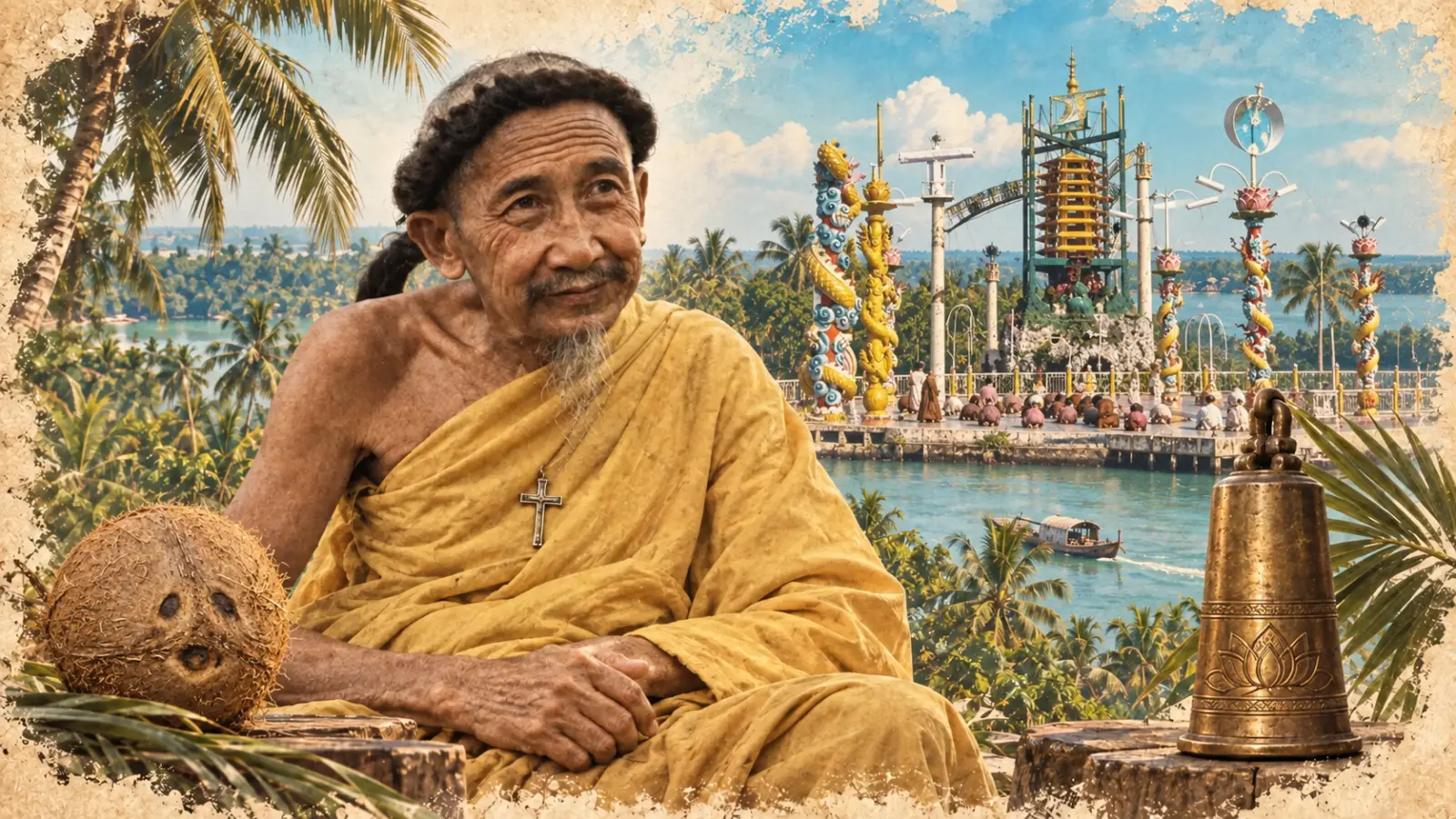
Can a separate world be built in the middle of a war — without weapons, marriage or music, but with prayers, coconuts and bells made from artillery shell casings? In the 1960s, such a community really existed on Cồn Phụng in the Mekong Delta. It was created by Nguyễn Thành Nam, a French-educated entrepreneur who became known as the Coconut Monk and set out to reconcile not only religions, but a divided Vietnam.
The island where there was no war
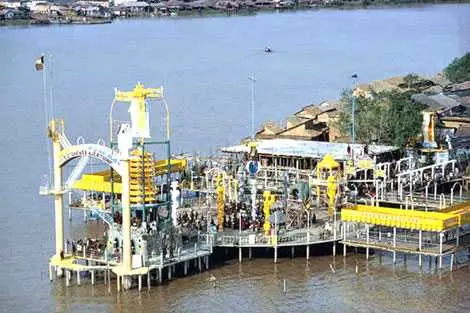
In the spring of 1968, 21-year-old American journalist John Steinbeck IV took a bus from Saigon to Mỹ Tho, then transferred to a small flat-bottomed boat — a sampan. A Vietnamese acquaintance had told him about a large peace conference being held on an island in the middle of the Mekong by a silent yogi nicknamed the Coconut Monk. Steinbeck expected another pagoda. Instead, something resembling a Buddhist amusement park appeared from behind the palms.
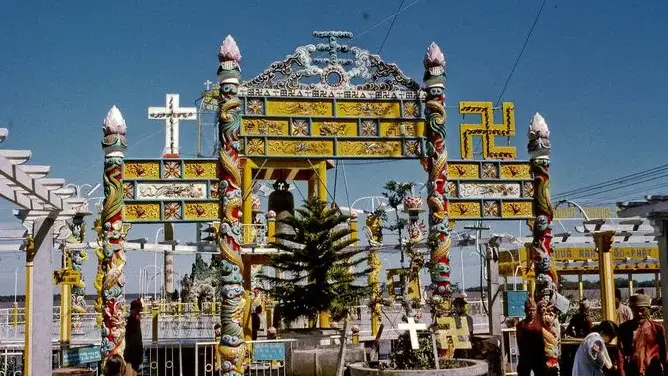
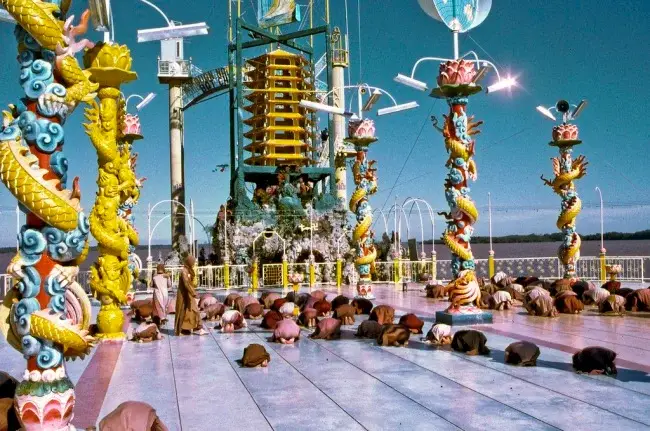
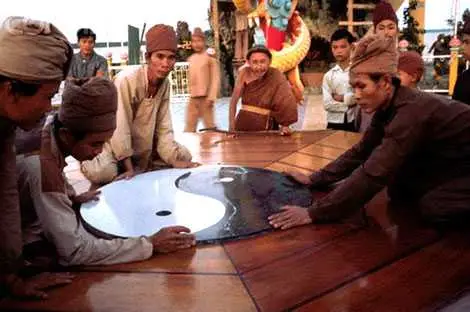
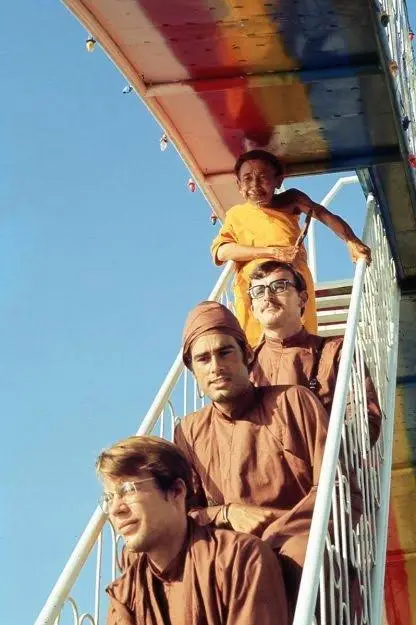
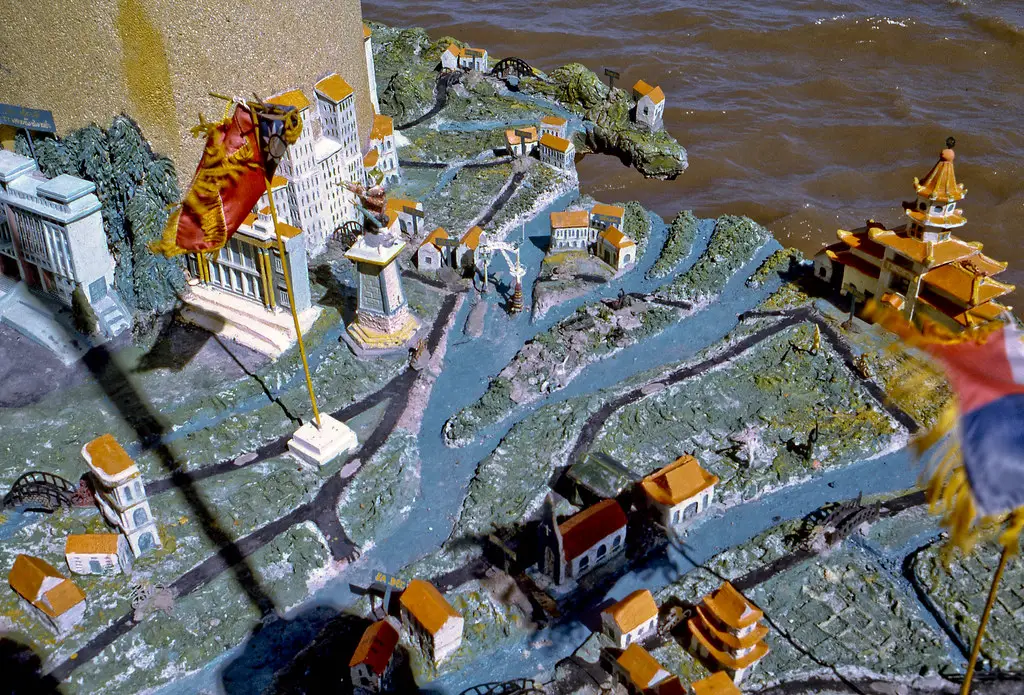
A seven-storey tower rose above the water. Nine dragons — one for each branch of the Mekong — curved across an enormous prayer platform, coloured lights glowing on their heads. A cross stood beside a Buddhist swastika, while a yin-yang symbol shared the scene with bright towers and staircases. Above the river hung a relief map of Vietnam about twenty-one metres long, complete with miniature cities, mountains and forests. The supports of a rainbow bridge rose from the northern and southern halves of the country, meant to unite North and South at least here.
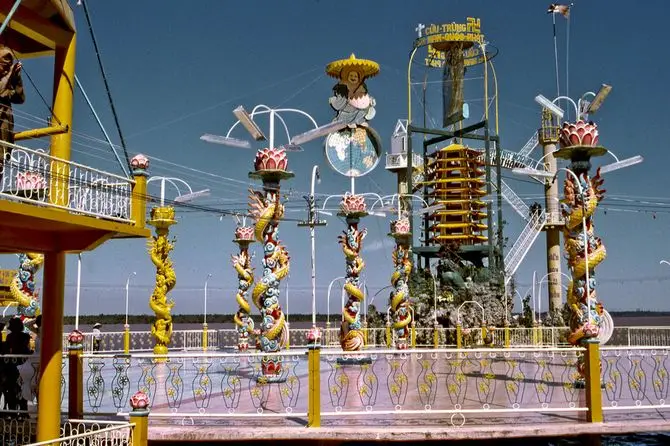
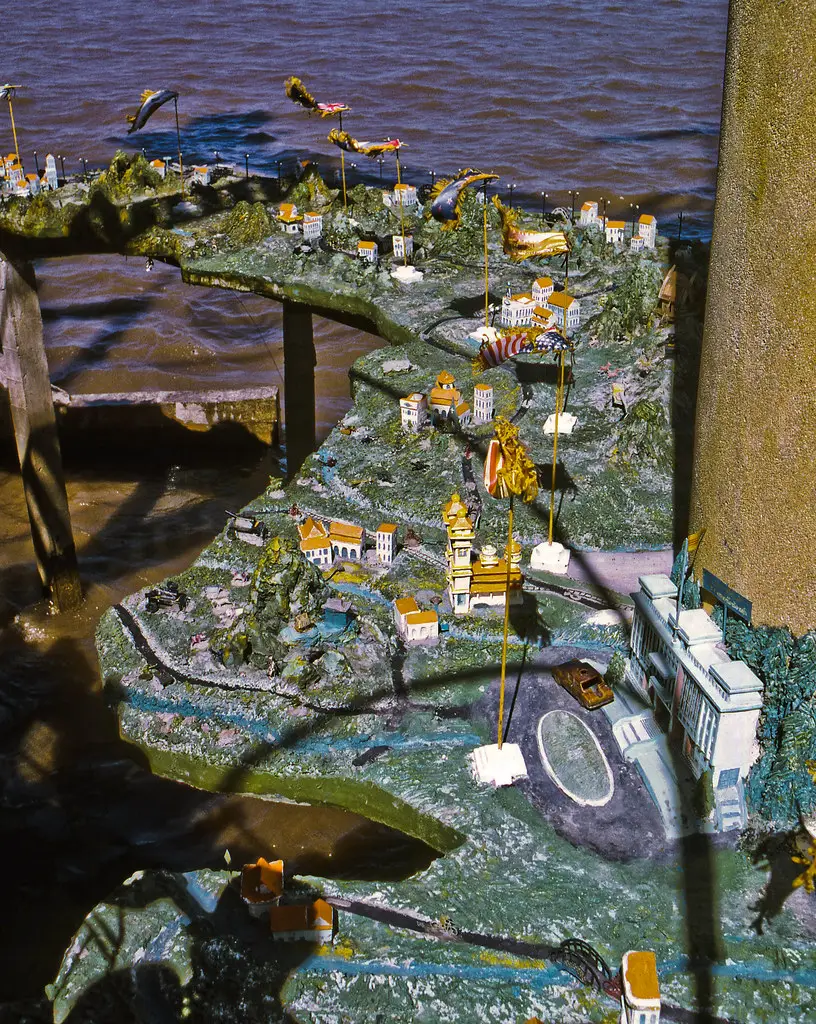
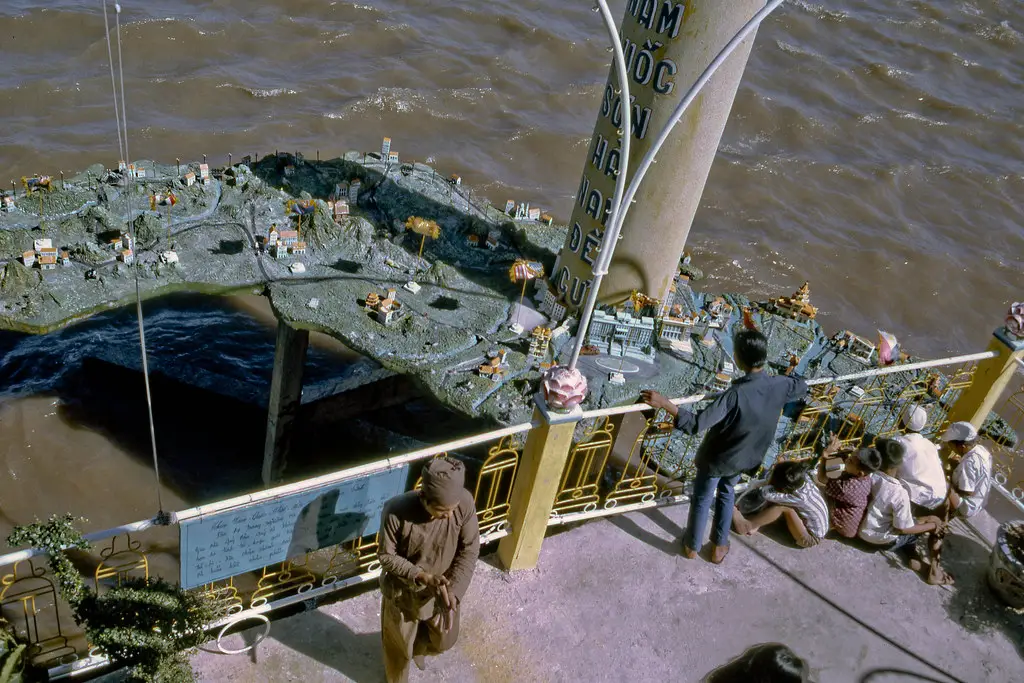
The island announced itself not only by sight but by sound. Hundreds of large bells hung from the corners of the pagoda. Their shape and size seemed vaguely familiar to Steinbeck: not long before, he had served in the US Army in Vietnam. He later learned that the bells had been made from brass casings of 175-millimetre artillery shells.
While guns were firing along the Mekong, the island literally made the weapons of war call for peace.
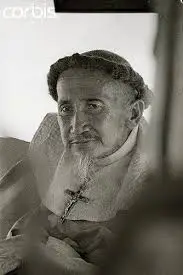
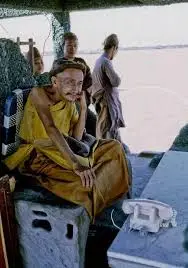
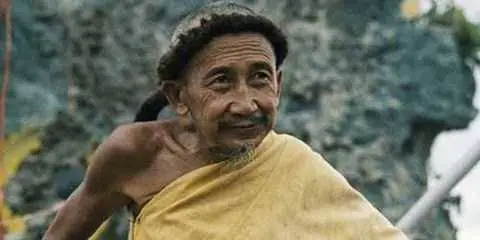
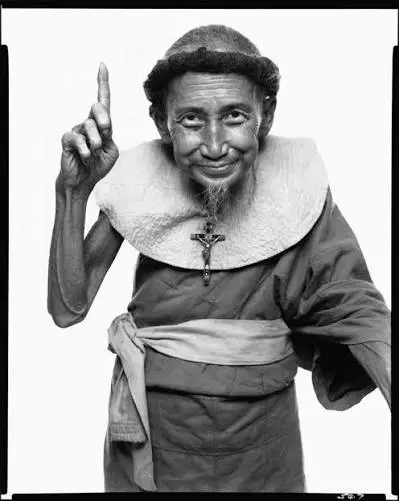
That day Cồn Phụng, home to a community of about four hundred people, was crowded with visitors to a two-day peace festival organised by Nam. Hundreds of men and women bowed on the prayer platform. Above them, in a niche in an artificial mountain, sat a short, thin man in saffron robes with a large Christian cross on his chest. He remained silent, smiled broadly and breakfasted on coconuts with hot red chilli.
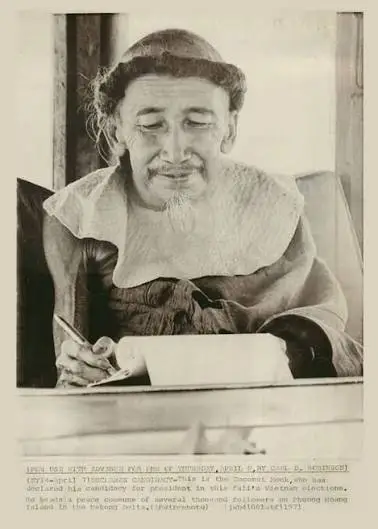
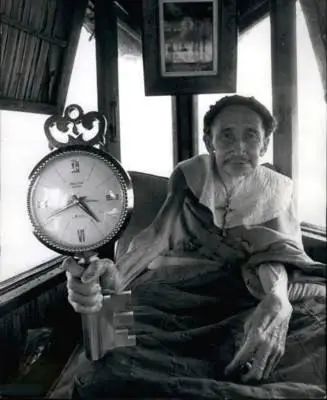
This was Nguyễn Thành Nam — the man who founded an island community conceived as a refuge from war and the rules it imposed.
How an engineer became the Coconut Monk
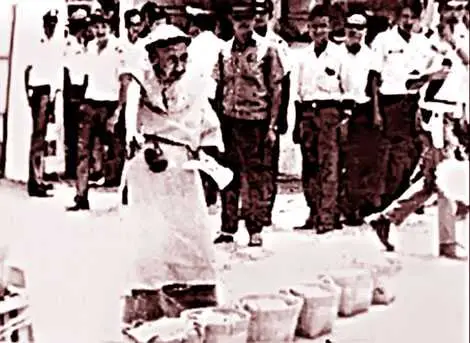
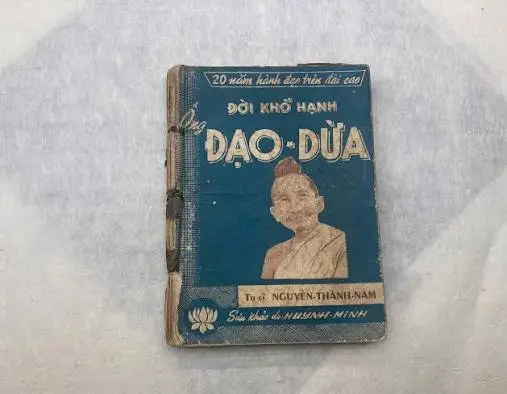
According to different sources, Nguyễn Thành Nam was born in 1909 or 1910 in the Bến Tre area of the Mekong Delta, into a wealthy and influential family. His father held an administrative post under French colonial rule, giving his son an education unavailable to most of his contemporaries. In 1928, the young Nam was sent to France to study chemistry. Several years later he returned to Vietnam.
Later accounts almost always call him a chemical engineer. In an election biography, Nam listed several French educational institutions and a chemistry school in Rouen. Yet journalist Wilbur Garrett, who wrote about him during his lifetime, maintained that Nam attended a private college rather than a university. In any case, after returning to Vietnam he tried to put his knowledge to practical use and opened a soap-making business based on coconut raw materials.
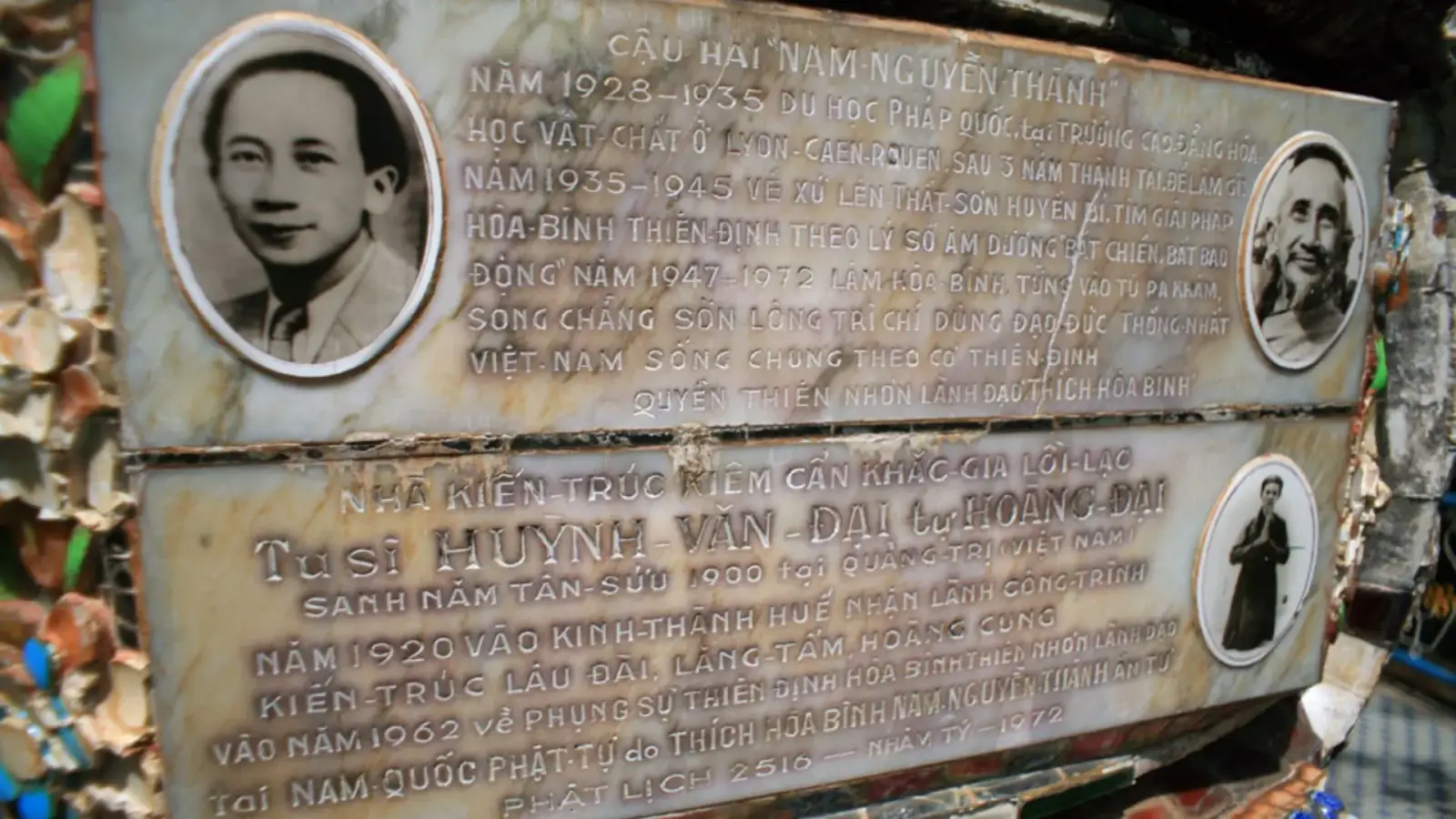
The soap works never became the beginning of an industrial career for Nam. He married and started a family, but in time abandoned both his business and his ordinary life. Why a prosperous man with a European education chose the path of a monk is unknown. The failure of the soap business is often described as the turning point, though Nam himself never explained his decision.
In 1945, he received Buddhist ordination in the Châu Đốc area, then withdrew for a long period into the mountains of south-western Vietnam. He meditated on raised platforms, observed silence and ate mostly fruit. Followers said that for several years he lived almost entirely on coconuts. The duration of such a fast cannot be verified, but coconut certainly became part of his daily practice: he drank coconut water, ate the flesh and used it to prepare other dishes.
Nam did not invent the nickname “Coconut Monk” or the name “Coconut Religion”; that was how outsiders began referring to him and his followers. The coconut palm was not chosen by chance. It was the defining tree of his native Bến Tre, evoked a simple life and supplied almost everything a person needed: water, food, oil, fibre and building material.
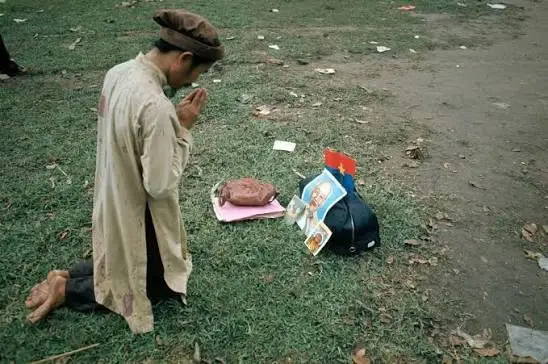
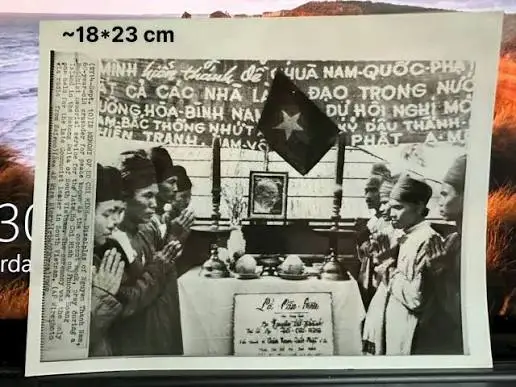
But Nam did not ask anyone to worship coconuts. His central idea was the reconciliation of religions. His prayers brought together the Buddha, Christ, the Virgin Mary, Guanyin, Laozi and Confucius. He celebrated Christmas and the Buddha’s birthday and wore a Christian cross over Buddhist robes. On one side of a rotating two-faced plaque in his shrine, the Buddha embraced Christ; on the other, the Virgin Mary embraced the bodhisattva Guanyin.
From the late 1950s, Nam spoke out ever more often for an end to the war and was imprisoned several times. Early in the next decade he chose the small island of Cồn Phụng on the Tiền River, one of the branches of the Mekong. There, funded by donations from followers, construction began on his “holy land”.
At first people came to the island out of curiosity. As the war expanded, the Coconut Kingdom was no longer merely an oddity: it became a refuge.
No sex, music or weapons
At the beginning of 1968, during Tết, the Vietnamese New Year, a major offensive began. Fighting spread through the towns and countryside of South Vietnam, and refugees made their way to Cồn Phụng. Among them were men of military age who did not want to join the army. In the early 1970s, one journalist who visited the island counted about fifteen hundred young men there. He estimated that, over the years, as many as five and a half thousand people may have hidden there from military service. The island grew into a settlement the size of a small village.
The basic rules were familiar for a religious community: followers were forbidden to kill, steal, drink alcohol, smoke or gamble. They were also barred from gossip, idle talk, listening to music, following fashion and having sexual relations. Islanders wore simple clothes, ate plant-based food and prayed regularly.
The most surprising rule was the ban on marriage. It did not necessarily last for life. According to surviving accounts, a man could marry after the age of thirty-four, when he was no longer eligible for military service. Marriage could also be permitted earlier — if peace came.
Private life was effectively suspended together with the country’s normal life. While young men could be sent away to kill and die, they were not supposed to start families or have children. Nam himself was already married and had a daughter; when he embraced ascetic life, he left his family in Bến Tre. For his followers he introduced a rule of “not creating children”, linking it to the need to limit population growth.
He never fully explained why all music was prohibited. Most likely it was grouped with fashion, alcohol and gambling as entertainment that distracted from ascetic discipline. Rejecting fashion also erased visible differences between rich and poor. On Cồn Phụng, the son of a wealthy family, a farmer and a refugee from a battle zone were all meant to look alike.
The rules did not release residents from work. Nam repeated a principle that can be translated roughly as: if the hands do not work, the jaws have nothing to chew. Followers farmed and practised coconut crafts. There was little free land on Cồn Phụng, so most agriculture had to be moved off the island. With money from wealthy supporters, the community acquired about 3.2 hectares in An Giang Province, where followers grew rice and other crops.
The Coconut Kingdom never became fully self-sufficient, though Nam wanted it to. Relatives brought rice and other provisions to some residents, wealthy followers supported construction, and pilgrims, curious visitors and journalists continued to arrive from Mỹ Tho along the Mekong.
The coconut palm gave people an astonishing amount. Grated flesh was pressed for milk, oil was extracted and sweets were made. Shells became bowls and small objects; fibre became ropes, mats and brushes. Leaves were used for roofing and woven goods, trunks for beams and furniture. Every part of the plant was put to use not only in the community but throughout the province. Over time, Bến Tre became a centre of crafts ranging from sweet-making to furniture production.
It is important, however, not to confuse the historical community with the modern excursion. Bến Tre’s famous coconut sweets were first made in the 1930s. But the sweet, rice-paper and souvenir workshops shown to visitors on Cồn Phụng today do not mean that the Coconut Monk’s followers sold the same range of goods. The historical community’s work is known only in broad terms: its residents farmed and made coconut products.
On the island, asceticism was constantly intertwined with politics. The ban on marriage was tied to the end of military age or the end of the war; the ban on killing became a form of pacifism; shell casings became bells. Even Nam’s strangest demands led residents back to a single thought: normal life would resume only when the war ended.
One coconut against the war
The peaceful island quickly became a problem for the South Vietnamese authorities. The community was dangerous above all because it sheltered thousands of young men refusing military service. That reduced the pool of conscripts and turned a religious choice into political disobedience. Nam sought dialogue with both sides of the conflict. He applied for permission to travel to Hanoi and meet the leaders of North Vietnam in person, but permission was refused. In 1967, he tried to reach the north illegally through Cambodia, from where the Hồ Chí Minh Trail could be accessed. He was detained near the border. After this attempt, the South Vietnamese authorities considered him politically unreliable and restricted his movement: whenever the monk appeared on the mainland, police tried to return him to the island at once.
It was at this time that John Steinbeck IV came into his orbit. His father, the American writer John Steinbeck — author of The Grapes of Wrath, Of Mice and Men and East of Eden — received the Nobel Prize in Literature in 1962. The famous writer’s son initially came to Vietnam not in search of spirituality: he had been drafted into the US Army, where he worked as a military correspondent.
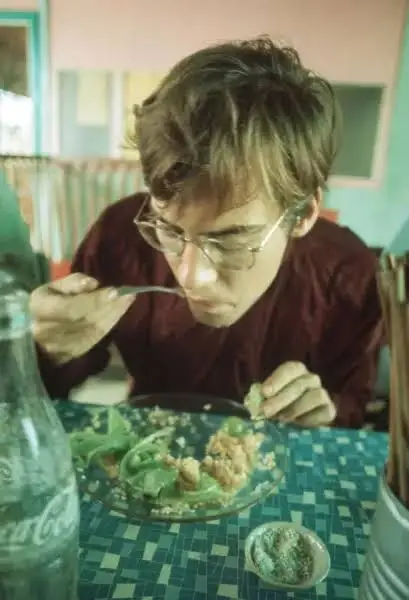
After his service, Steinbeck IV returned to Vietnam as an independent journalist. On Cồn Phụng, the Coconut Monk invited him to stay and gave him a begging bowl and the community’s clothing. The young American settled in a tiny hut built on an old river barge and began calling Nam his spiritual father.
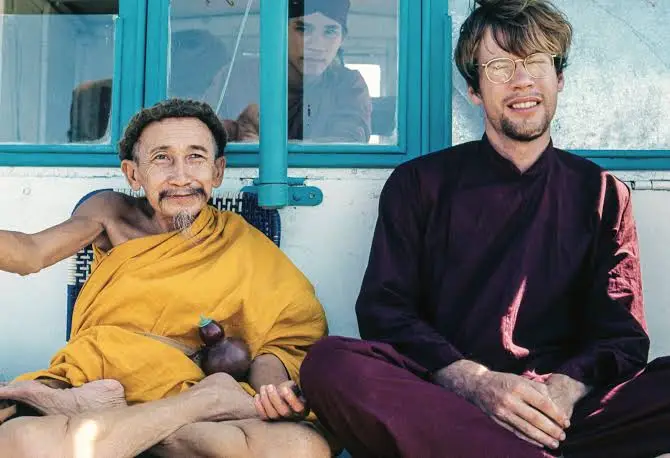
Through Steinbeck, his friends — reporters and war photographers — began arriving on the island. AP, UPI, Time, Newsweek, CBS, BBC, French television and National Geographic learned about the Coconut Monk. He was photographed by Richard Avedon, one of the leading American photographers of the twentieth century, known for portraits of Marilyn Monroe, Andy Warhol and members of the US political elite. The hero of the Mekong Delta, coconut in hand, joined that gallery of famous faces.
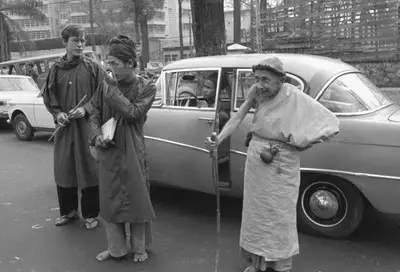
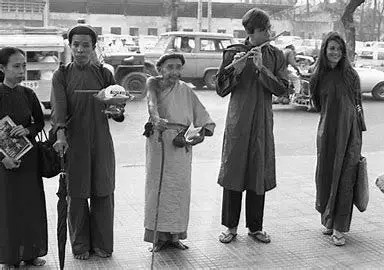
Nam quickly realised that the foreign press could carry his ideas to places where the monk himself was not allowed to go. One day he asked Steinbeck to gather correspondents in Saigon’s Chinatown. He wanted the coming demonstration to be noticed. The monk arrived for the meeting in a 1954 Buick Century with its roof painted saffron and announced that the next day he would travel to the presidential palace and then to the US Embassy.
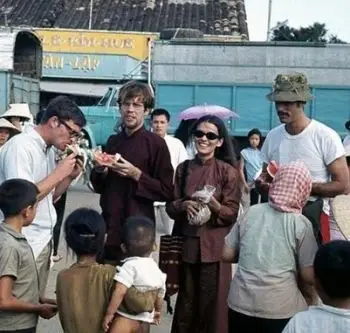
He carried a coconut and interpreted the three dark “eyes” at its blunt end as a sign of peace, although every coconut has such indentations. When the small procession approached the American embassy, the gates were chained shut, armed soldiers appeared on the roof and helicopters began circling overhead. The short elderly monk sat down on the pavement and began preparing his lunch. Journalists and passers-by gathered around, and the display of military force gradually came to look absurd.
At last a diplomat emerged from the building. He accepted the letter to Lyndon Johnson but refused the coconut: the president of the United States, he explained, could not accept gifts from foreign political figures.
The letter contained a peace plan on a matching scale. Nam asked Johnson to provide twenty large transport aircraft. He intended to use them to carry followers and building materials to the demilitarised zone separating North and South Vietnam. In the middle of the Bến Hải River, the monk wanted to erect a prayer tower, climb it without food or water and station three hundred followers on each bank. They would pray for seven days and seven nights — and thereby end the war.
The South Vietnamese authorities saw the peace demonstration as a political challenge. After the march to the embassy, Nam was returned to Cồn Phụng. In his absence the island was searched and several dozen of his closest followers were detained. Steinbeck recalled patrol boats appearing around the community and tear gas sometimes being dropped onto the platform during prayers.
Nam did not stop the war. But the small community in the middle of the Mekong confronted both sides with an uncomfortable question: what should be done with people who support neither the enemy nor the fighting, but simply refuse to kill?
What remains of the Coconut Kingdom
In 1975, the war ended and Cồn Phụng ceased to exist in its old form. After the country was reunified, the socialist authorities banned the independent Coconut Religion as an unregistered and “superstitious” cult, and the organised community dissolved. Some followers moved away, religious activity stopped, and the structures gradually began to decay.
Nguyễn Thành Nam lived for another fifteen years. He continued to gather supporters and tried to return to public activity, repeatedly bringing him into conflict with the authorities. In May 1990, local officials demanded an end to unregistered religious activity. Followers resisted and a clash began. According to one version, a disciple pulled Nam too sharply while trying to bring him out to the officials; the frail elderly monk fell, suffered a severe head injury and died in hospital the following day. The circumstances of his death have never been reliably established.
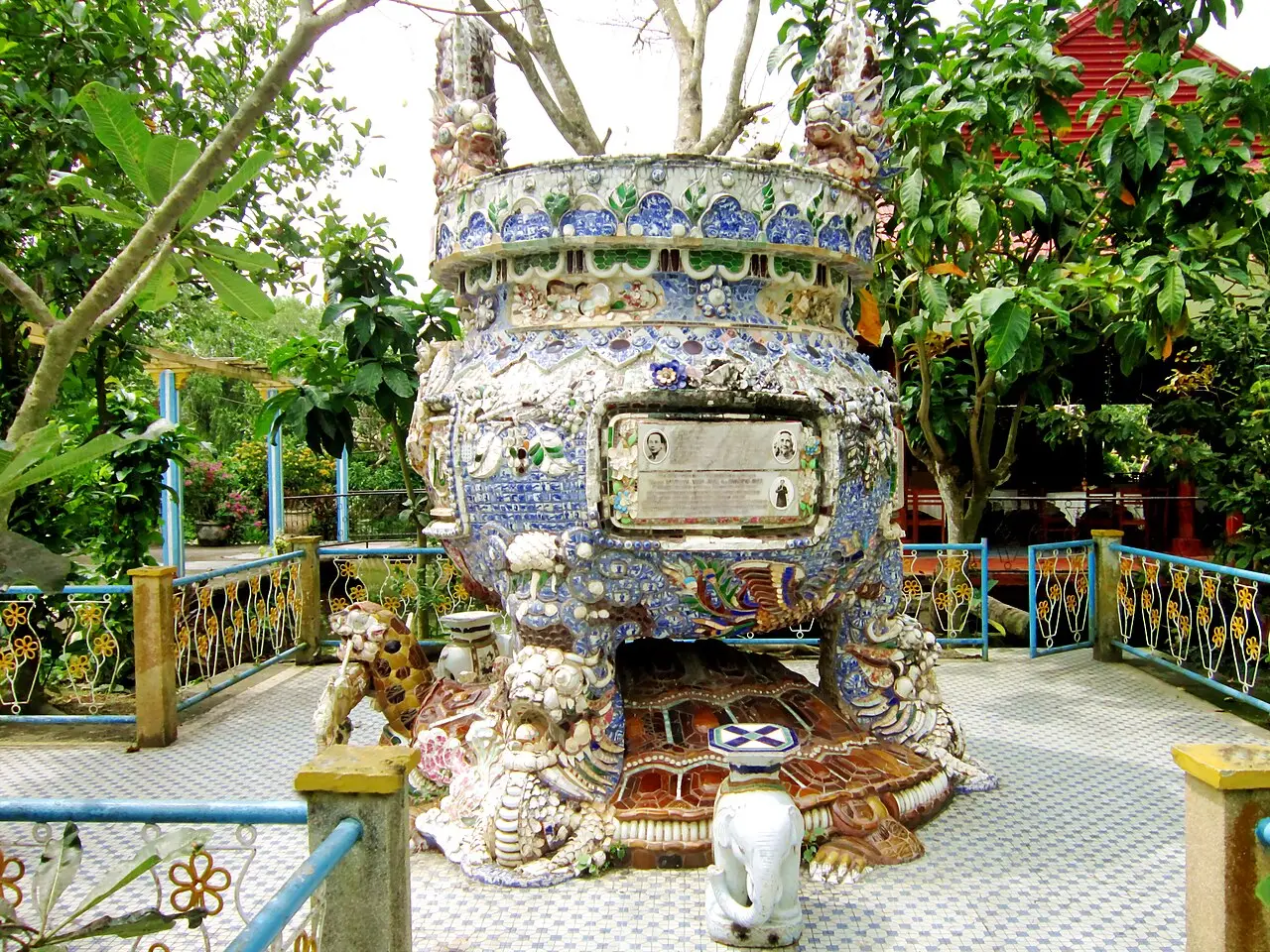
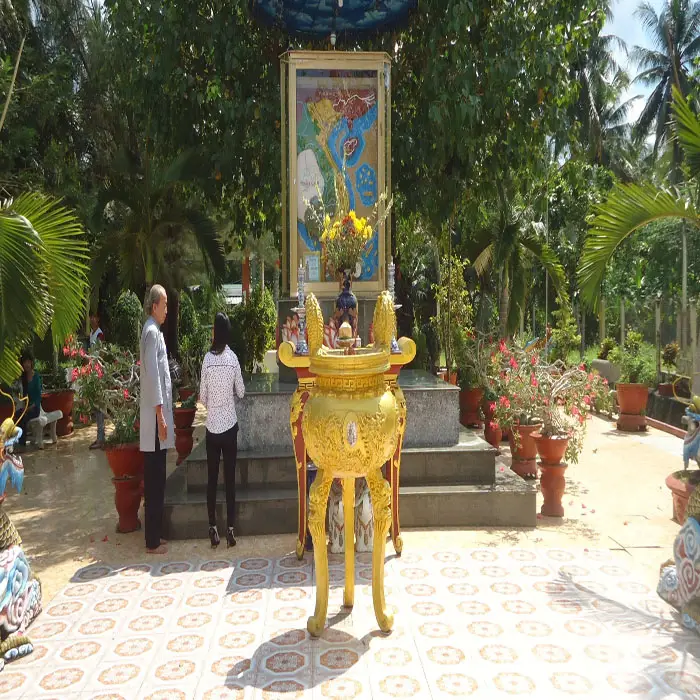
Today, the Nine Dragons courtyard, the Peace Tower and parts of the Nam Quốc Phật Pagoda survive on Cồn Phụng. A tourist complex operates around them. Visitors arrive by boat from Mỹ Tho and Bến Tre, taste coconut sweets, watch souvenirs being made from shells, photograph the dragons and hear a short story about the strange monk.
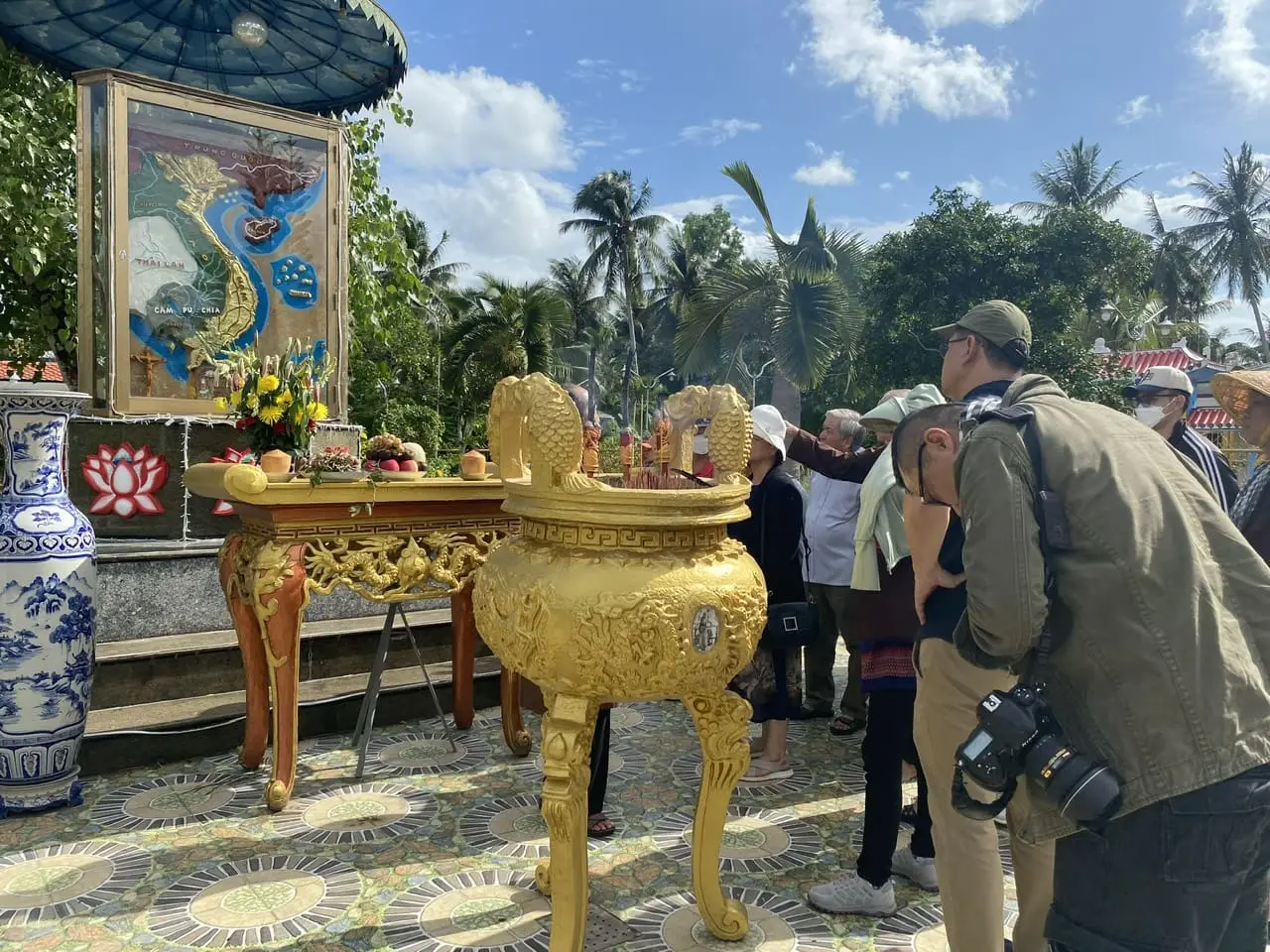
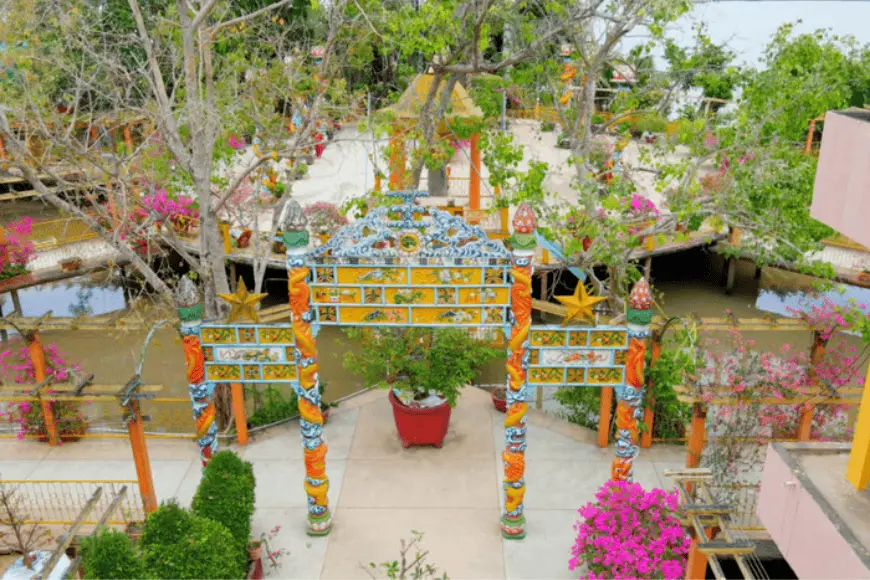
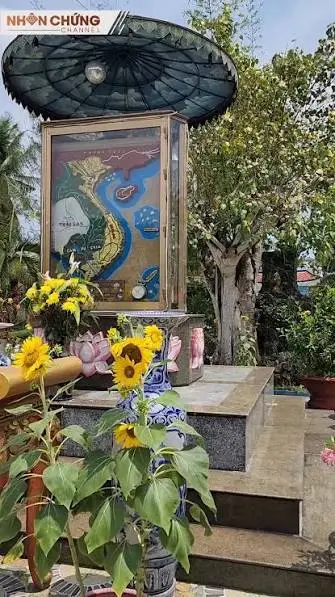
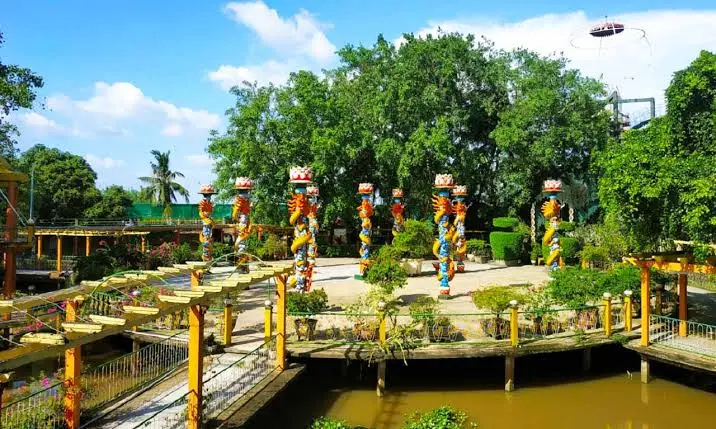
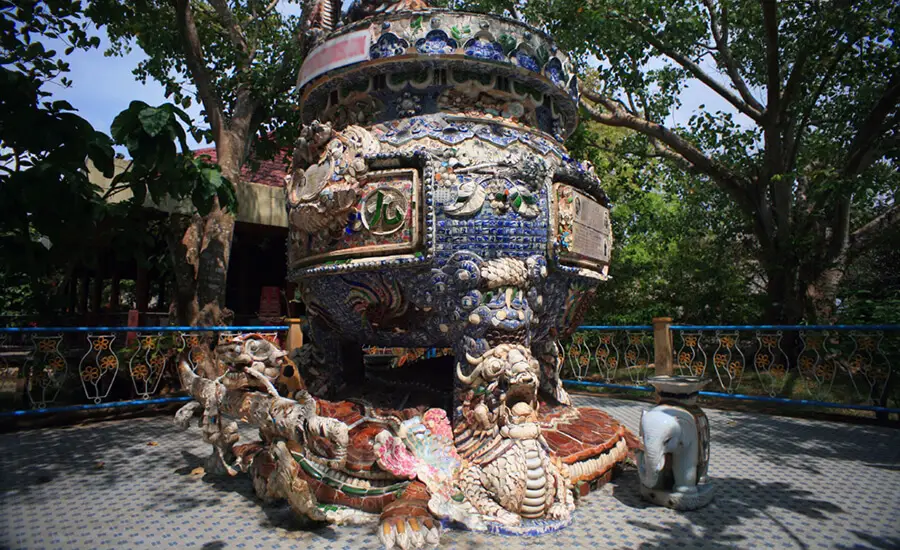
It is difficult to reconcile the quiet tourist ruins with the fact that hundreds, perhaps thousands, of people once lived here. They gave up meat, marriage, music, fashion and weapons; they grew food, worked with coconuts and waited for the war to end. Tracer rounds flew above the island while bells made from shell casings rang from its towers.
Now these structures resemble scenery left behind after an exceptionally strange performance. Yet the map of divided Vietnam, the nine dragons and the metal of the shell casings remind us that the Coconut Kingdom was not built for the sake of a picturesque legend. Its residents seriously tried to create a place where war would no longer determine how a person lived.
Comments
Read also
All articles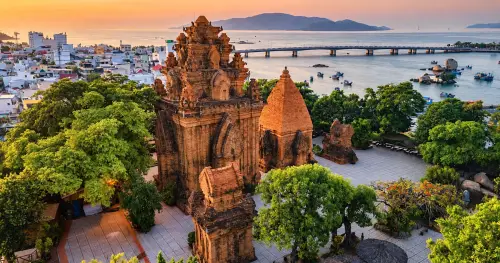
Po Nagar Towers in Nha Trang: the goddess who outlived her kingdom
The story of the Mother of the Land and why people still bring her offerings.
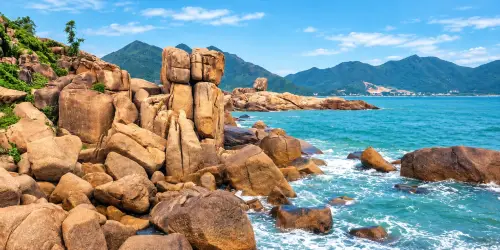
Nha Trang Rock Garden: legends and a seaside walk
A giant paw print and two rocks said to be lovers turned to stone.
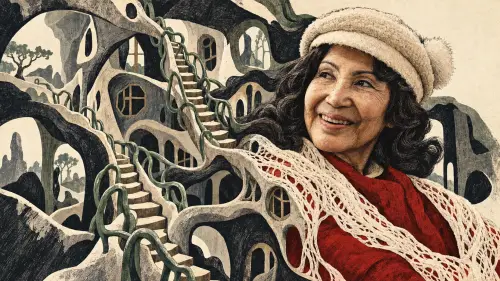
A hotel of fantasies: how a Vietnamese revolutionary’s daughter built Crazy House
Concrete trees, family keepsakes and a building project that became a life’s work.
Hue, Da Nang and Hoi An in 5–7 Days: A Practical Central Vietnam Itinerary
Hue, Da Nang and Hoi An are close enough to combine in one trip, but they should not be treated as three similar stops. Hue…
Mekong Delta: How to Plan Your Trip and What Is Actually Worth Seeing
The Mekong Delta is not a single attraction near Ho Chi Minh City. It is a huge region of rivers, canals, rice fields, orchards and…
The “Long-Haired Army”: the story of Vietnam’s first female general
Women in southern Vietnam arrived at government offices with their entire families and spent weeks demanding the withdrawal of troops. One of the movement’s organisers…