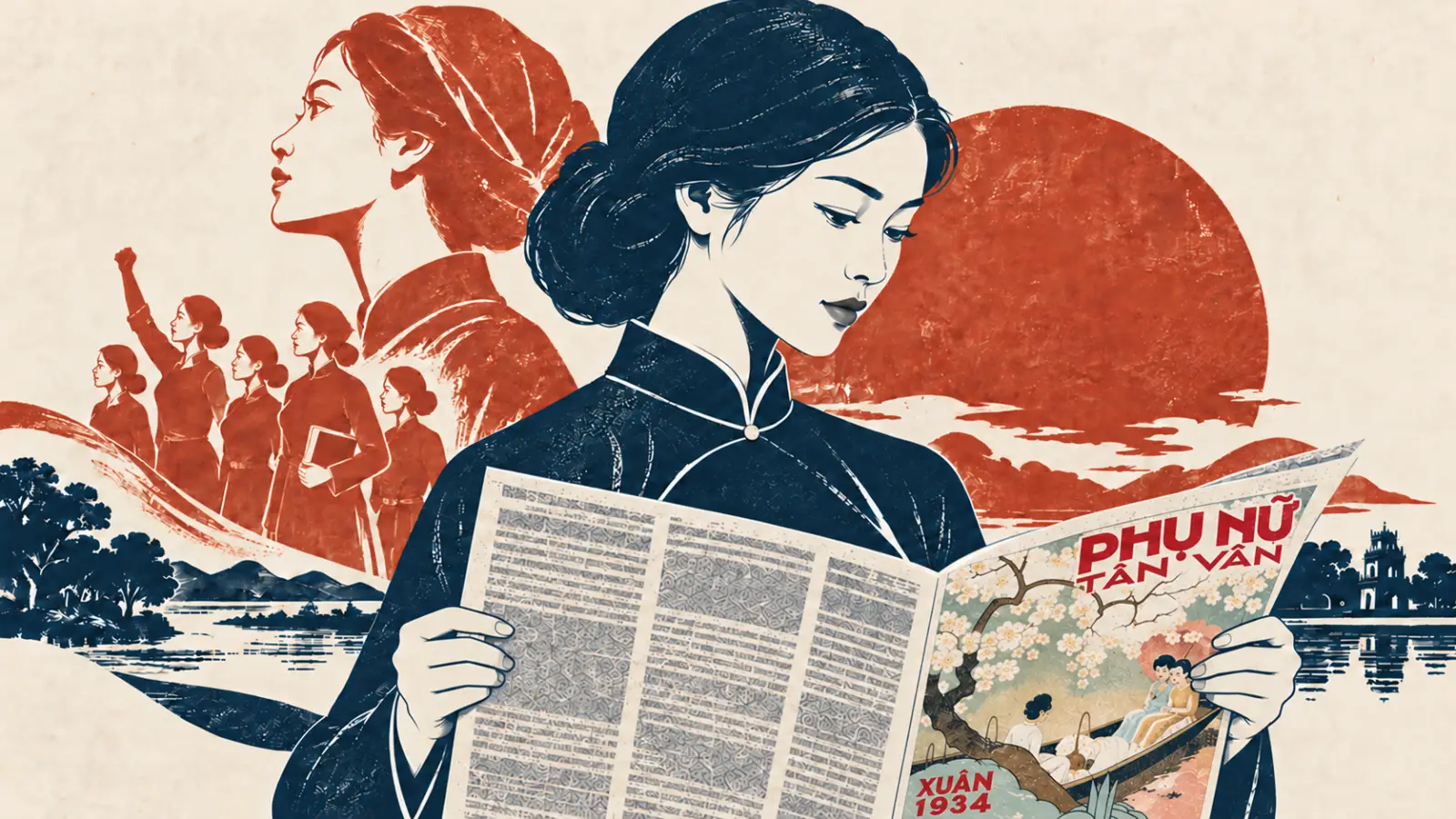
Why Vietnam has two Women’s Days: the women who fought for rights and independence
In Vietnam, women are celebrated twice a year: on March 8 and October 20. In both spring and autumn, women receive flowers and gifts, along with warm wishes. The celebrations may look similar, but they have different origins.
March 8 grew out of the international movement for women's rights: the right to vote, fair pay, and better working conditions. October 20 has a specifically Vietnamese starting point: the founding of a women's union whose history dates back to 1930. Here the struggle for equality became intertwined with the struggle for independence from France. The story began long before festive bouquets, including in the pages of a Saigon newspaper that asked what a woman's life could become.
A newspaper for a new life
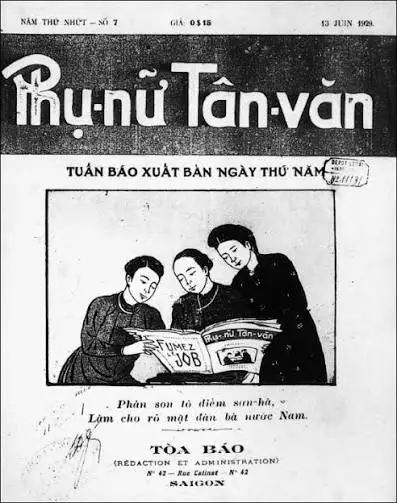
In May 1929, the first issue of Phụ nữ Tân văn, or “Women's News,” appeared in Saigon. It was founded by Cao Thị Khanh. Its cover showed three young women, from northern, central, and southern Vietnam. Every Thursday, readers were offered a new issue with stories, household advice, and articles about matters that concerned women.
Alongside domestic matters, it discussed questions that could provoke serious arguments within families. Must a widow remain alone for the rest of her life? Why should she be barred from marrying again? The newspaper's writers challenged that prohibition and argued for her right to start a new family. In a women's publication, there was room to ask who got to decide how a woman should live.
The newspaper defended the right to education just as insistently. Its writers compared knowledge to food: if the body needs nourishment, the mind needs education. Why was it considered essential for a boy, while a girl was supposedly able to do without it? They proposed opening schools for girls, teaching in Vietnamese, and publishing inexpensive or free textbooks.
Even sport caused controversy. To some contemporaries, a woman riding a bicycle or holding a tennis racket was an improper sight. The newspaper objected: exercise was good for health and there was nothing wrong with it. At first people might find it unfamiliar; then they would get used to it. By defending women's participation in sport, the writers also disputed the idea that a woman ought to be weak and fragile.
These debates were taking place in Europe too. People in Vietnam learned about them through the French language, books, and education. Girls attended Franco-Vietnamese schools, and a few were able to continue their studies in France. There they encountered a way of life unlike the one they knew at home. France remained a colonial power, yet ideas of liberty and equality also came from there.
“Women's News” likewise introduced its readers to France through travel accounts and letters sent from there. These offered a chance to compare lives, ask questions, and reconsider familiar rules. Vietnam's struggle for independence did not mean rejecting everything French. Books and ideas could be useful to people who wanted to change life in their own country.
Even supporters of change, however, were not ready to abandon every old belief. The need for women's education, for example, was explained by saying that an educated mother would raise her children better. A woman's right to learn still had to be justified through its benefit to the family.
The discussion of education went beyond newspaper pages. Women began teaching one another. As early as 1927, two years before the first issue of “Women's News,” three sisters from Phật Tích village in northern Vietnam organized classes where women learned to read and write. The sisters themselves also took part in the revolutionary movement for their country's independence.
From hopes to a holiday
For the women in that movement, Vietnam's independence was bound up with hopes of change in their own lives. They wanted education, more rights within the family, and a chance to take part in the country's affairs. To pursue these aims, women joined revolutionary groups and formed their own organizations. The history of one such organization is behind the date October 20.
On October 20, 1930, an anti-imperialist women's organization was established. Today's Vietnam Women's Union traces its history to it. The organization brought together two aims: opposing colonial rule and advancing women's rights.
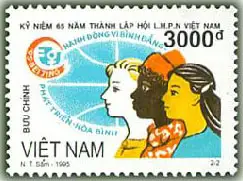
Over the following decades, women's organizations changed their names and worked through war and the division of Vietnam. After reunification, the organizations of North and South joined a single women's union in 1976. October 20, 1930, was chosen as its founding date.
In 2010, the union was turning eighty. To mark the anniversary, its leaders proposed formally recognizing October 20 as Vietnamese Women's Day. The proposal was accepted. A date remembered by members of the movement thus became a holiday for women across the country.
Vietnam continued to mark March 8 as well. Both days are connected with the struggle for women's rights, but the October holiday has its own occasion: the anniversary of a Vietnamese organization. Today mothers, friends, and colleagues receive congratulations in both spring and autumn.
Two pens from Paris
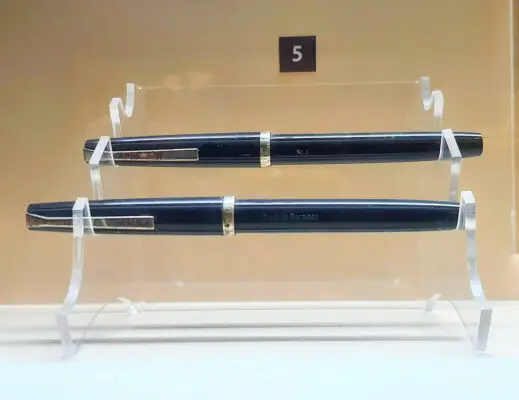
In the decades between 1930 and the holiday's formal recognition, Vietnam lived through wars, and women's history became part of the country's military and political history. Photographs of women carrying weapons are not the only evidence. The Southern Women's Museum in Ho Chi Minh City holds two pens donated by Nguyễn Thị Bình, who took part in the negotiations leading to the 1973 Paris Peace Accords.
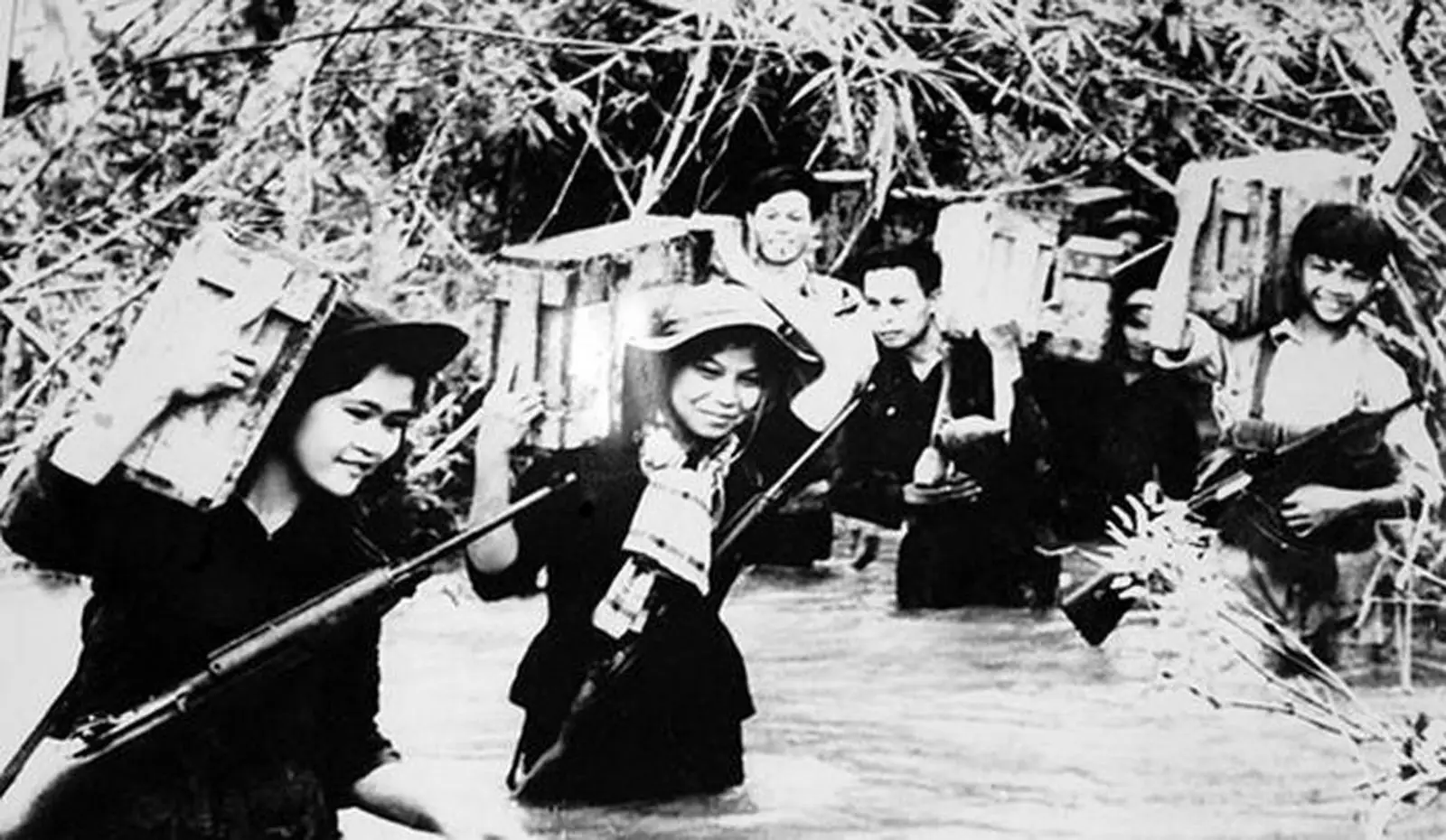
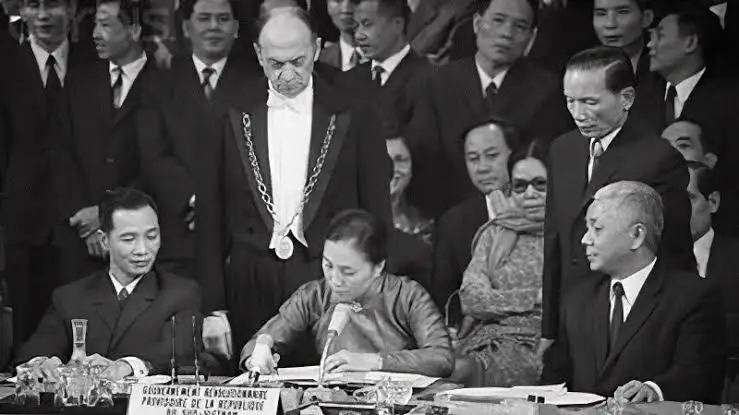
She arrived in Paris in 1968 as deputy head of the delegation of the National Liberation Front of South Vietnam. She later became foreign minister of the Provisional Revolutionary Government of the Republic of South Vietnam and led its delegation. Behind the long titles lay a specific role: she represented one side in negotiations over the future of a country at war.
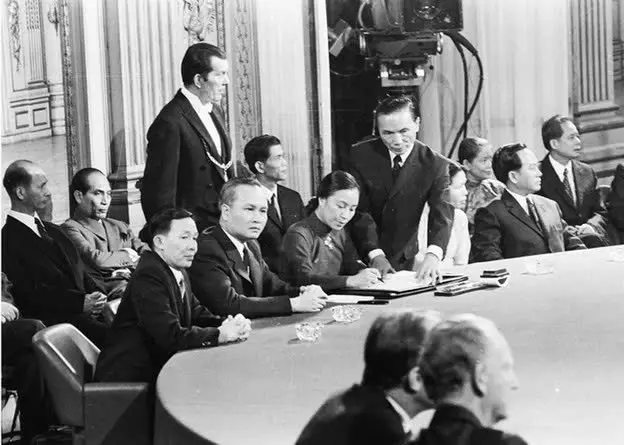
The negotiations lasted almost five years. On January 27, 1973, the agreement on ending the war and restoring peace in Vietnam was signed. Her signature appeared on the document too.
In 1985, Bình gave the museum two pens used at the signing. The museum's description of one records the material of its barrel, its German manufacture, and its length: 13.4 centimeters. An ordinary black pen becomes precise evidence of a woman's part in an event usually recalled in terms of states, armies, and international treaties.
Letters from France
While Nguyễn Thị Bình was negotiating in Paris, other women in France were collecting money and warm clothes for Vietnam. The war against France had ended, but the country still had no peace: American troops were now fighting there. French women who opposed that war sent Vietnamese women parcels and letters of support.
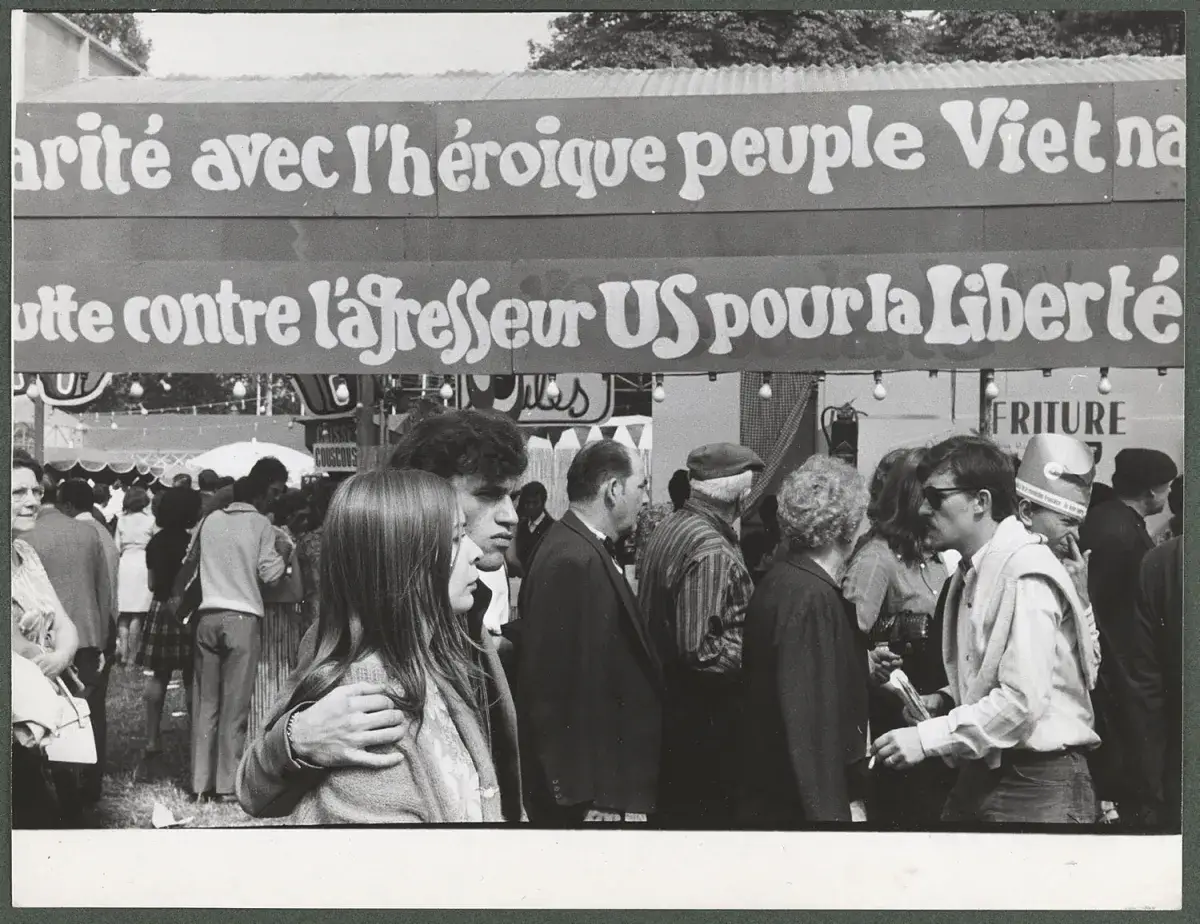
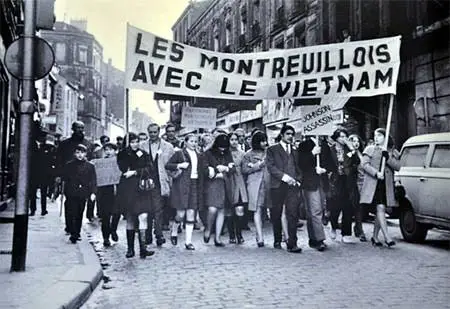
The letters began before the Paris negotiations. From 1965, women in the antiwar movement organized “white nights” around March 8: they gathered to write to Vietnamese women and to draft appeals against the war. Women's Day gave them a reason to support people who had little time for celebrations.
Practical help accompanied the letters. In 1968, the Union of French Women took part in the “Solidarity Train for Vietnam” campaign: women raised money, knitted, and sent warm clothing. The Vietnamese museum has preserved photographs and documents sent that year by a women's association in the French town of Bobigny. Its collection also includes a postcard that French women sold on March 8 to raise money for Vietnam.
Read also: “The Long-Haired Army”: the story of Vietnam's first woman general.
Four digits on a postcard
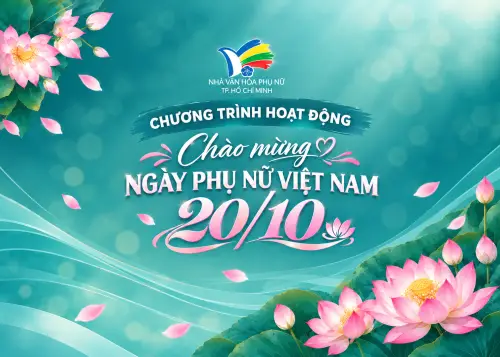
Today, holiday cards carry very different wishes. Just four digits—“20/10”—are enough for people in Vietnam to understand the occasion. The holiday's full name is Ngày Phụ nữ Việt Nam, Vietnamese Women's Day. On this day, mothers, grandmothers, friends, teachers, and colleagues receive flowers and gifts.
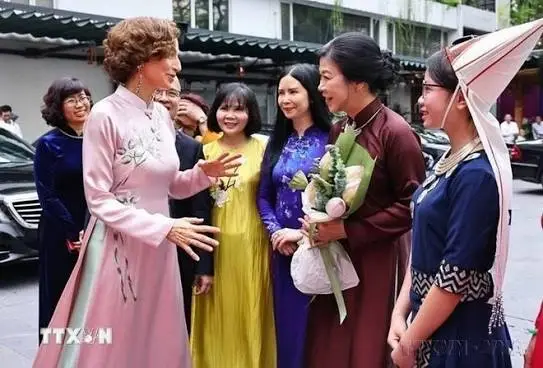
Flower shops have high hopes for the day, although sales are not equally strong every year. In October 2024, sellers in Ho Chi Minh City complained that customers were saving money and choosing cheaper bouquets. Shops were cautious too: they ordered fewer roses for fear they might not sell them before the holiday.
At kindergartens, children make gifts themselves. That same October, Kinderland pupils made cards for their mothers and grandmothers: they used drinking straws to print flowers on paper and added words of love. Meanwhile, parents prepared greetings for the teachers, bringing flowers and treats.
In the evening, when mothers and grandmothers came to collect the children, the children handed over their work.
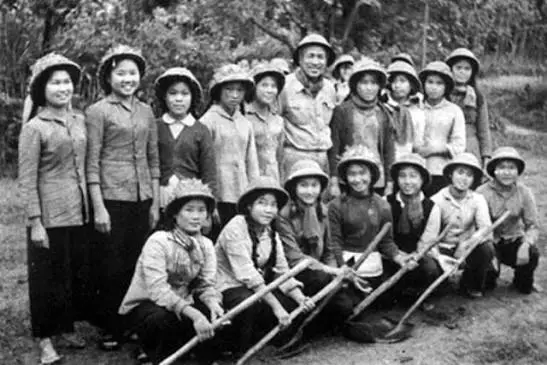
Behind the flowers and congratulations of Vietnam's October 20 lies the memory of several generations of women. They joined underground organizations, fought, worked in the fields, and raised children in years when even the next day was uncertain. Some entered textbooks; others' names survive only in family memories. The holiday honors both, including women whose hard daily work rarely earned an award.
So if you are in Vietnam on October 20, congratulate the Vietnamese women you know—a colleague, neighbor, or teacher. You need not buy a large bouquet: a few warm words are welcome too. It means a great deal when someone from another country remembers your holiday and understands why it is celebrated.
Comments
Read also
All articles
How to earn from tourism services in Vietnam: partners, commissions and first customers
Choose a city and tourism niche in Vietnam, find local providers, agree commissions, publish a clear listing and learn how to handle your first customer…

Where to Live in Vietnam for a Month: Da Nang, Nha Trang, Ho Chi Minh City, Hanoi, or Da Lat
Choose a Vietnam base for a month by daily life: sea, work, districts, season, budget and a one-week housing test.

A hotel of fantasies: how a Vietnamese revolutionary’s daughter built Crazy House
Concrete trees, family keepsakes and a building project that became a life’s work.

Best Beaches in Vietnam: Where to Go by Month and Which Destination to Choose
Vietnam has almost 3,300 km of coastline, but there is no single nationwide “beach season”. In winter, the most reliable beach weather is usually found…

The Last Turtle of Hoan Kiem: Hanoi’s Symbol and a Legend Come to Life
How Le Loi received a magic sword, why Hanoians called the lake’s giant inhabitant the Venerable Turtle, and what became of the last of her…

Blood Oaths, Fire-Breathing Dragons and Hidden Mechanisms: The Story of Vietnamese Water Puppetry
How a rainy-season village pastime reached the imperial court and won over audiences around the world.