
Where to Live in Vietnam for a Month: Da Nang, Nha Trang, Ho Chi Minh City, Hanoi, or Da Lat
If you are coming to Vietnam not for a week but for at least a month, you should choose a city differently. On a short holiday, you can tolerate a noisy street, daily taxi rides, or the lack of a good supermarket nearby. After three weeks, all of that becomes part of everyday life.
If you want the short answer:
Da Nang — the most balanced option if you want the sea, a proper city, and a relatively relaxed pace.
Nha Trang — if your main priority is to live literally next to the beach without moving to an island or a small resort town.
Ho Chi Minh City — if work, meetings, restaurants, services, and big-city energy matter more than the sea.
Hanoi — if you do not need the beach and care more about urban life, culture, food, and more distinct seasons.
Da Lat — if you want cooler weather, greenery, and a quieter routine, and you are ready to give up the sea and some of the options of a major city.
But each of these places has drawbacks that may not matter during a one-week trip and become much more noticeable over a month. Those details usually determine whether you actually enjoy living there.
Quick comparison
| City | Best for | Main advantage | Main drawback |
|---|---|---|---|
| Da Nang | First month in Vietnam, remote work, sea | Strong balance between beach and normal city life | Highly dependent on the season |
| Nha Trang | Living by the sea, walking, daily beach access | Very compact coastal core | Central areas are touristy and can be noisy |
| Ho Chi Minh City | Work, business, networking, urban entertainment | The widest choice of almost everything | Heat, traffic, distances, and no beach |
| Hanoi | Culture, food, city life | Strongest urban character | Very hot and humid in summer, surprisingly cool in winter |
| Da Lat | Quiet work, cooler climate, nature | Climate and slower pace | Hills, rain, no sea, fewer big-city services |
If I had to choose one city blindly for a first month in Vietnam, I would usually start with Da Nang or Nha Trang — but only if the weather suits the coast during the month you are going.
Da Nang: the best balance between the sea and normal city life
Da Nang works well because you do not have to choose between a beach resort and a real city.
You can go to the sea in the morning, sit down with a laptop in a café ten minutes later, order delivery, go to a supermarket or gym, and then head into the regular urban part of Da Nang in the evening. The international airport is right inside the city, while Hoi An, Hai Van Pass, Son Tra Peninsula, and Hue are all within easy reach for weekend trips.
For a one-month stay, that convenience matters more than it may seem. The fewer everyday tasks that require a separate journey, the easier the city is to live in.
Where to stay
If the sea should be part of your daily routine, start with Mỹ An / An Thượng and the area around My Khe Beach. There are plenty of apartments, cafés, restaurants, gyms, and services aimed partly at foreigners.
If the beach is less important and you want a more ordinary urban environment, look west of the Han River, closer to the city centre.
Do not automatically choose a first-line apartment. A nice sea view can come with road noise, construction next door, and the fact that you still need to travel elsewhere for basic shopping.
What may become annoying after a month
Da Nang is not a small city, but in terms of events, restaurants, specialised shops, and professional contacts it is still noticeably behind Ho Chi Minh City and Hanoi.
The second issue is weather.
Vietnam Tourism notes that spring and early summer are usually especially good for Da Nang. Summer tends to bring relatively little rain and calmer seas, while from November to February the chances of prolonged rain and grey weather rise considerably.
If you are choosing Da Nang specifically for daily beach life, the difference between a good season and several wet weeks in a row is huge.
Who I would choose Da Nang for
If you are trying a one-month stay in Vietnam for the first time, work remotely, and want both city life and the sea, Da Nang is the safest all-round choice of these five.
But not year-round.
Nha Trang: the easiest option if you want to live right by the sea
Nha Trang works differently.
The sea is not a separate part of the city that requires a special trip. The long waterfront runs directly along the central districts, so it is genuinely possible to rent an apartment where the beach, cafés, shops, and restaurants are all within walking distance.
For a month by the sea, that is one of Nha Trang’s biggest advantages.
Unlike an island resort, the city still has normal urban infrastructure: markets, shops, hospitals, delivery services, gyms, cafés, a railway station, and Cam Ranh Airport outside the city.
Where to stay
The obvious choice is the central area along Trần Phú and the streets behind the waterfront.
This gives you the widest choice of food and services, but also more tourists, traffic, and evening noise.
For a quieter atmosphere, look north of the centre toward Hòn Chồng. The sea is still close, but the area feels less like the heart of a tourist district.
Before committing to a month-long rental, walk around the area in the evening. In Nha Trang, two apartments five hundred metres apart can offer completely different experiences: one may be surrounded by bars, hotels, and tour buses, while the other sits on a normal residential street.
Nha Trang or Da Nang
This is probably the most useful comparison in the whole article.
Choose Nha Trang if you want the simplest possible daily life built around the sea: step outside, and within a few minutes you have the beach, promenade, and most of the places you use every day.
Choose Da Nang if you want a larger, more varied city, more space, and better access to trips around central Vietnam.
Nha Trang feels more compact and resort-oriented. Da Nang feels more like a full-scale city that happens to have a huge beach.
What about the weather
Nha Trang has its own seasonal pattern. Vietnam Tourism identifies the main rainy period as roughly September to December, with many sunny days through much of the rest of the year.
For a one-month stay, though, rain is not the only factor. If swimming matters, check sea conditions for your exact period as well: waves and water clarity can change more dramatically than average air temperatures suggest.
Who I would choose Nha Trang for
If the main reason you want to live in Vietnam is to have the sea a few minutes from home every day, Nha Trang is one of the most convenient large cities in the country.
Ho Chi Minh City: if you need a big city, not a resort
Ho Chi Minh City is a completely different scenario.
There is little point in choosing it as a compromise between work and a beach holiday: there is no sea. But for almost everything related to big-city life, it offers more options.
Restaurants, events, international companies, specialised shops, delivery, private services, nightlife, professional meetings — this is where the choice is usually widest.
Vietnam Tourism describes Ho Chi Minh City as the country’s economic centre and highlights its constant energy, modern urban environment, food scene, and entertainment options.
Where to stay
For a first month, you do not necessarily need to live right in the centre.
District 1 is convenient if you want to walk out of your building and immediately be surrounded by restaurants, attractions, and activity. But it is not always the best balance of price, noise, and space.
Bình Thạnh and Phú Nhuận work well as more ordinary urban districts with relatively easy access both to the centre and the airport.
Thảo Điền is popular with foreigners because of its restaurants, cafés, international services, and more relaxed environment, but it makes most sense if a large part of your daily life is also based in that area.
The main rule in Ho Chi Minh City: choose your daily route, not just your apartment
A common mistake is to find a beautiful cheap apartment and then discover that every working day requires crossing half the city.
A short distance on the map can become a serious everyday problem in heat, rain, and rush-hour traffic.
If you already know where your office, coworking space, friends, gym, or regular activities are, choose housing around those places.
What may wear you down
Ho Chi Minh City stays warm almost all year. The strongest heat usually comes in April and May, while the rainy season generally runs from May to November.
Rain does not mean that the city becomes unlivable for half the year; often it is simply an intense tropical downpour for part of the day. But the combination of heat, humidity, traffic, and long distances is much more noticeable after a month than during a three-day city break.
Who I would choose Ho Chi Minh City for
If a month in Vietnam means normal life and work rather than an extended beach holiday, and you enjoy the energy of a metropolis, Ho Chi Minh City gives you more opportunities than the other four cities.
Hanoi: if the city matters more than the sea
Hanoi makes sense not because it is “the most convenient”, but because you specifically want to live in Hanoi.
The city itself becomes the main content of the month: old neighbourhoods, lakes, small streets, street food, cafés, museums, and much stronger seasonal changes than in southern Vietnam.
Vietnam Tourism describes Hanoi as the cultural centre of the country and highlights the combination of historic neighbourhoods with a modern restaurant and coffee scene.
Where to stay
Hoàn Kiếm is convenient for a first introduction and walking, but some streets around the Old Quarter are too noisy for a full month of everyday life.
Tây Hồ, around West Lake, offers more space, cafés, restaurants, and housing popular with foreigners.
Ba Đình is a calmer compromise between central location and ordinary city living.
It is better to choose a specific street rather than a district name. In Hanoi, the difference between a noisy arterial road and a quiet lane just around the corner can be enormous.
The weather really matters here
Hanoi has a real winter.
From December to March it can be cool, damp, and grey, with temperatures sometimes dropping to around 10 °C. Summer, by contrast, is hot, humid, and rainy. Vietnam Tourism points to periods such as September to November as especially pleasant for walking, when the weather becomes cooler and drier.
That means an apartment without decent heating or humidity control in winter, or with weak air conditioning in summer, is not a minor issue.
Who I would choose Hanoi for
If you want not a beach month but a month inside Vietnamese urban culture, I would choose Hanoi before Da Nang or Nha Trang.
But this is also the city where your travel dates matter especially strongly before you even start looking for an apartment.
Da Lat: a completely different Vietnam
Da Lat stands apart from the rest.
It lies in the Central Highlands at roughly 1,500 metres above sea level, so the climate is noticeably cooler than in most major Vietnamese cities. There are pine forests, hills, lakes, coffee farms, and a very different pace of life.
Vietnam Tourism describes Da Lat as a cooler alternative to coastal destinations. The rainy season runs roughly from April to November, and between November and January the evenings can be cool enough to need warmer clothes.
Why a month can work well here
If your work requires concentration and constant tropical heat is tiring, Da Lat’s climate can be its biggest advantage.
Cafés, cool mornings, walks around the lake, trips into the surrounding hills, and quieter evenings create a good routine for someone who does not need constant urban activity.
But Da Lat only looks walkable on the map
The main issue is topography.
Two points may be very close in a straight line, but there can be a long uphill section between them. So an apartment “ten minutes from the centre” may be perfect by scooter or taxi and quite inconvenient on foot.
If you want to live without transport, look closer to Xuân Hương Lake and the central market.
If quiet, views, and nature matter more, there are many options outside the centre, but dependence on transport also increases.
What may become frustrating
Do not think of Da Lat as a cooler version of Da Nang.
There is no sea. The selection of large stores, international services, events, and specialised services is smaller than in Ho Chi Minh City or Hanoi.
And several weeks of rain in a hilly city feel very different from a short tropical shower in the south.
Who I would choose Da Lat for
If you want to spend a month escaping the heat and the big city, working and living more quietly, Da Lat may be the best choice of all five.
If you need new events, business meetings, and a broad range of services every few days, you may get bored.
Which city is cheaper
I would not choose between these cities based only on the average apartment price.
For a one-month stay, four things matter more:
- the exact neighbourhood;
- short-term rental pricing;
- the season;
- how much time and money daily transport will cost.
On average, a private apartment and ordinary life in central Hanoi and Ho Chi Minh City usually cost more than a comparable setup in Da Nang. But a good new apartment by the sea in Da Nang or Nha Trang during peak season can easily reverse that picture.
So detailed numbers are better calculated for your actual dates. Our separate Vietnam monthly budget guide includes estimates for housing, food, utilities, transport, and deposits as of September 2026.
If you do not want to rent a scooter
This changes the ranking quite a lot.
For walking-based daily life, I would roughly order the cities like this:
Nha Trang — one of the easiest choices if you live near the central waterfront.
Da Nang — very convenient within the right beachside neighbourhood, but the city itself is spread out.
Hanoi — some districts are excellent for walking, but the city as a whole is not.
Ho Chi Minh City — you can live comfortably inside your own neighbourhood, but full use of the city still requires taxis, public transport, or other rides.
Da Lat — distances are short, but hills sharply reduce real walkability.
So instead of asking “Do I need a scooter in Vietnam?”, a better question is: Can I choose a neighbourhood where 80% of my daily needs are within fifteen minutes of home?
If the answer is yes, a one-month stay becomes much more comfortable.
How to check an apartment before renting for a month
Beautiful photos are not enough.
Before paying for a long stay, test the internet through a real video call, listen to the apartment in the evening, check hot-water pressure and the air conditioner, and ask how electricity is billed.
Also ask whether the price includes:
- water and internet;
- cleaning;
- parking;
- electricity;
- deposit;
- commission;
- final cleaning;
- early departure.
If possible, spend the first few days in a hotel or serviced apartment and look for a monthly rental after arriving. Over a month, the quality of the specific building usually affects everyday life more than the difference between two neighbouring districts.
Before paying, take a closer look at how to check the apartment, rental agreement and deposit refund terms.
So which city should you choose
If everything is reduced to a few scenarios:
First month in Vietnam + sea + remote work — Da Nang.
The beach should literally be part of everyday walking life — Nha Trang.
Work, networking, business, restaurants, and the widest urban choice — Ho Chi Minh City.
Culture, food, walking, and a real major city without needing the sea — Hanoi.
Cooler weather, quiet, and focused work without constant city noise — Da Lat.
There is no universally best city among them.
In fact, the same person could reasonably choose Da Nang in April, Nha Trang in summer, Hanoi in autumn, and Da Lat during a hot period, simply because season affects quality of life in Vietnam more than the map suggests.
For a one-month stay, I would therefore choose not “the best city in Vietnam”, but a combination of three things: weather for your exact dates, a neighbourhood that works for daily life, and what you will actually be doing five days out of seven.
Only after that would I choose the apartment with the beautiful view.
Sources: Vietnam Tourism — destination and climate materials for Da Nang, Nha Trang, Ho Chi Minh City, Hanoi, and Da Lat; Anilau’s separate monthly budget guide, updated for September 2026.
Comments
Read also
All articles
How to Find What You Need in Vietnam: Why Post a “Demand” Listing
When you need to find an item, a place to live, a tradesperson or a service in Vietnam, the first reaction is usually obvious: open…

Da Nang Events
Discover Da Nang fireworks, film festivals, live music and community meetups. Browse current event announcements or list your own event for free.

The “Long-Haired Army”: the story of Vietnam’s first female general
Women in southern Vietnam arrived at government offices with their entire families and spent weeks demanding the withdrawal of troops. One of the movement’s organisers…

Blood Oaths, Fire-Breathing Dragons and Hidden Mechanisms: The Story of Vietnamese Water Puppetry
How a rainy-season village pastime reached the imperial court and won over audiences around the world.

Vietnamese Coffee: How a French Import Became a National Habit
How coffee arrived in Vietnam, why the country became the world’s second-largest exporter, which drinks to order, and where to try the best coffee in…
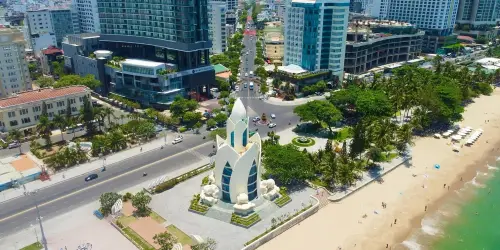
Tram Huong Tower in Nha Trang: why it is not a lotus and what is inside
Why the tower changed colour, what was displayed inside and how to visit.