How to Rent an Apartment in Vietnam: Contract, Deposit, Utilities and What to Check Before Paying
Renting an apartment in Vietnam is usually easier than in many European countries. Landlords rarely ask for a credit history, salary statements or references from previous landlords, and many apartments come fully furnished. A lease can often be arranged quickly.
The downside is that the market is far less standardised. The same apartment may be advertised by several agents at different prices, old listings often remain online after the property has already been rented, photos may show a different unit or a showroom, and rules around deposits, repairs and utility charges vary significantly even within the same building.
That is why a good rental in Vietnam starts not with the contract, but with checking the exact property and the person who is about to receive your money.
Arrive first, rent long-term afterwards
If you are not yet in Vietnam, it is usually safer to book a hotel or short-term apartment for a few days and look for long-term housing after arrival. Sending a full one-month deposit for an apartment you have seen only in photos or during a video call creates an unnecessary risk.
A recurring recommendation in tenant discussions is simple: do not pay the full security deposit before seeing the exact apartment and reading the lease.
A small holding deposit does exist in competitive buildings. It is sometimes used to take a unit off the market while the contract is being prepared. If you agree to one, there should be written confirmation stating the exact apartment, amount paid, agreed monthly rent, intended lease term and the conditions under which the holding deposit is refundable or forfeited.
Treat an online listing as an invitation to inspect a property, not as proof that the description is accurate. Tenants in Hanoi, Da Nang and other cities regularly report duplicate listings, apartments that have already been rented and agents advertising units they have never personally inspected.
Check the agent
Since 2025, Vietnam’s rules for real-estate brokers have become stricter. Under the 2023 Law on Real Estate Business, an individual broker must hold a professional certificate and work through a real-estate brokerage company or another legally recognised real-estate business rather than simply operate independently.
In practice, Facebook groups, messaging apps and local property pages still contain many people who simply show apartments and call themselves agents. That does not automatically mean they are dishonest, but if someone is asking you to transfer a large deposit, it is reasonable to ask for the company name, legal entity and the basis on which they are receiving your money.
For ordinary long-term rentals, the agent’s commission is often paid by the landlord rather than the tenant. If you are asked to pay a full month to the landlord as a deposit and another full month directly to the agent, do not assume this is a universal Vietnamese norm. Ask exactly what the payment is for and whether it appears in the documentation.
Who is actually renting the apartment to you?
The most important question before payment is not whether the agent seems friendly. It is whether the party signing the lease has the right to rent out the specific property.
Vietnamese housing law does not make presentation of a property ownership certificate a mandatory condition for every residential rental transaction, so the simple rule “always demand the pink book” is legally too crude. You should still establish that the person has authority over the apartment.
If the owner signs the lease, ask to see identification and documents that connect that person to the property. Depending on the situation, this may include a property ownership certificate known as a sổ hồng, a purchase agreement, building-management records or other supporting documentation.
If a relative, manager or agent signs instead, ask what authorises them to do so.
Be especially careful with subletting. If the person renting the property to you is themselves a tenant, there should be permission from the actual owner. Vietnamese housing law allows subletting only with the landlord’s consent.
Inspect the exact apartment you are renting
In a building with dozens of similar studios, an agent may offer to show you “the same layout on another floor”. Do not accept that as sufficient if you are paying a deposit for a specific unit.
The apartment number, floor and address should match the contract. If you are told that the actual unit is occupied now but “will look exactly the same”, ask to inspect your unit before making a major payment.
This matters particularly because of humidity and mould. Tenants in Da Nang and other humid coastal cities frequently report apartments that looked excellent in advertisements but had visible mould on walls, ceilings or inside wardrobes when viewed in person.
How to inspect the apartment
Do not just walk in, look at the view and check the bed. A proper inspection should take at least 20–30 minutes.
- Run every air conditioner for at least 10–15 minutes and check whether it genuinely cools, leaks water or produces a strong musty smell.
- Open wardrobes, look under sinks and behind curtains, and inspect wall and ceiling corners for damp smells, mould, fresh spot-painting and signs of old leaks.
- Turn on the shower while another tap is running to test water pressure; separately check the water heater, shower drainage and sewer smells.
- Test the washing machine, refrigerator, cooker, extractor fan, television and any other appliances included in the rental.
- Check windows, balcony doors, locks, mosquito screens, keys, access cards, elevators and hallway lighting.
- If you work remotely, run a speed test from your own laptop and ask whether the apartment has a dedicated internet connection or shares one Wi-Fi network across the building.
A dedicated internet line can matter for remote work. Long-term tenants have reported cases where a shared landlord-provided network became slow in the evenings, while installing a separate Viettel connection solved the problem.
Noise cannot be checked during a daytime viewing
An apartment shown at 14:00 tells you very little about what it sounds like at 07:00 or 23:00.
Before signing a one-year lease, it is worth returning to the building at least once in the evening. Look for karaoke venues, bars, construction sites, schools, restaurant exhaust systems directly below the windows or vacant plots where construction may begin soon.
Unexpected construction is repeatedly mentioned by long-term tenants as one reason not to commit too quickly to a very long lease.
If the apartment faces a swimming pool, gym, elevator lobby or parking entrance, listen from the bedroom with the windows closed.
The air conditioner matters more than the kitchen
In Vietnam, air conditioning is often the biggest electricity consumer in the apartment and one of the most expensive things to repair.
An old non-inverter unit may still cool properly while using noticeably more electricity than a modern inverter model. Ask how old the unit is and who pays for routine cleaning, gas refills, compressor repairs or full replacement.
The phrase “everything is working” does not answer who pays when the air conditioner stops cooling one month after you move in.
Disputes do occur where landlords try to classify almost any repair as the tenant’s responsibility simply because the tenant used the appliance. The division of responsibilities should therefore be written into the lease before move-in.
Electricity: one of the main sources of surprises
Serviced-apartment listings often quote a fixed electricity rate such as 4,000–4,500 VND per kWh. It is so common that many tenants assume this is the standard government residential tariff. It is not.
As of September 2026, EVN’s published household tariff runs roughly from 1,984 to 3,460 VND per kWh before VAT, depending on consumption level. The regulated average retail electricity price after the latest adjustment is around 2,204 VND per kWh before VAT.
Special rules can apply to rented housing. For example, where accommodation is rented for less than 12 months to workers or students and the landlord cannot determine the exact number of occupants, the supplier may apply the third household tariff tier to the entire consumption. Under the current tariff scale, that is about 2,380 VND per kWh before VAT.
From May 2026, administrative penalties also apply where a landlord charges tenants above the permitted residential retail electricity price in cases where household electricity pricing rules apply.
That does not mean every 4,000 VND electricity rate is automatically illegal. A serviced apartment may use a different electricity arrangement, a commercial classification or bundle additional services into the charge.
The practical approach is to ask before signing:
- What electricity tariff applies to this exact apartment, and why?
- Does the apartment have its own meter?
- Can you see the original EVN or supplier bill?
- Does the landlord add any surcharge to the electricity cost?
Arguments about rates around 4,000–4,200 VND per kWh appear regularly in tenant communities, so this is something to clarify before receiving the first bill.
Water, internet, cleaning, parking and management fees
There is no universal monthly amount for these charges.
Water prices vary by locality, parking charges depend on the building, condominium management fees may be included in rent or billed separately, and serviced apartments may include internet or cleaning in the base price.
Instead of asking only “Are utilities included?”, ask for the full monthly cost model in writing: rent; electricity; water; internet; cleaning; parking; management fee; pool or gym charges, if separate.
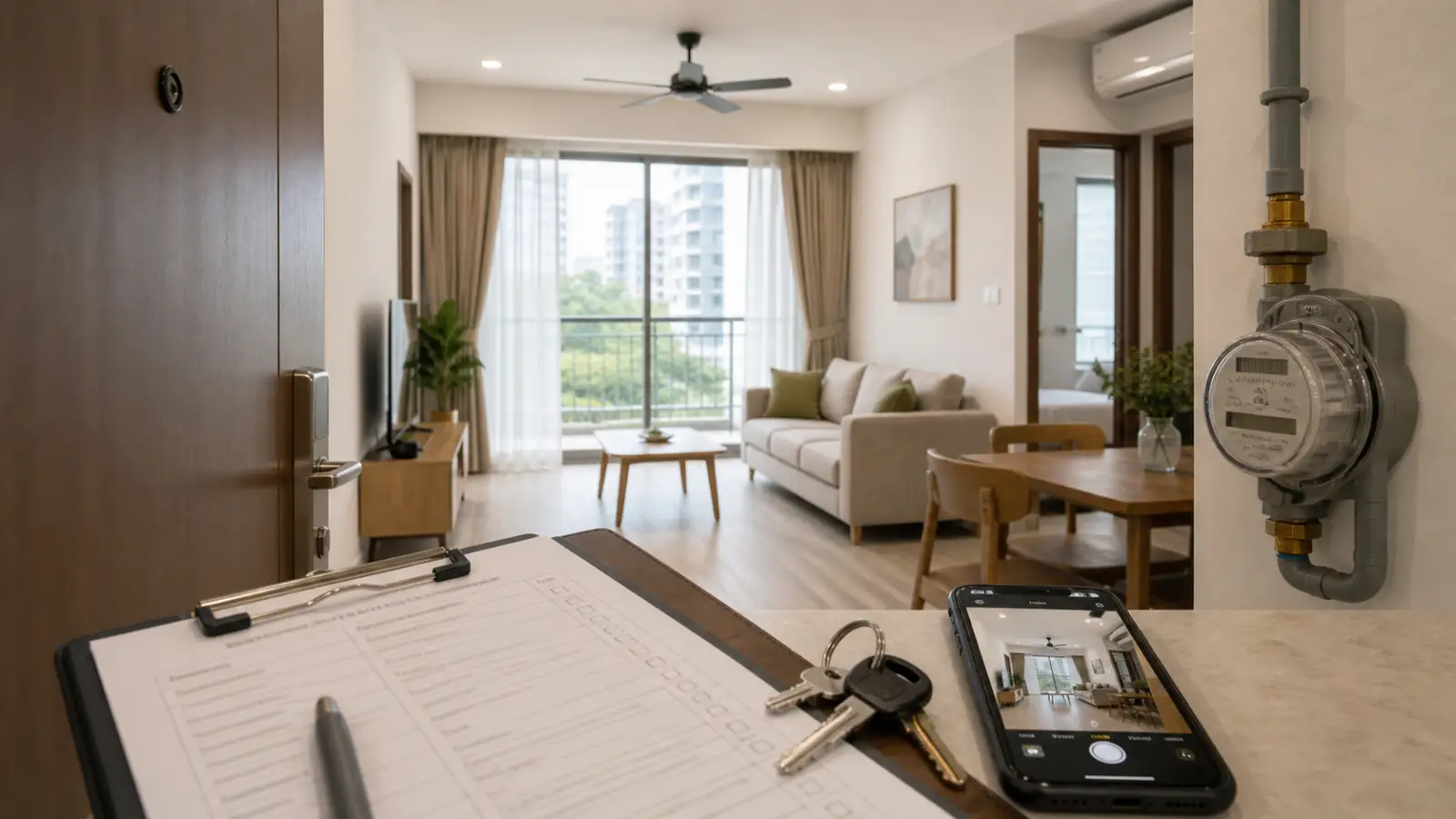
For every item, it should be clear whether the cost is fixed or based on actual use. If there is a meter, photograph the starting reading when you move in.
Deposit: one month is not a legal rule
Vietnam does not impose one universal statutory security-deposit limit for ordinary residential leases. The amount is agreed between the parties.
In practice, one month is common for smaller apartments and serviced apartments, while one or two months is common for standard condominiums, but landlords of houses or higher-end properties may ask for more.
Prepayment of several months’ rent also occurs. In cities such as Da Nang, tenants report requests for three or six months in advance, particularly for houses or during periods of high demand.
This is a commercial condition set by the landlord, not a national legal requirement, so it can be negotiated.
The more money you pay upfront, the less leverage you retain if construction begins next door, the air conditioner breaks or the landlord turns out to have a problem with foreigner registration. A discount for six months’ prepayment should therefore be weighed against the additional risk.
Do not send the deposit “just to the agent”
The safer structure is straightforward: lease, authorised landlord, payment and key handover should all be clearly connected.
A bank transfer should ideally go to an account whose owner you can identify, with a payment description referencing the apartment, rent or deposit. If you pay cash, get a receipt showing the amount, date, purpose of payment and recipient’s signature.
A situation where an agent asks you to transfer a large deposit to their personal bank account, while you have not met the landlord and the contract will supposedly arrive “tomorrow”, creates a risk you do not need to take.
The lease: notarisation is usually not required
Under the current Housing Law, an ordinary residential lease must be in writing, but it does not generally have to be notarised or certified unless the parties themselves choose to do so.
The issue is therefore not whether the contract has a notary stamp, but whether the contract is precise enough.
At minimum, it should include:
- The exact address and apartment number, the names and identification details of the parties, and the basis of authority if someone other than the owner signs.
- The lease term, move-in date, monthly rent, payment dates and renewal conditions.
- The exact security deposit, deadline for returning it and a clear list of permitted deductions.
- What is included in the rent and how electricity, water, internet, parking and management fees are calculated.
- Who is responsible for the air conditioner, water heater, refrigerator, washing machine, plumbing and other installed systems.
- The notice period for early termination and the financial consequences of leaving before the end of the lease.
- Rules on guests, pets, smoking, parking and use of swimming pools or other common areas.
- Rules governing landlord or maintenance access to the apartment during the tenancy.
If the lease is bilingual, for example Vietnamese and English, it should also state which language version prevails if the texts conflict. All figures, dates and obligations should match in both versions.
The rent should be stated in Vietnamese dong
Vietnam restricts the use of foreign currency in domestic transactions. Unless a specific exception applies, prices, payments and contract quotations inside Vietnam should not normally be denominated in foreign currency.
For that reason, a lease saying “rent is USD 700, payable in VND at the exchange rate on payment day” creates an unnecessary legal complication.
For an ordinary residential lease, it is better to state the rent directly in VND.
Foreigner registration is not a formality
For foreign tenants, this is one of the most important parts of renting in Vietnam.
The landlord or person directly managing the accommodation must declare a foreigner’s temporary stay to the police within 12 hours of arrival, or within 24 hours in remote areas.
Vietnam’s Ministry of Public Security has reiterated that every foreign guest must be declared individually. The national online system is now used for these declarations.
Before paying a deposit, ask the landlord directly:
“Can you officially register my temporary residence at this address as a foreign tenant?”
Do not accept vague answers such as “it is not necessary”, “we do not register foreigners here” or “if the police come, we will sort it out”.
Recent tenant discussions include real examples where police checked rented apartments and the landlord or agent had simply forgotten to register the foreign tenant.
After moving in, ask the landlord to send you confirmation that the declaration was completed. It can be useful not only during an inspection, but also for some immigration, employment or banking procedures.
What about guests?
This should also be discussed before signing.
The government registration requirement does not apply only to the main tenant. Foreign overnight guests may also need to be declared individually.
In addition to national requirements, specific condominiums may have their own guest-access rules.
Tenants in Da Nang and elsewhere have reported cases where, after move-in, landlords suddenly announced that foreign guests were not allowed to stay overnight. Even where the restriction came from the building rather than from national law, finding this out after signing the lease is obviously too late.
If receiving guests matters to you, the lease should say clearly that guests are allowed subject to legal registration requirements and building rules.
Renting in a condominium: check the building rules as well
A private landlord may own the apartment, but access to the property is also controlled by the building management.
Before payment, ask about access cards, guests, pets, parking, swimming pool, gym, deliveries, move-in procedures and overnight access. Some buildings require tenants to be registered separately with the management office.
This matters particularly for very short stays. In Ho Chi Minh City, short-term tourist use of condominium apartments has been subject to a specific regulatory framework since 2026, including requirements around accommodation registration and permitted use of the building.
If you are renting a normal apartment for several months as your residence, that is a different situation. But the fact that a property appears on Airbnb, Facebook or a rental group does not automatically mean the owner is operating it correctly.
Who pays for repairs?
Do not rely on “this is obvious”.
Under Vietnam’s Civil Code, the tenant is responsible for preserving the property, normal minor maintenance and damage caused by the tenant, but is not responsible for ordinary wear and tear. The landlord is responsible for ensuring the property remains usable and for fixing problems that are not the tenant’s responsibility.
Housing law also gives tenants rights where a landlord fails to repair serious defects. Depending on the situation, unilateral termination generally requires advance notice unless the contract provides otherwise.
The practical problem is that the boundary between “minor maintenance” and “equipment failure” can become an argument very quickly.
The lease should therefore state who pays, for example, for air-conditioner servicing, repair of an old refrigerator, plumbing leaks, water-heater replacement and technician call-out fees.
Move-in photos are the cheapest deposit insurance
On the day you receive the keys, record a continuous video of the entire apartment and photograph all existing defects separately.
Pay particular attention to scratched furniture, stains, chipped tiles, damaged walls, mattress and sofa condition, kitchenware, appliances, meter readings, keys and access cards.
Send the photos to the landlord or agent in the chat you normally use and ask them to confirm that this is the apartment’s starting condition.
The Civil Code states that the tenant is not responsible for normal wear and tear. But after a year, it is much harder to prove that a scratch or stain was already there if nothing was documented at move-in.
How to get your deposit back
Deposit disputes do happen in expat communities, although individual stories do not prove that landlords generally refuse to return deposits. Many tenants also report receiving their full deposit after a normal move-out inspection.
The biggest problem is often vague wording such as “deposit will be returned after inspection and final bills”.
A better lease defines the process in advance: move-out inspection on a specific date, photos of final meter readings, permitted deduction categories, supporting invoices or calculations, and a deadline for transferring the remaining deposit back to the tenant.
Do not leave the final utility amount undefined for several weeks. If the final bill is not yet available, you can agree in advance that the landlord temporarily retains a reasonable fixed amount and settles the remainder by a specified date.
Some online advice suggests simply refusing to pay the final month and telling the landlord to take it from the deposit. Unless the contract allows this, that may itself be a breach of the lease. It is much safer to agree on deposit-to-final-month offset before signing, if the landlord accepts it.
Red flags
One unusual detail does not automatically mean fraud, but several together are a good reason to move on.
- You are asked for the full deposit before viewing the apartment or before being allowed to read the lease.
- The agent will not identify the landlord, company or legal basis for accepting your money.
- You are shown one apartment but asked to pay for “the same one” on another floor.
- The landlord cannot or will not officially register a foreign tenant at the address.
- Electricity is charged at a high fixed rate, but nobody can show the meter or explain the basis for the tariff.
- The deposit will supposedly be “returned later”, but there is no deadline or clear deduction mechanism in the contract.
- Important verbal promises are missing from the lease or directly contradict the written text.
- Rent is demanded in USD or tied each month to the USD/VND exchange rate.
Vietnam has enough rental supply that there is rarely a good reason to turn an obviously difficult landlord into your own one-year experiment.
A short checklist before paying
Before transferring a significant amount of money, five things should already be clear.
- You have personally inspected the exact apartment and checked the appliances, water, air conditioning, damp, noise and internet.
- You know who is signing the lease and receiving the money, and why that person has the right to rent out the property.
- You have read the entire lease, including the deposit, early termination, repairs, utilities and guest rules.
- The landlord has confirmed that your temporary residence can be registered properly as a foreign tenant within the required time.
- Every payment has a clear record, and the apartment’s move-in condition will be documented with photos, video and meter readings.
If any of these remains at the “we will sort it out later” stage, sort it out before paying the deposit.
What real tenant experiences show
Official rules matter, but discussions among people who actually rent in Vietnam are useful because they reveal where day-to-day problems repeatedly occur.
The same issues appear again and again: bait listings, deposits requested before contracts, unexpected electricity rates, mould, disputes over repairs, forgotten foreigner registration and attempts to deduct old damage from the deposit.
That does not mean renting in Vietnam is unusually dangerous. Most problems begin when the tenant pays first and only afterwards starts asking who the owner is, what electricity actually costs, whether guests are allowed and who is responsible for a broken air conditioner.
A good apartment is not only a good view and an acceptable monthly price. It is also a landlord who properly registers foreign tenants, a clear contract, transparent bills and a property whose condition you checked before your money became the security deposit.
Updated: September 2026.
Main sources: Vietnam Housing Law 2023; Civil Code; Law on Real Estate Business 2023; Vietnam Ministry of Public Security; State Bank of Vietnam; EVN and the Ministry of Industry and Trade; current Ho Chi Minh City apartment-use regulations; tenant discussions on Reddit and Expat.com.
Comments
Read also
All articles
10 Beach Clubs in Vietnam: Pools, Sunsets, Music and Water Sports
Ten beach clubs in Phu Quoc, the Hoi An area, Nha Trang, Cam Ranh, Mui Ne and Phan Rang, with real photographs, each venue’s character…

Nha Trang Travel Guide: How Many Days, Where to Stay and What to Do
How long should you stay in Nha Trang? Three days covers the city, beach and one outing; five to seven days gives you time for…

Health in Vietnam: Insurance, Hospitals, Pharmacies and Emergency Care
A practical health guide for Vietnam: emergency numbers, hospitals, pharmacies, travel insurance, animal bites, fever and upfront payments.

Hue, Da Nang and Hoi An in 5–7 Days: A Practical Central Vietnam Itinerary
Hue, Da Nang and Hoi An are close enough to combine in one trip, but they should not be treated as three similar stops. Hue…

Vietnam in 14 days: three routes without racing across the country
Three workable two-week routes through north, central and south Vietnam: nights, transfers, weather buffer and booking order.

Phu Quoc Events
Seaside shows in Sunset Town, performances at Grand World, beach parties and island traditions. Explore Phu Quoc events, from major productions to local meetups, and…