The City That Isn't on the Map: The Secret of the Cu Chi Tunnels
About 70 kilometres northwest of central Ho Chi Minh City lies a place now known as the Cu Chi Tunnels. They are considered one of the most remarkable feats of engineering to emerge from the Vietnam War. The underground network allowed guerrillas to move unseen between villages, supply their units, and appear where the American military least expected them. This role turned the Cu Chi Tunnels into one of the symbols of the war against the United States. Their story, however, began much earlier: the first passages appeared in the late 1940s, during the war against the French colonial army.
Why the people of Cu Chi began going underground
At first these were short shelters and hiding places, not parts of a grand underground city designed in advance. Local residents used them to hide during French raids, store weapons, and maintain contact between villages. The war continued and the danger grew, so the shelters gradually became longer, deeper, and more complex. Eventually they were connected, forming a single underground system.
What lies beneath Cu Chi
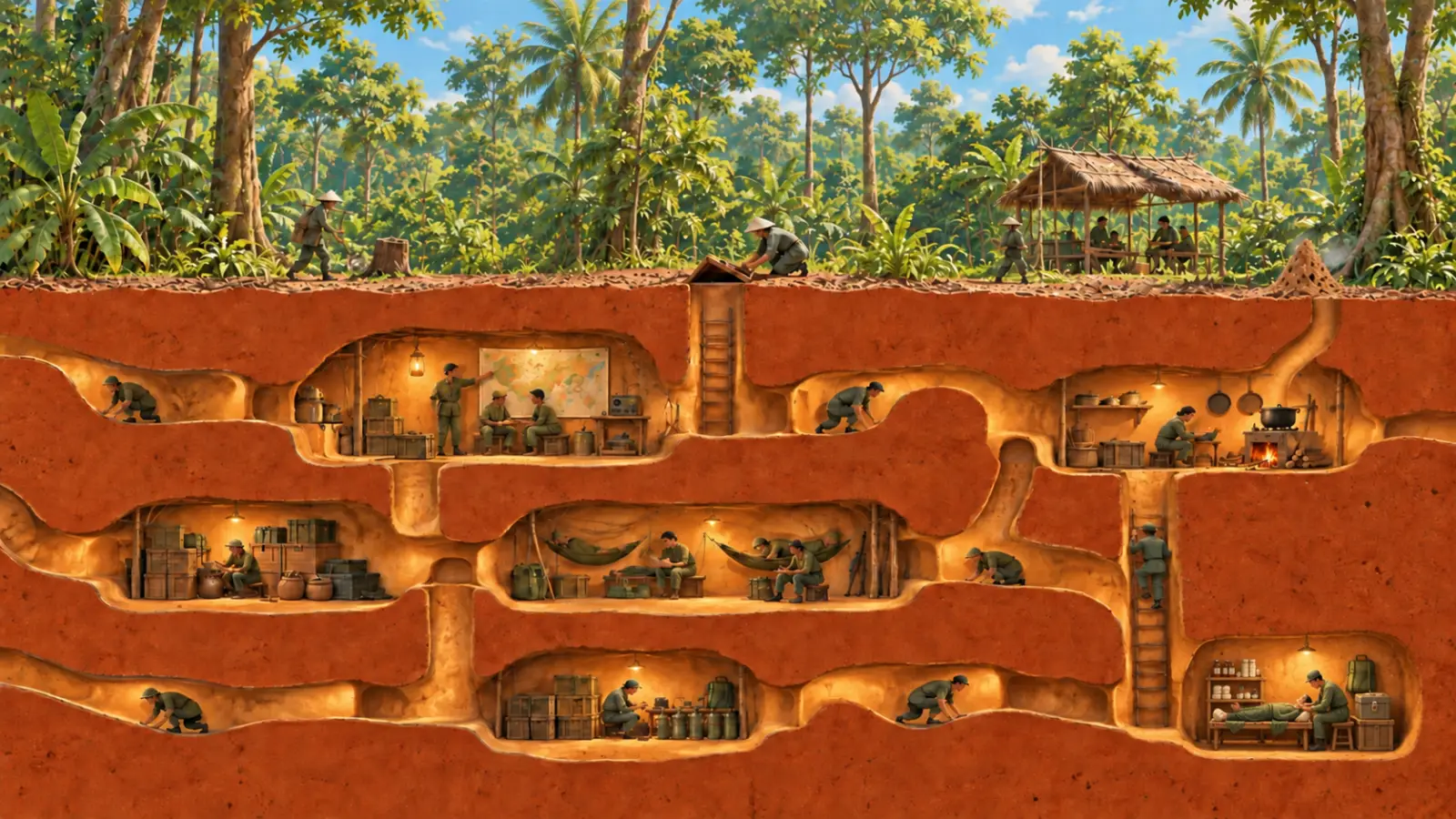
By the height of the Vietnam War, the tunnel network stretched for roughly 250 kilometres. It should not be imagined as one endless corridor. It was more like an underground web. Side branches led away from the main passages: some reached neighbouring villages, others led to fighting positions or concealed exits in the grass, while still others deliberately ended in dead ends. No complete map of the entire system existed. Each section was known best by the people who had dug it and travelled through it.
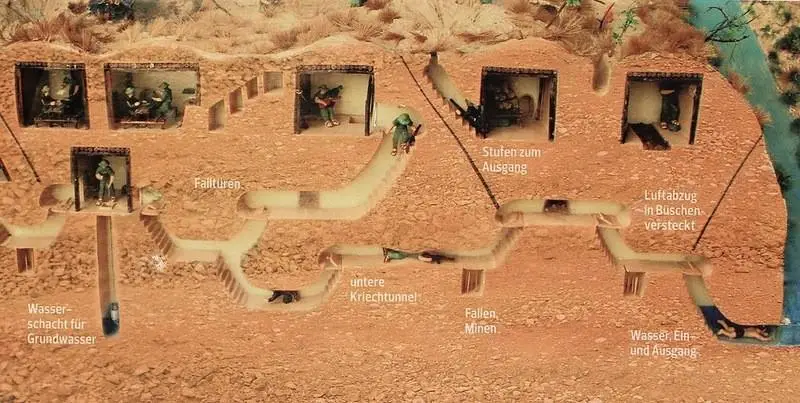
In the most developed sections, the tunnels descended through three levels. The first lay about three metres below the surface, close enough for a quick escape above ground. The second reached a depth of around six metres. The deepest rooms were hidden eight to twelve metres underground, where people sheltered during heavy bombing. Concealed passages, hatches, and ventilation shafts linked the levels, and the tunnels constantly changed direction.
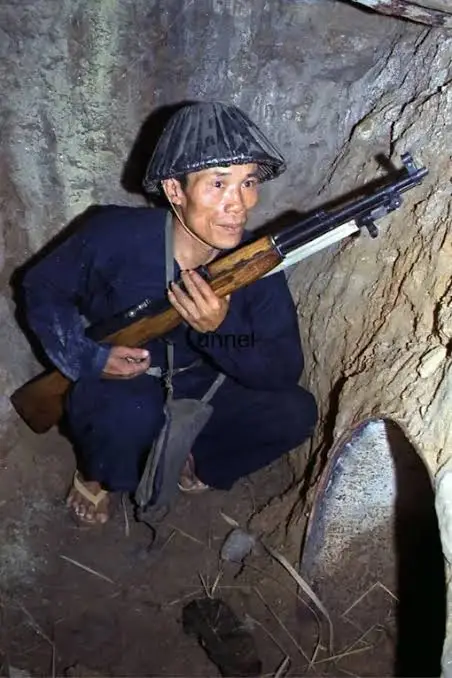
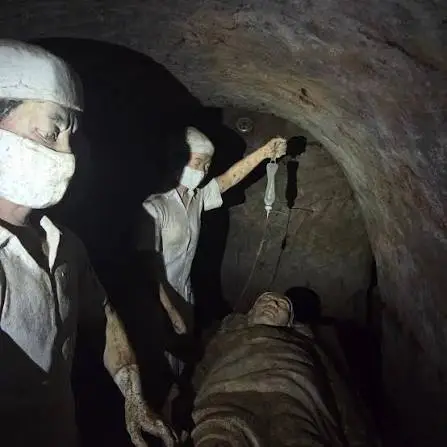
Calling it a “city” is not an exaggeration, but neither does the word suggest anything like ordinary life. Underground, people treated the wounded, repaired weapons, stored rice, held meetings, and screened films. There were kitchens, wells, and sleeping quarters nearby. Yet the tunnels were dark, damp, and stifling. Many passages were so narrow that people had to crouch almost to the ground or crawl. This city was not built for living in the usual sense. It was built for survival when the surface was no longer safe.
How the underground city was built and equipped
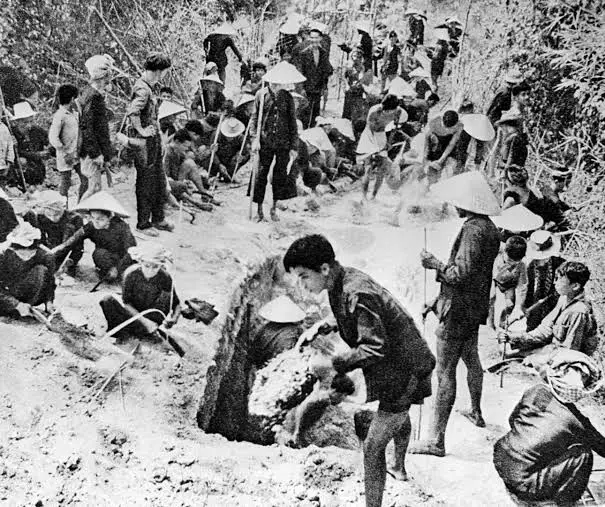
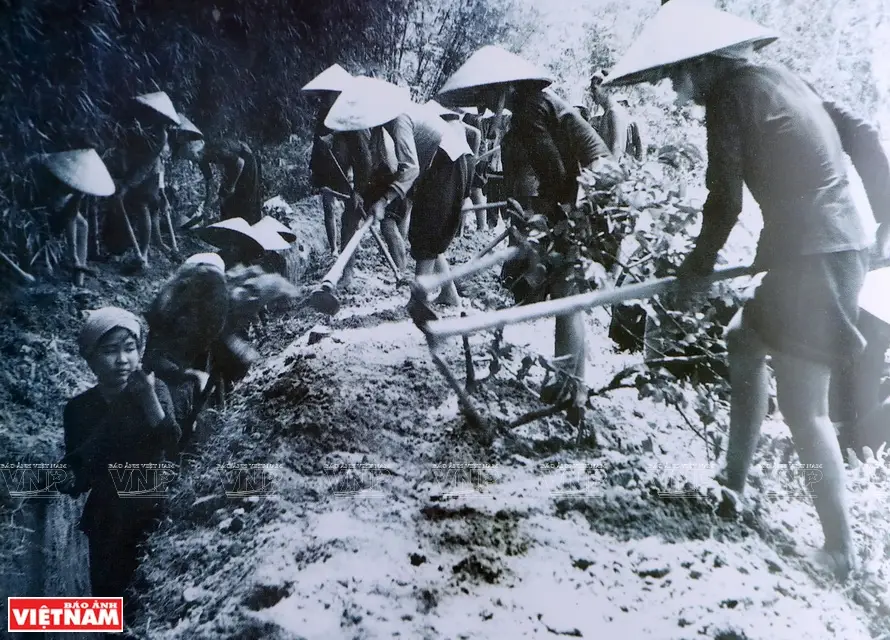
This underground city had neither an architect nor construction machinery. Entire villages built it together. By day, people worked in the fields and tended to daily chores; in the evening, they took short hoes and bamboo baskets and went underground. One participant remembered young men moving ahead to cut the passage while young women filled baskets with earth and passed them to the surface. Sometimes they worked until dawn. Older residents prepared food and helped carry away the soil, while teenagers brought water and delivered messages.
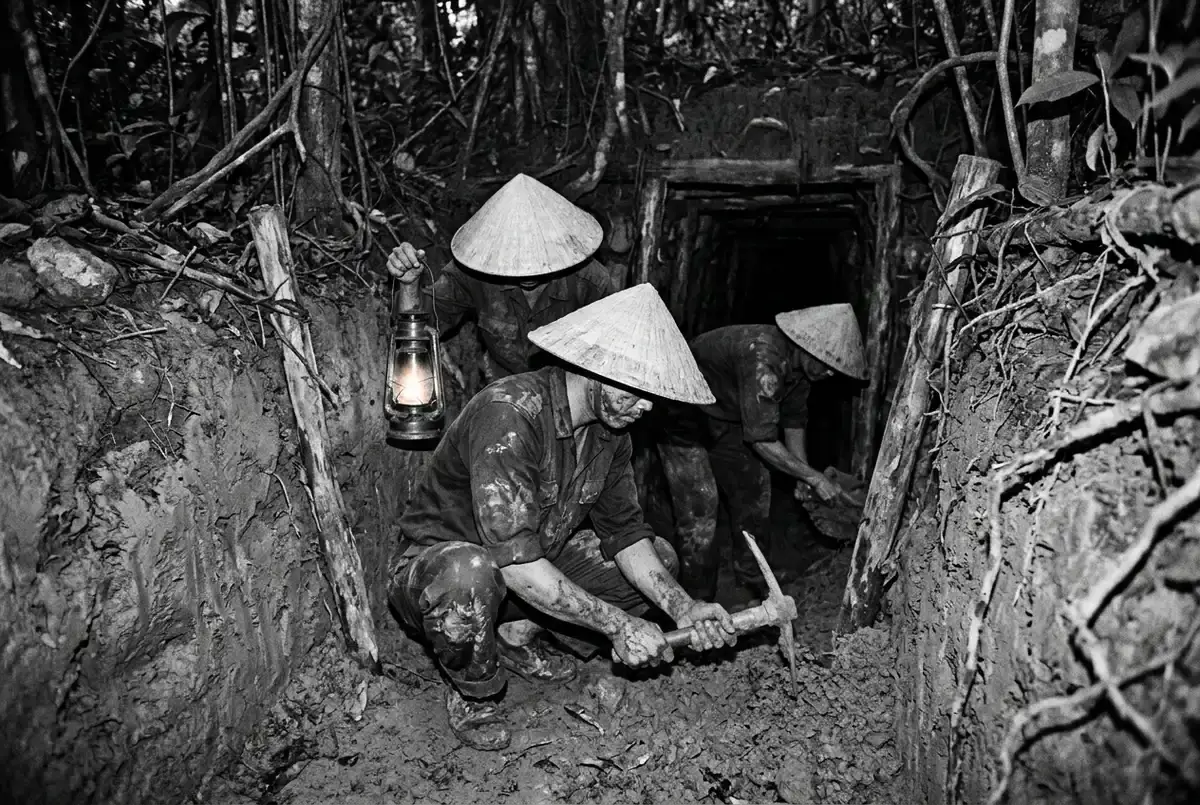
Only one or two people could fit at the narrow working face. One loosened the earth with a short hoe while the other filled a basket that was pulled up by rope. Several teams would start seven to ten metres apart and dig towards one another. They had no instruments; they followed the sound of another hoe beyond the earthen wall. Every new metre produced soil that could expose the entire system. It was carried to the river, scattered across fields, used to fill bomb craters, or shaped into artificial termite mounds.
The earliest passages were made wider, but they were more likely to collapse during the rainy season. Gradually the tunnels became narrower: a typical passage was about 60 centimetres wide and 70 centimetres high. No one could walk upright. People had to bend almost to the ground or crawl. The narrow passages, however, better withstood the pressure of the soil and took less time to build. That is why sections open to tourists today had to be widened considerably.
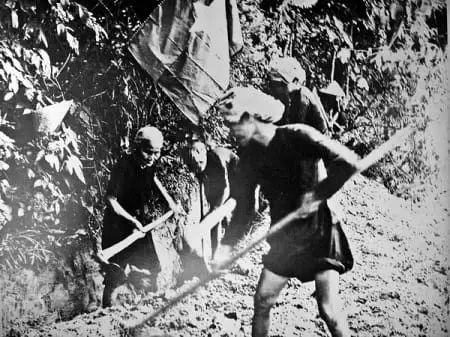
Air was one of the greatest challenges. A ventilation shaft was dug roughly every ten metres, with its outlet concealed inside a termite mound, among bamboo, or between tree roots. There had to be enough openings for people to breathe, but not so many that soldiers and tracker dogs could find the tunnels. Even fire had to be hidden. In Hoang Cam kitchens, smoke travelled through long underground ducts, cooling before it reached the surface far from the stove as a thin haze resembling morning mist.
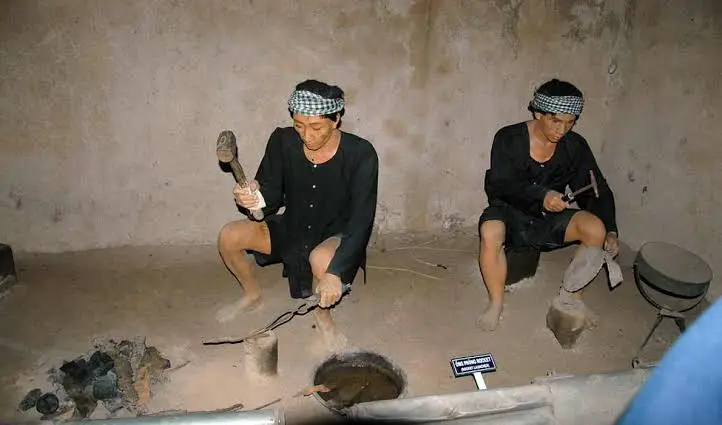
Cu Chi was not built according to a plan prepared in advance. The underground city grew through constant trial and error.
Why the Cu Chi Tunnels became a nightmare for the American military
Every new solution devised by the people of Cu Chi gradually turned the underground city into a weapon. Guerrillas emerged through camouflaged hatches, struck, and disappeared before American soldiers could understand where the fire had come from. The entrance was covered again with a lid disguised by soil and leaves, while the next exit might lie near another village. At times American units set up camp without realising that tunnels ran directly beneath them.
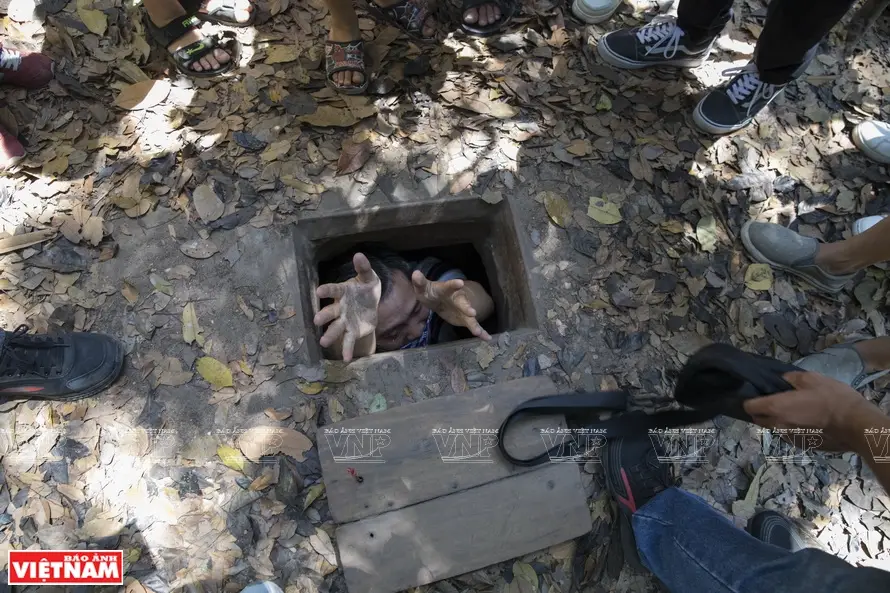
Finding an entrance was only half the battle. Inside, straight sections gave way to sharp turns that weakened blast waves and stopped shrapnel. The main passage split into side branches: some ended in dead ends, while others reached shelters known only to the people who used them. Certain passages were sealed with wooden plugs. An explosion merely drove the plug more tightly into place, preventing gas from spreading through the entire system.
American forces used tracker dogs to find ventilation shafts. The outlets were hidden in artificial termite mounds, among bamboo, and beside tree roots, but the animals could still detect the smell of people and food. The tunnel dwellers responded by using pepper and later American soap and shaving products obtained in the city. The familiar scent confused the dogs.
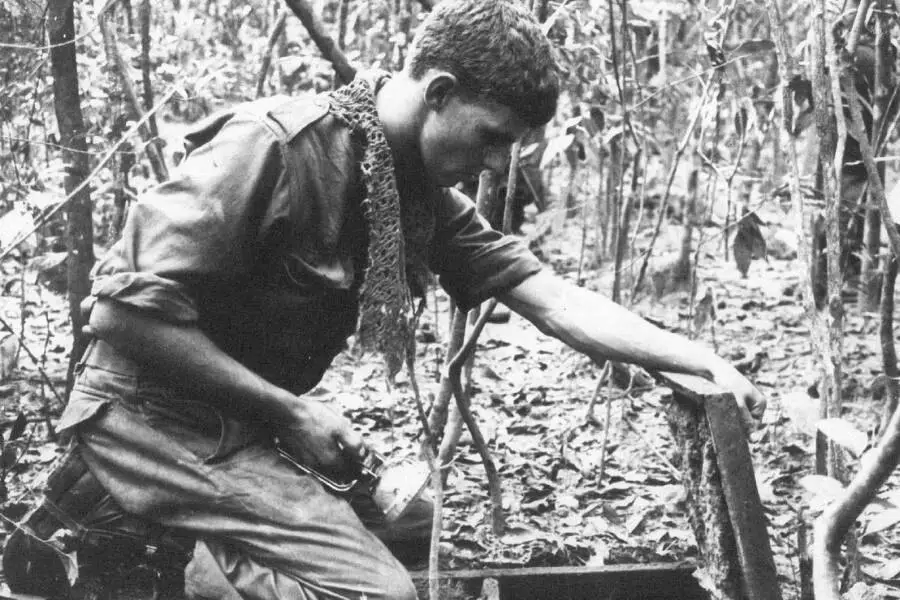
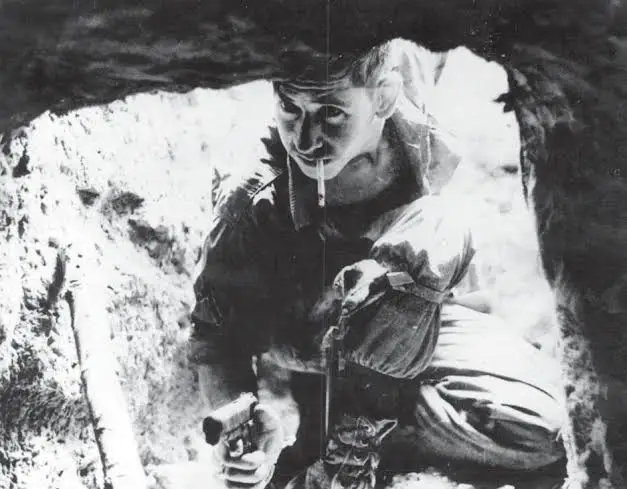
To investigate the passages they found, American units sent soldiers underground who became known as “tunnel rats”. Small, lean men were generally chosen for the task because a larger person simply could not fit through the passages. They descended with a pistol, a knife, and a flashlight. A rifle was too long, while firing inside the confined space could blind and deafen the shooter himself.
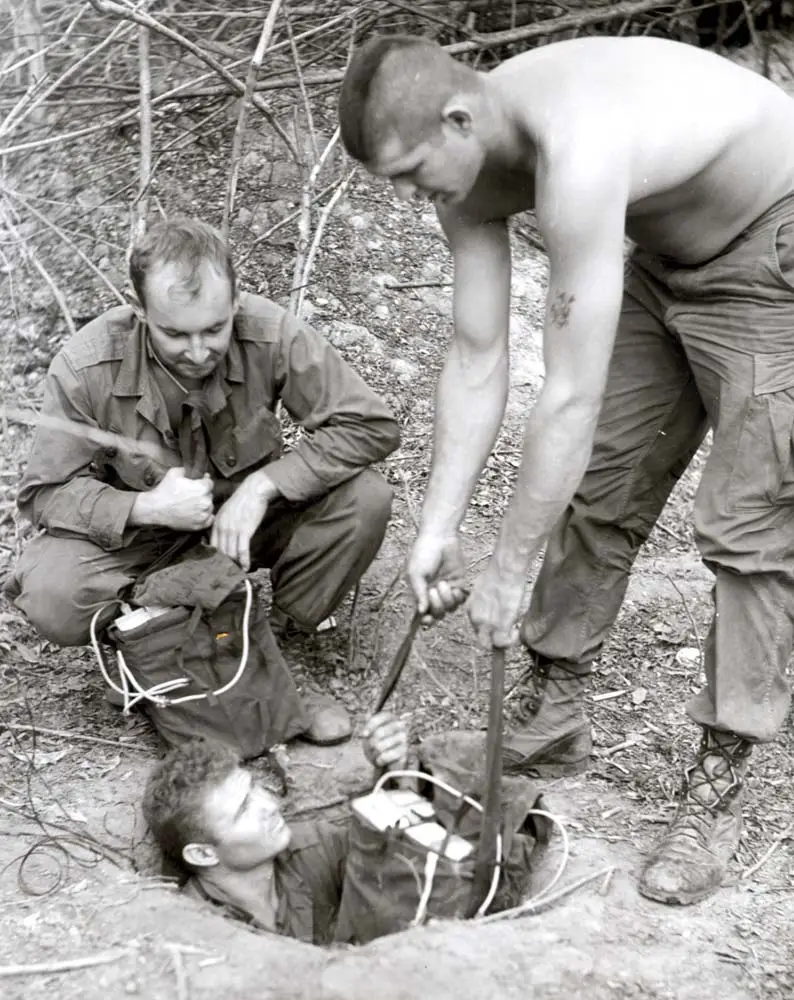
There is little heroism in the memories of American tunnel rats. One veteran recalled the heat, the smell of damp and decay, and the complete isolation from those on the surface. Another always kept a flashlight nearby after returning home and slept with the light on: a dark room instantly carried him back into the tunnel. That fear also found its way into cinema. A similar descent appears in one of the most tense scenes in Oliver Stone's Platoon, while the 2008 film 1968 Tunnel Rats is devoted entirely to fighting in the underground passages of Cu Chi.
The American military pumped water and gas into the tunnels, blasted entrances, used bulldozers, and subjected the district to massive bombing. Individual sections collapsed, yet the entire network could not be destroyed in a single strike. Bends and barriers contained the damage, surviving branches remained in use, and blocked passages were cleared or bypassed with new ones.
Cu Chi was formidable not because it was invulnerable. It was not a single fortress that could be surrounded and destroyed, but a vast system dissolved beneath villages, fields, and forest. The American military held the advantage in technology and firepower, yet underground that superiority all but disappeared. Here, what mattered was knowing every turn and being able to move in complete darkness.
What remains of the underground city today
There was no single day when every hatch opened and all the residents of the underground city emerged at once. Life in Cu Chi was not continuous confinement: people worked in the fields, searched for food, and returned underground during shelling and raids. Even after the main American forces withdrew, the war continued. In the spring of 1975, Cu Chi still served as a shelter and a staging area for troops advancing on Saigon.
When the fighting ended, there was no longer a need to hide. But the people who emerged did not find the homes they remembered. Villages had been destroyed, fields were scarred by craters and strewn with mines and barbed wire, and vast areas had become wasteland. The people of Cu Chi did not simply have to return to peaceful life; they had to rebuild it above ground.
Without maintenance, sections of the underground network began to disappear. Some passages had been destroyed by bombing, while others collapsed in the rain or flooded. That is why it is impossible today to walk all 250 kilometres from beginning to end. The surviving sections were reinforced and incorporated into two historical complexes, Ben Dinh and Ben Duoc.
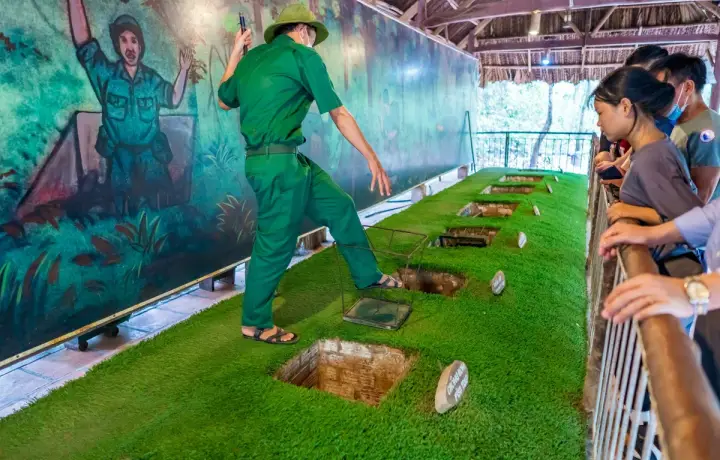
Command posts, hospitals, weapons workshops, and Hoang Cam kitchens have been restored above and below ground. Visitors can see camouflaged hatches, ventilation holes hidden in artificial termite mounds, bomb craters, and traps that protected the approaches to the tunnels. Some features survived; others were reconstructed to show how the underground city worked.
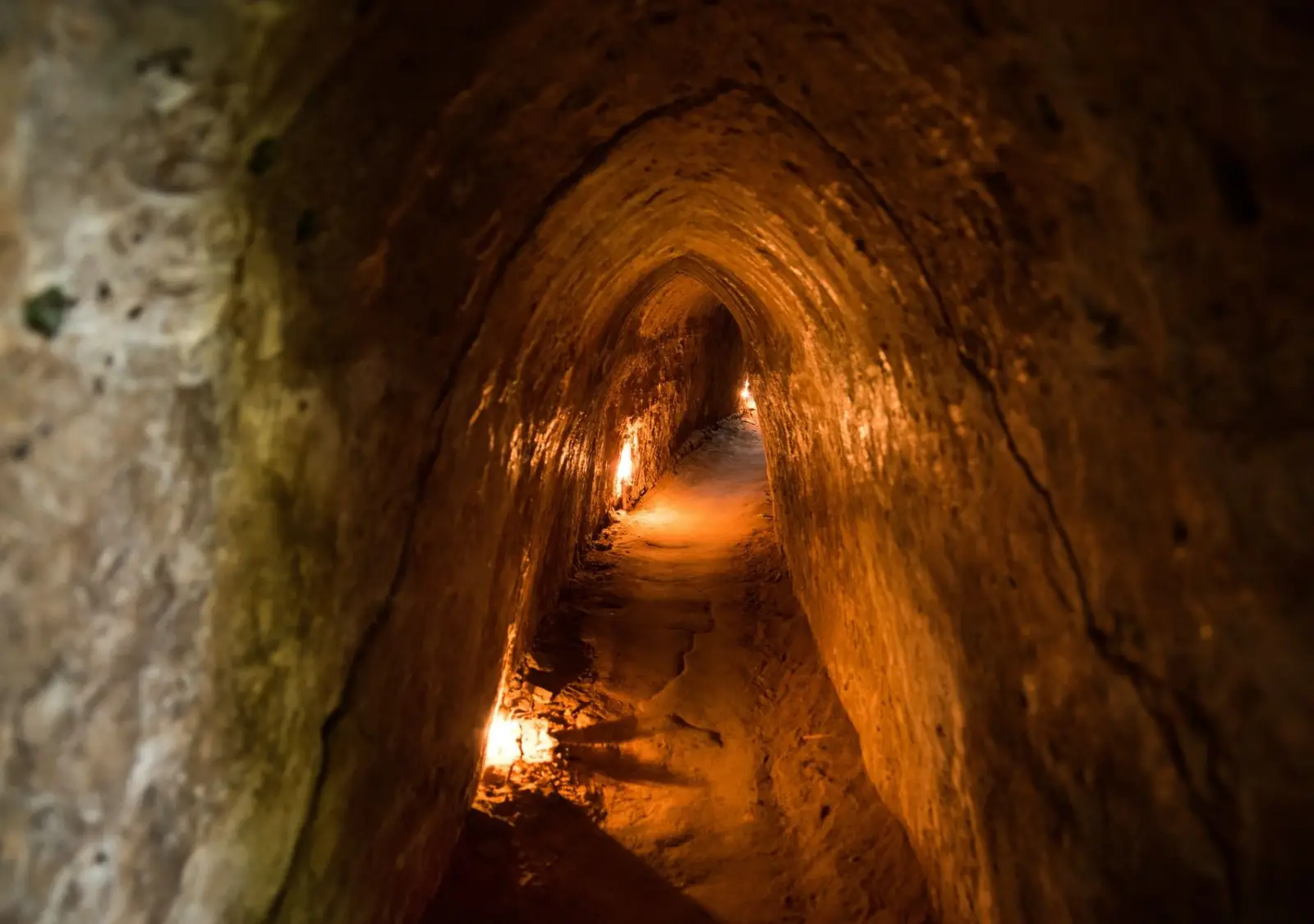
Visitors can still enter the tunnels, although the tourist sections have been widened, reinforced, and in places illuminated. Even so, you have to move almost in a squat: the ceiling quickly drops, the air grows heavier, and daylight disappears after the first bend. Completing the entire route is optional. Anyone who feels trapped or frightened can use one of the exits back to the surface.
Back above ground, visitors are offered boiled cassava with peanuts and sesame, the simple food eaten during the war. Today the area is filled with the voices of guides and tourists, yet underground it remains easy to imagine what years of life between the surface and darkness meant. A few minutes below ground are enough to make Cu Chi's 250 kilometres feel like more than an impressive figure in a guidebook.
How to reach Cu Chi and which site to choose: Ben Dinh or Ben Duoc
A visit to Cu Chi takes at least half a day. The drive from central Ho Chi Minh City usually lasts between ninety minutes and two hours, although rush-hour traffic can make it longer. The simplest option is a group tour with transfers. Travelling by private car or taxi costs more, but lets you choose the site and avoid a group schedule. Public transport is also possible, although the journey requires several changes. Another option is to travel part of the way along the Saigon River by speedboat.
Two sites, around 13 kilometres apart, are open to visitors. Ben Dinh, or Bến Đình, is closer to Ho Chi Minh City, so most short tours come here. The grounds are more compact, the tourist passages have been widened, and the entire route can easily be completed in a few hours. The downside of its popularity is the large tour groups and the feeling of a tourist attraction, especially in the first half of the day.
Ben Duoc, or Bến Dược, lies farther away and covers a larger area. During the war, the regional command responsible for Saigon and the surrounding area was based here. Today, in addition to the tunnels, visitors can see a memorial temple and a reconstructed wartime village with houses, workshops, and fields. It is generally quieter, but the trip takes more time. Ben Duoc is a better choice for those who want to explore the history in depth rather than simply enter a tunnel and return to Ho Chi Minh City.
If time is limited and you want a convenient half-day excursion, Ben Dinh is the easier choice. If atmosphere and a fuller understanding of Cu Chi matter more, choose Ben Duoc and allow almost an entire day.
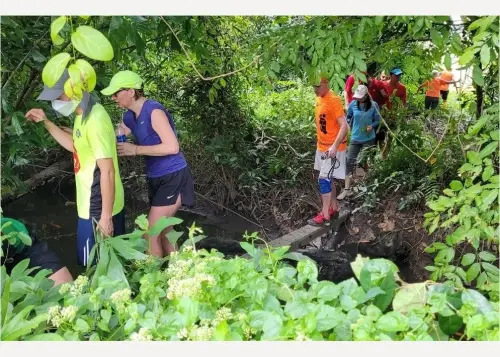
Wear light clothing that you do not mind getting dirty and closed shoes. Going underground is optional: the design of the tunnels can also be understood from the surface. If confined spaces cause panic or the descent would be physically difficult, you can skip this part of the tour. Even the widened tourist passage offers only a faint sense of how people hid, treated the wounded, and fought between the blinding sun above and total darkness below.
Comments
Read also
All articles
Everyday Vietnam: How to Communicate at Markets, Cafés and in Vietnamese Homes
Travellers in Vietnam rarely need a deep understanding of local etiquette. Mispronouncing a word, choosing the wrong form of address or not knowing where to…

Po Nagar Towers in Nha Trang: the goddess who outlived her kingdom
The story of the Mother of the Land and why people still bring her offerings.

From Paris to Nha Trang: How Alexandre Yersin Became a Legend in Vietnam
He arrived from Europe with a microscope, identified the bacterium behind plague, and could have returned to Paris. Instead, he chose Nha Trang. Why do…

Blood Oaths, Fire-Breathing Dragons and Hidden Mechanisms: The Story of Vietnamese Water Puppetry
How a rainy-season village pastime reached the imperial court and won over audiences around the world.
Ho Chi Minh City: What to See in 3–4 Days, Where to Stay, What to Eat and How to Get Around
A practical Ho Chi Minh City guide for 3–4 days: where to stay, what to see, what to eat and how to navigate the city.

Tram Huong Tower in Nha Trang: why it is not a lotus and what is inside
Why the tower changed colour, what was displayed inside and how to visit.