From Paris to Nha Trang: How Alexandre Yersin Became a Legend in Vietnam
Across Vietnam, streets and a university bear the name of Alexandre Yersin. He was not Vietnamese, never fought for the country, and held no government office. Yet in 2014 Vietnam posthumously made him an honorary citizen. Nha Trang has a monument, a park, and an entire museum dedicated to him, while people still bring flowers and incense to his grave. How did a French doctor earn such affection in a country that spent decades fighting French colonial rule?
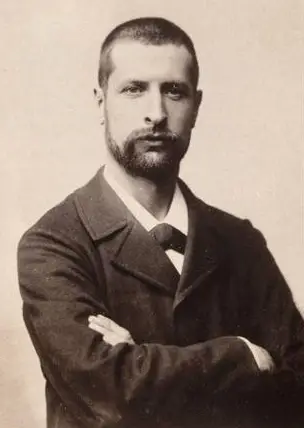
Childhood and the road to medicine
Alexandre Yersin was born in the autumn of 1863, just weeks after his father died. His father, also named Alexandre, taught natural sciences and studied insects. Years later, the son he never had the chance to teach would develop the same fascination.
His mother was left with three children. To support them, she opened a boarding school for girls in the Swiss town of Morges on Lake Geneva. Yersin grew up in a strict Protestant household, read adventure stories, and wandered through the mountains. He was fascinated by living things, especially insects. That curiosity eventually led him to medicine: first to Lausanne, then Marburg in Germany, and finally Paris.
At a Paris hospital, Yersin spent hours performing autopsies. He wanted to understand what happened inside a person during illness and why the body sometimes failed. Among the patients were people bitten by rabid animals. Doctors tried to save them with Louis Pasteur's new rabies vaccinations, but for some treatment began too late.
During this work, in 1886, Yersin met Emile Roux, a physician developing rabies vaccination with Pasteur. They quickly found common ground. Roux brought the young student into Pasteur's laboratory, where Yersin had long dreamed of working. There he helped vaccinate patients and later joined Roux in studying diphtheria, a disease he had encountered in the children's hospital.
In 1888, at the age of twenty-five, Yersin defended his doctoral thesis and received his medical degree. Almost immediately, his work with Emile Roux led to his first major discovery. They established that the diphtheria bacterium did not kill on its own: it released a toxin that poisoned the body. This changed the way scientists approached the disease. They now understood that treatment had to stop the infection and neutralize its poison.
Yersin continued his research at the newly opened Pasteur Institute. His scientific career was taking shape: he worked beside his mentor and had already contributed to an important medical discovery. Yet he still longed to travel.
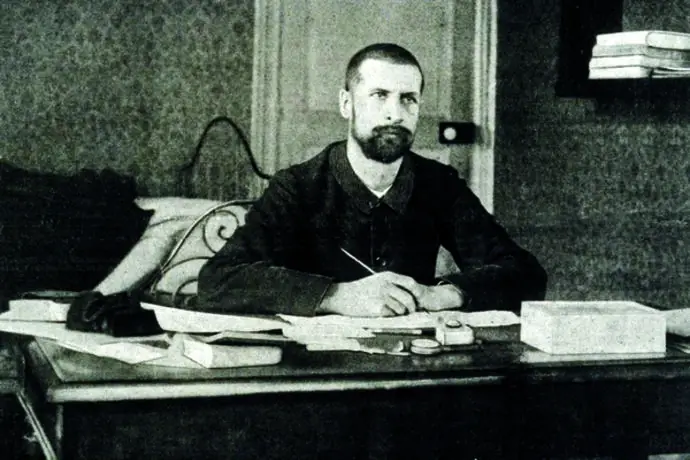
From Paris to the sea
Work on diphtheria sometimes took Yersin far from the Paris laboratory. While studying how the disease spread, he travelled to Grandcamp, a Normandy town on the English Channel. It was there that he found a new passion. He returned to the coast during his holidays and, back in Paris, admitted in his letters that he missed the sound of the waves and seemed to have fallen completely in love with the sea.
Meanwhile, Paris was hosting the 1889 World's Fair. Yersin returned again and again, exploring pavilions devoted to distant lands and meeting people from around the world. He increasingly wanted to see those places himself, while the hours spent preparing lessons at the institute interested him less and less.
Nha Trang becomes home
Yersin decided to become a ship's doctor, a job that allowed him to earn a living and travel at the same time. He asked Pasteur for a year's leave, and Pasteur gave him a letter of recommendation to the shipping company Messageries Maritimes. In September 1890, Yersin sailed from Marseille to Asia with a pair of binoculars and a microscope.
A few weeks later he reached Saigon, today's Ho Chi Minh City. In a letter to his mother, he admitted that at first he felt completely lost: everything was unfamiliar and the heat was intense. The ship on which he was to serve lay in the middle of the river. He needed to hire a boat to reach it, but had no local currency. An employee of the steamer that had brought him from France let him spend the night aboard and took him for a walk that evening. Confusion gradually gave way to curiosity, and his letters began to describe palms, houses on stilts, and a visit to the Chinese quarter.
For his first months, Yersin served on the route between Saigon and Manila. His medical duties left him time to learn navigation from the sailors: finding a ship's position by the stars, using instruments, and drawing maps. He was then transferred to the route between Saigon and Haiphong in northern Vietnam. The vessel followed the coast and called at small ports. One of them was Nha Trang.
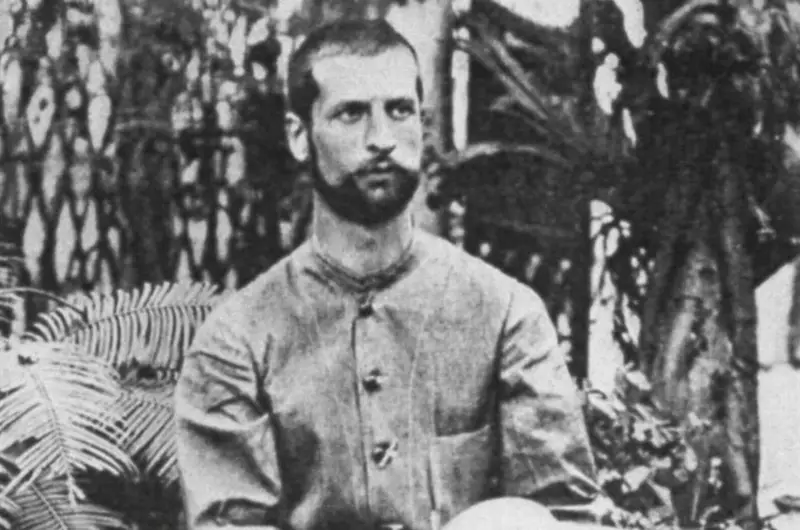
In the summer of 1891, Yersin stepped ashore in Nha Trang. He had often seen its bay, sandy shore, and mountains from the ship. Now he wanted to discover the country beyond its ports. Long journeys were impossible while he had to return to the vessel after every stop, so by the end of the year he left maritime service.
Nha Trang gradually became the place to which he returned after every journey. He settled in the fishing village of Xom Con, began seeing patients, and treated local residents. Those who could afford it paid; the poor were treated free of charge. Yersin had begun learning Vietnamese while still at sea because he hated being unable to question an ill sailor and understand his complaint. On land, the language helped him speak with villagers, stay in their communities during expeditions, and care for the sick.
Leaving the ship also meant losing a regular salary. Life and expeditions required equipment, provisions, guides, and transport. Yersin faced a difficult choice: he had no desire to return to the Paris laboratory, but had not yet found a reliable livelihood in Asia.
A solution came from Albert Calmette, another physician from Pasteur's circle. Calmette had come to Saigon to establish a vaccine laboratory and met Yersin during his first months in Asia. He advised him to join the colonial medical service, which offered a regular salary and the chance to remain in Indochina. Yersin hesitated, fearing official duties would cost him his freedom, but agreed in late 1892. The man who had left the laboratory to travel now put on a military uniform so that he could afford to continue travelling.
By then he had already made an expedition from Nha Trang to the Mekong and travelled downriver to Phnom Penh. His observations and maps caught the attention of the French colonial administration. His next journey had a specific commission: survey the highlands, assess their resources, and consider possible roads. Colonial ambitions to develop the region also lay behind this support.
During that expedition, in June 1893, Yersin reached the Lang Biang Plateau. Before him stretched grassy hills that he compared in his diary to enormous ocean waves, with mountains rising above them like an island. The climate was cooler than on the coast, and he later recommended the area for a hill resort where people could escape the tropical heat.
Local peoples already lived on the plateau, and Yersin was not the first European to visit it. His role was different: he helped draw attention to the place where Da Lat would later grow. The travels of a former ship's doctor thus became linked to the birth of one of Vietnam's best-known mountain cities.
In pursuit of the plague bacillus
By 1894 Yersin had spent several years travelling through Indochina, but he had not abandoned the study of disease. He sought permission to visit China's Yunnan province, where plague occurred, hoping to find the microbe that caused it. While the expedition was being arranged, the epidemic reached Hong Kong. Yersin chose to go there and received authorization from the French authorities.
Hong Kong was a major international port. From there the disease could travel aboard ships and reach Vietnam. Identifying its cause mattered not only to scientists; colonial officials also feared an epidemic in their territories.
Yersin arrived during the rainy season. Downpours battered the city, residents fled the epidemic, and hospitals overflowed. Temporary wards were being built in haste. He brought a microscope and equipment borrowed in Saigon, determined to find the cause of a disease that might soon reach Vietnam.
Beginning the work proved harder than reaching the plague-stricken city. Hong Kong was under British rule, and a Japanese team led by bacteriologist Shibasaburo Kitasato was already working in the local hospital. They had been given laboratory space and access to the dead. Yersin also needed tissue samples, but permission to conduct autopsies was refused; the bodies were reserved for the Japanese researchers.
An Italian missionary, Father Vigano, came to his aid. He had lived in Hong Kong for years, understood local ways, and served as Yersin's interpreter. Together they found a way around the obstacle by arranging access with British sailors responsible for taking the dead for burial. A few coins opened a door that the hospital authorities had kept closed.
Before burial, bodies were briefly kept in a basement-like room. There Yersin opened a coffin, brushed away the lime covering the deceased, and found a bubo, the severely swollen lymph node characteristic of plague. He took a tissue sample and hurried to examine it. Under the microscope he saw countless identical short rods: bacteria.
Yersin made his laboratory in a small straw-roofed hut beside the hospital and lived there as well. His instruments, test tubes, bacterial cultures, and cages of laboratory animals made up his entire operation. He admitted to his mother that the equipment was so limited that many experiments were impossible. With too few assistants, he had to do almost everything himself.
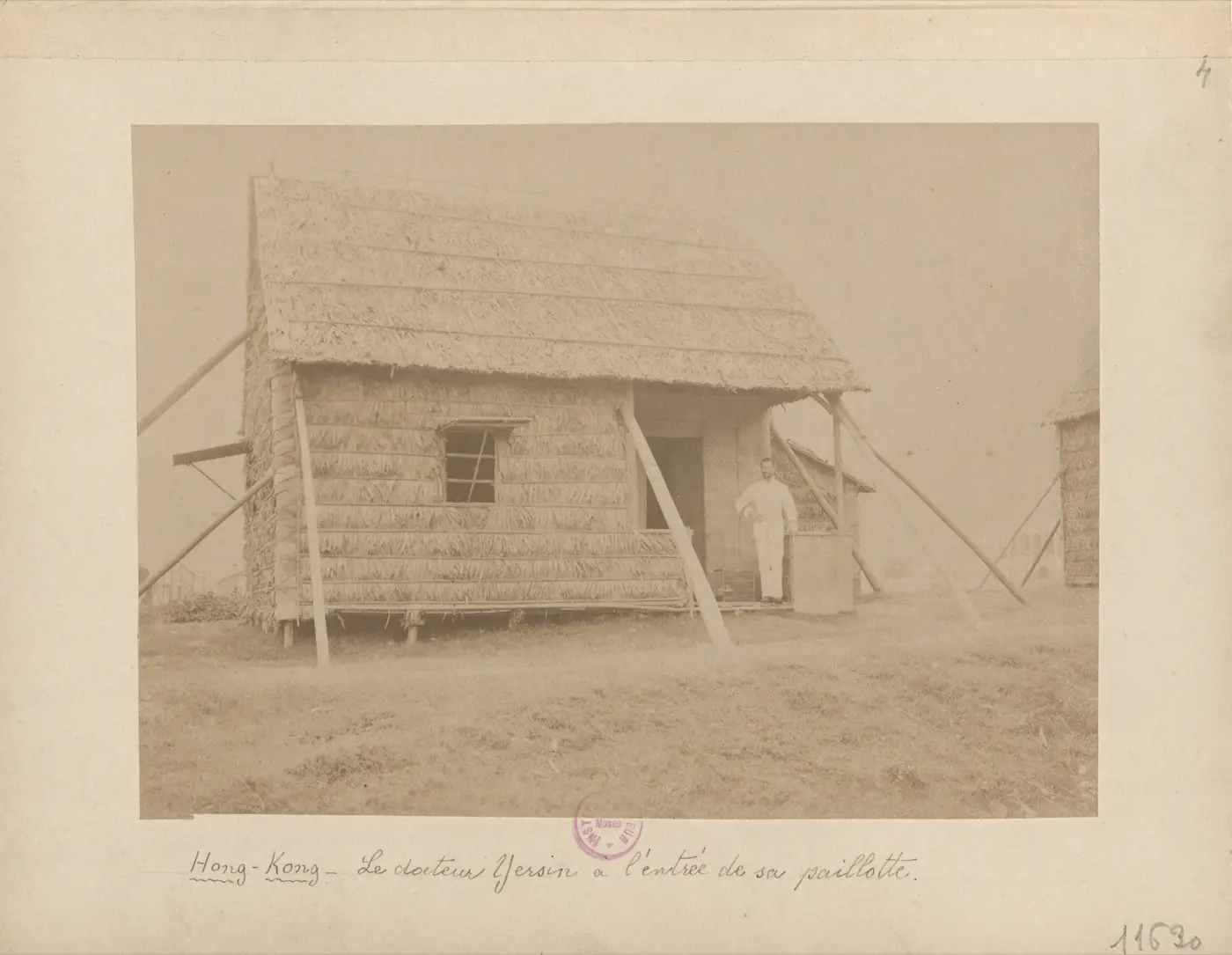
Flies swarmed into the hut. When Yersin noticed them dying in large numbers, he studied them too, trying to understand how the disease spread. At the same time, he cultured the bacteria and conducted animal studies. Sick animals carried the same microbe he had seen in human tissue. Observation after observation formed a clear conclusion: the cause of plague had been found.
He wrote to his mother about the work almost casually, saying he felt well, only a little tired. At the end of one letter he explained that two bodies were waiting and were already being hurried to the cemetery. Then he added: “Wash your hands after reading my letter so you don't catch the plague!”
Yersin and Kitasato: a discovery in parallel
Almost simultaneously, Kitasato also announced the discovery of the plague pathogen. The two scientists studied the same disease in the same city, yet their descriptions of the microbe differed. The Japanese team's results contained contradictions; one possible explanation is that other bacteria contaminated their samples. Yersin produced a clearer, more consistent description. Historians of medicine still debate Kitasato's share in the discovery, however, and it would be unfair to reduce the story to one man being right and the other simply wrong.
The greatest surprise is that what first looked like Yersin's disadvantage may have helped him. Kitasato had a properly equipped laboratory; Yersin had a hut and a modest set of instruments. Yet the conditions in that improvised laboratory happened to suit the microbe better. The shortage of equipment became an advantage, allowing Yersin to observe and describe what was harder to distinguish in his rival's work. This is one explanation for his success, not a claim that dirt and discomfort somehow benefit science.
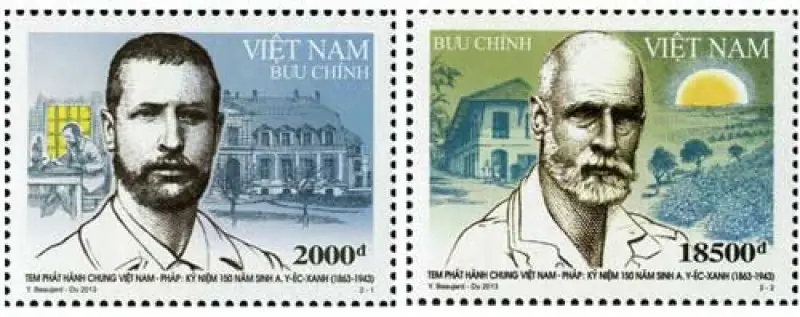
The plague bacterium was later named Yersinia pestis in his honour. Yersin's name remains not only on the streets of Nha Trang but in medical textbooks around the world.
Return to Nha Trang
After the discovery, Yersin returned to France. In Paris he was welcomed as a scientist whose name had become known around the world in a matter of weeks. He received the Legion of Honour, one of France's highest distinctions. Pasteur and his colleagues were delighted to have the young researcher back at the institute, where a brilliant Parisian career now seemed open to him.
Fame was not Yersin's final goal. The bacterium he had identified was still killing people, which meant the work was unfinished. Together with Emile Roux and Albert Calmette, he decided to develop an anti-plague serum that could be used to treat patients.
He needed his own laboratory and a place to continue the work. He returned to Nha Trang, a city that had already become home. What he did there would soon reach far beyond Pasteur's circle. Nha Trang was no longer merely the starting point for his journeys; it became the base from which he hoped to help people struck by plague across Asia.
From then on, Yersin looked less and less like a scientist visiting Vietnam temporarily. He built a lasting life there, treating people, studying animal diseases, and seeking ways to protect entire countries. Colleagues urged him to return to Paris, but he replied: “If you had seen Nha Trang even once, you would never ask me to stay in Paris.”
A doctor for people and animals
In the late nineteenth century, disease in Vietnam threatened animals as well as people. Livestock epidemics could destroy farms within weeks, depriving families of food, transport, and income. Yersin therefore turned to veterinary medicine. For local residents this was not an abstract scientific concern but a matter of survival.
Horses, cattle, and buffaloes appeared at the laboratory. They were needed for observation and for producing therapeutic sera. A working farm gradually grew around the small station, requiring stables, pasture, feed crops, and people who knew how to care for the animals.
Yersin had to learn almost everything from scratch. The physician accustomed to microscopes and Paris lecture halls now studied livestock breeds, watched harvests, and tried to make the farm independent of uncertain supplies. He tested crops and searched for a place where the animals could remain healthy.
The research station gradually became an entire system. Diseases were studied and sera prepared in Nha Trang, helping protect farms from epidemics. Outside the city, at Suoi Dau, a large livestock farm grew in connection with the laboratory. Yersin never separated science from the life around him: if disease destroyed a herd, it had to be fought not only in an office but where people lived and animals grazed.
The Pasteur Institute in Nha Trang
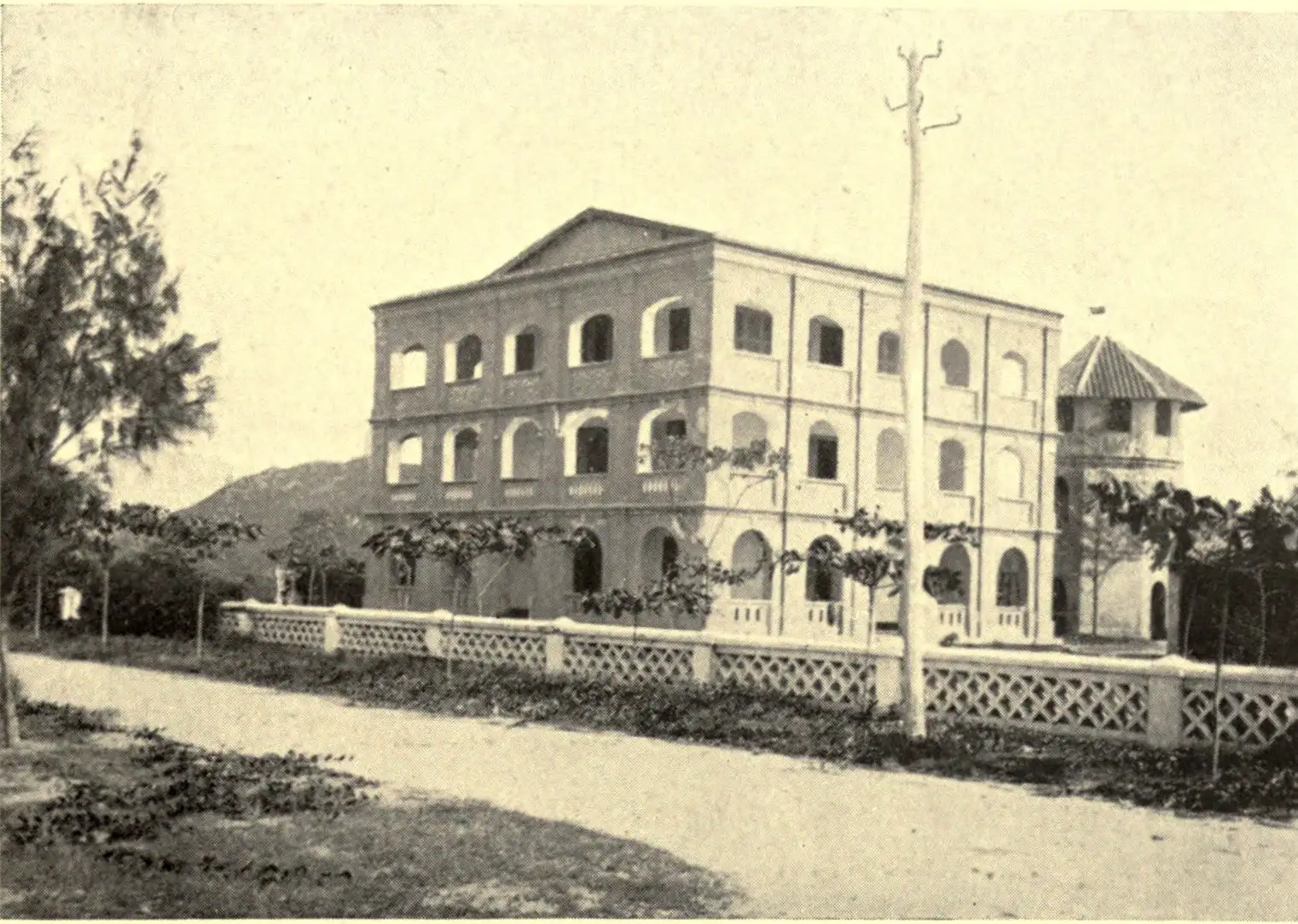
In 1895 Yersin founded a laboratory in Nha Trang that later became part of the Pasteur Institute network. It studied human and animal diseases, prepared sera, and gradually acquired a farm, staff, and new departments. Yersin effectively built it from nothing: choosing the site, organizing the work, developing the livestock station, and connecting it with other medical institutions in Indochina.
The laboratory initially belonged to the administration of French Indochina. In 1904 it was placed under the scientific direction of the Pasteur Institute in Paris and became known as the Pasteur Institute of Nha Trang.
Hon Ba and a medicine for malaria
Yersin's work was not confined to the coast. He knew that plague was not the only tropical threat. Malaria was a constant danger to residents, workers, and travellers. The only reliable medicine was quinine, obtained from the bark of the cinchona tree. It had to be imported from far away, making supplies uncertain and treatment expensive.
Yersin decided to try growing cinchona in Indochina. He chose Mount Hon Ba, about fifty kilometres from Nha Trang, where the climate was cooler and wetter than on the coast and resembled the tree's native conditions. Reaching the summit was difficult: a road had to be cut through the forest and housing built for the station's workers.
A small research station appeared on Hon Ba in the mid-1910s. Yersin travelled there to observe the plants and see whether they would adapt to the local climate. There was no familiar city life, only mountain forest, mist, rain, and the long road back to Nha Trang. Yet such places had always attracted him: they allowed him to begin almost from nothing.
Cinchona grew slowly, so quick results were impossible. Yersin was working for the future; he wanted Indochina to produce its own malaria medicine. In time, cinchona cultivation helped establish quinine production in the region.
The man Nha Trang embraced as its own
When Yersin died on 1 March 1943 (the Pasteur Institute gives 27 February), colleagues and officials were not the only people who came to say goodbye. Behind his coffin walked residents of Nha Trang, fishermen from Xom Con, and people he had once treated without charge. The funeral procession stretched for more than three kilometres. The city was not bidding farewell to a visiting French doctor, but to someone it had come to regard as one of its own.
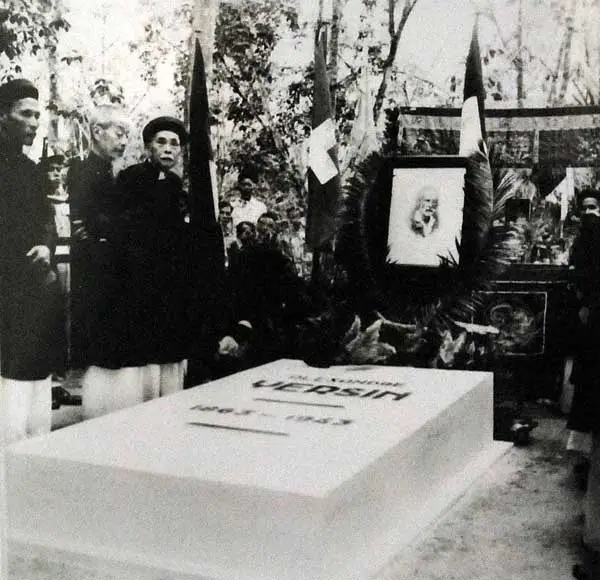
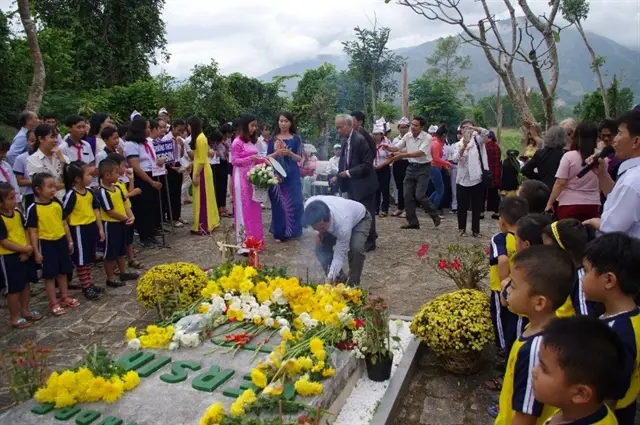
Yersin asked to be buried at Suoi Dau and not returned to Europe. He wanted to remain amid the land he had explored and the people he had helped. His grave is simple, almost hidden in the greenery. Beside it stands a small shrine where people still bring flowers and light incense.
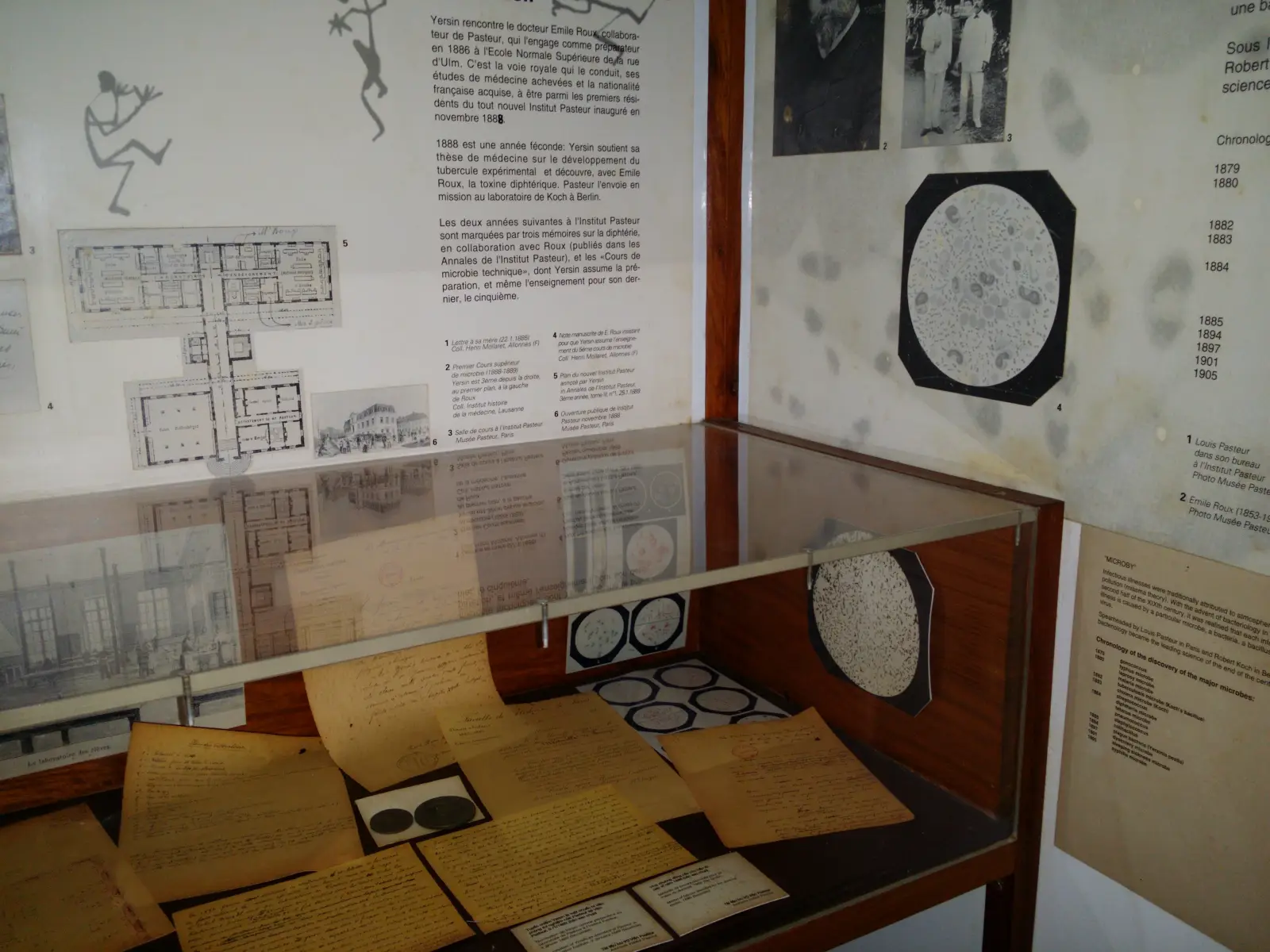
In Nha Trang, visitors can also see the Yersin Museum at the Pasteur Institute. It occupies the house where he lived and worked, preserving his belongings, books, letters, photographs, and scientific instruments. The modest exhibition reveals not only a celebrated researcher, but the man who spent years among these objects and considered Nha Trang his home.
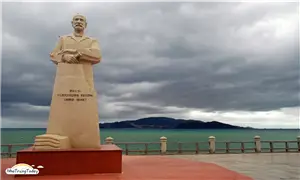
In Vietnam, his name has long extended beyond medical history. For Nha Trang he is not merely a figure in a textbook, but the man who chose this shore and remained in the city's memory. Hospitals and educational institutions bear his name. Vietnam posthumously named him an honorary citizen, a rare distinction for someone born in Switzerland, employed by France, and never a Vietnamese national.
Official honours still do not explain the tenderness with which people remember him. In local stories, Yersin became an almost legendary figure, a man believed to heal, protect, and continue doing good even after death. Some call him an embodiment of the god of medicine. Gratitude, respect, and memories of the unassuming doctor mingle in this belief: the man who visited the sick, showed films to children, and left everything he had built to the people of Nha Trang.
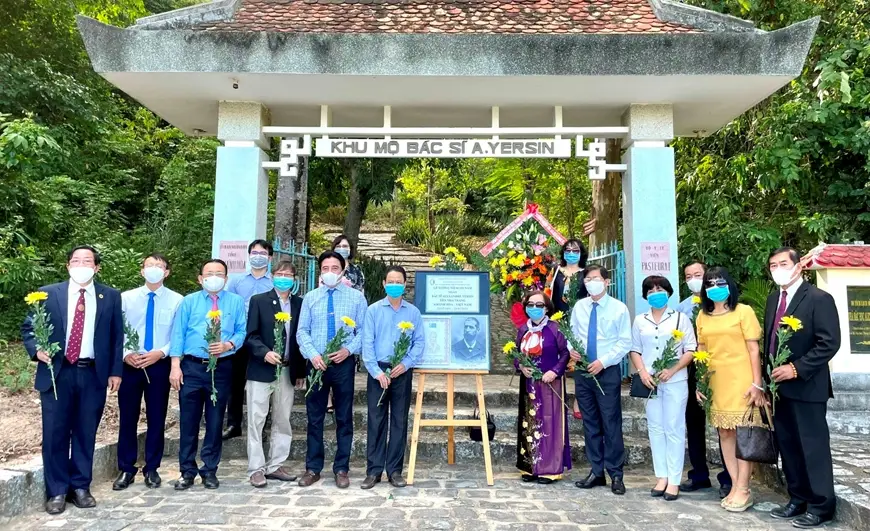
He arrived from Paris intending to stay only temporarily, aboard a ship, carrying a microscope and almost no money. Instead, he remained for life. That is why people at his grave remember more than the scientist who discovered the cause of plague. They remember the man who chose Nha Trang and became part of the city forever.
Comments
Read also
All articles
Hue, Da Nang and Hoi An in 5–7 Days: A Practical Central Vietnam Itinerary
Hue, Da Nang and Hoi An are close enough to combine in one trip, but they should not be treated as three similar stops. Hue…
Mekong Delta: How to Plan Your Trip and What Is Actually Worth Seeing
The Mekong Delta is not a single attraction near Ho Chi Minh City. It is a huge region of rivers, canals, rice fields, orchards and…

From Mivina to Vinpearl: How a Billionaire from Kharkiv Changed Vietnam
Can instant noodles make you enough money to build your own Disneyland on a tropical island? Pham Nhat Vuong went from trading in Moscow and…
Best Beaches in Vietnam: Where to Go by Month and Which Destination to Choose
Vietnam has almost 3,300 km of coastline, but there is no single nationwide “beach season”. In winter, the most reliable beach weather is usually found…
No Sex, Music or Weapons: Life in the Coconut Kingdom During the War
A French education, a religion of his own and an island in the middle of the Mekong: the story of Nguyễn Thành Nam and the…
The Last Turtle of Hoan Kiem: Hanoi’s Symbol and a Legend Come to Life
How Le Loi received a magic sword, why Hanoians called the lake’s giant inhabitant the Venerable Turtle, and what became of the last of her…