Vietnamese coffee: what to order and how to understand café culture
If you are trying Vietnamese coffee for the first time, start with cà phê sữa đá — sweet iced coffee with condensed milk. If you prefer black coffee, order cà phê đen nóng. In Hanoi, try cà phê trứng, coffee topped with a thick egg cream, while Huế is known for cà phê muối, served with a sweet and salty cream layer.
But Vietnamese coffee is much more than a handful of famous drinks. Street cafés with tiny plastic tables exist alongside traditional phin coffee, large local chains, and modern specialty coffee shops experimenting with different beans, roast profiles, and brewing methods.
There is one important distinction to make from the start: a famous coffee culture does not necessarily mean consistently great coffee.
Why Vietnamese coffee tastes different
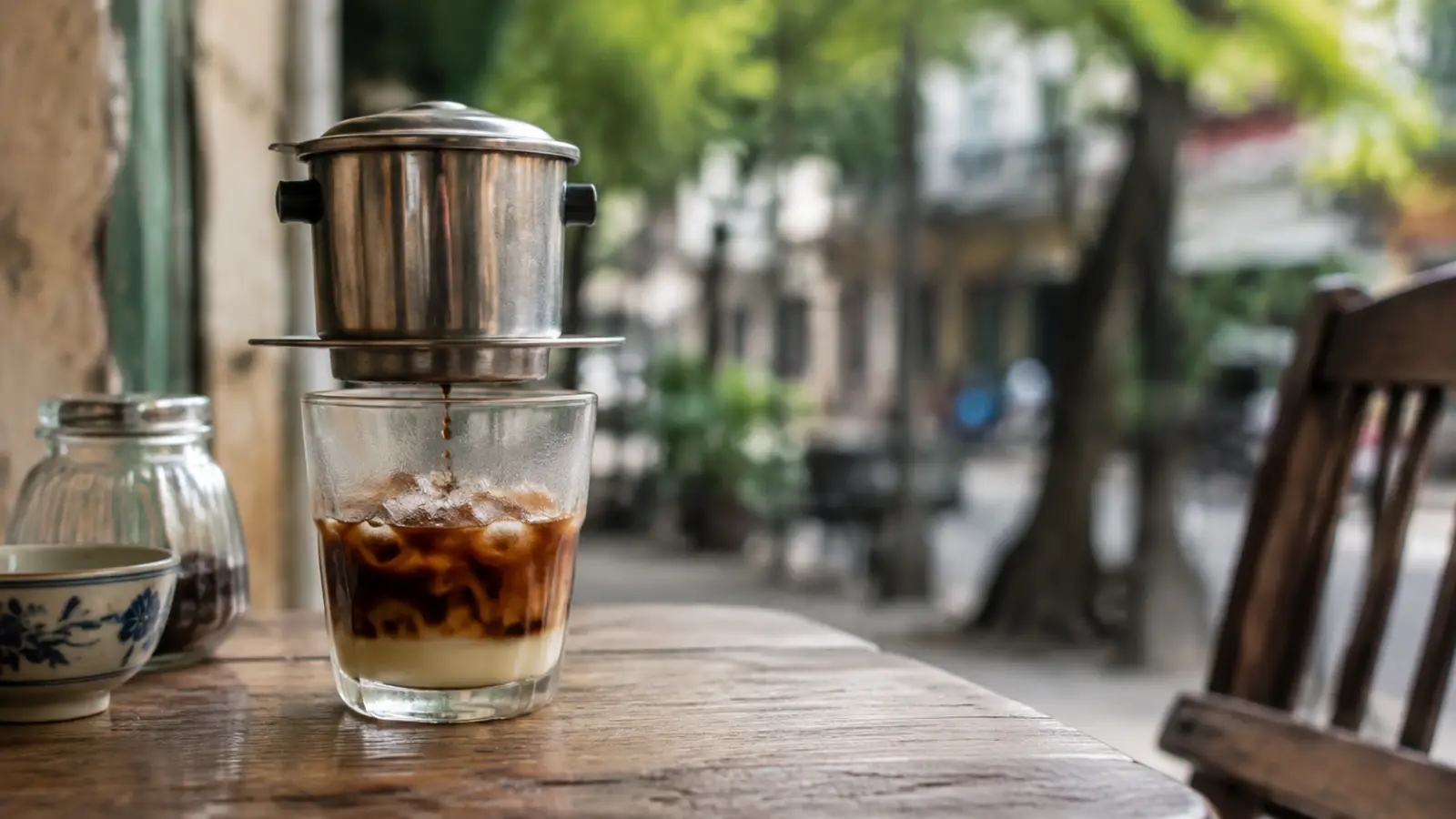
One of the symbols of Vietnamese coffee culture is the phin, a small metal filter placed directly on top of a cup or glass. Hot water slowly passes through the ground coffee, so brewing takes several minutes. This is simply part of the method, not slow service.
Vietnam widely uses robusta, known for its high caffeine content, pronounced bitterness, and heavy body. Traditional Vietnamese coffee is often made from very dark-roasted beans, and some roasting styles also use oil or other additions. Modern coffee shops work with robusta, arabica, and blends of the two, so today the term “Vietnamese coffee” can refer to very different drinks.
Many popular recipes deliberately combine coffee’s bitterness with sweetness and other flavours. Condensed milk, coconut, yogurt, egg cream, and salted cream are not merely additions to the same basic drink. They create distinct coffees with very different flavours and textures.
Famous does not necessarily mean good
This part is subjective. In my experience, beans in most ordinary Vietnamese cafés are roasted so heavily that, to me, they go beyond a dark roast and taste effectively burnt.
Drink this coffee black and the intense bitterness, smoky character, and almost burnt notes become particularly obvious. Condensed milk, cream, coconut, or a large amount of sugar can partly compensate for this: sweetness and fat soften the harsher flavours. That is probably one reason very dark coffee works so well in many traditional Vietnamese recipes.
But if you are used to good specialty coffee and want to taste the beans themselves — acidity, natural sweetness, fruit, chocolate, or nutty notes — the difference is immediately noticeable. A large serving of condensed milk can turn the drink into an enjoyable dessert, but it cannot turn over-roasted beans into good coffee.
I would therefore separate Vietnamese coffee culture from coffee quality. The culture itself is distinctive, interesting, and deservedly famous. But I would not say that excellent coffee is available everywhere in Vietnam. Truly good coffee certainly exists here, including coffee made from locally grown beans, but you usually have to look for it in dedicated specialty cafés and roasteries. These places are far less common than ordinary street cafés and are usually more expensive.
That is not a reason to avoid traditional Vietnamese coffee. Quite the opposite: cà phê sữa đá, cà phê trứng, and cà phê muối are worth trying as part of the local cuisine. Just do not assume that every random cup will showcase exceptional beans.
What to order: the main types of Vietnamese coffee
| Name | What you get | Best for | What to know |
|---|---|---|---|
| Cà phê đen nóng | Hot black coffee, often brewed through a phin | Anyone who wants to taste the coffee without milk | Can be extremely strong and bitter |
| Cà phê đen đá | Black coffee over ice | Those who want cold coffee without milk | Sugar is sometimes added |
| Cà phê sữa nóng | Hot coffee with condensed milk | A good introduction to the typical combination of bitterness and sweetness | The amount of condensed milk varies |
| Cà phê sữa đá | Coffee with condensed milk and ice | One of the easiest choices for a first Vietnamese coffee | You can ask for it less sweet |
| Bạc xỉu | A milk-heavy coffee with much more milk and less coffee than cà phê sữa đá | Those who find regular Vietnamese coffee too strong | The proportions vary from café to café |
| Cà phê trứng | Strong coffee topped with a thick cream made from egg yolk, sugar, and condensed milk | Anyone looking for a dessert-like coffee | Contains egg and dairy |
| Cà phê muối | Coffee topped with a sweet and salty cream layer | Those interested in an unusual balance of coffee, sweetness, and salt | The cream recipe varies |
| Cà phê dừa | Cold coffee with coconut milk or coconut cream, often with condensed milk and ice | Fans of sweet cold drinks | Recipes vary considerably |
| Cà phê sữa chua | Coffee with yogurt, sometimes condensed milk and ice | Those who like sweet and tangy flavours | Check the ingredients if you want to avoid extra sugar |
The same name does not guarantee exactly the same recipe. Coconut coffee, for example, may be blended with ice and coconut cream into an almost dessert-like drink in one café, while another serves the coffee and cream in separate layers. If sweetness, dairy, or particular ingredients matter to you, ask about the recipe before ordering.
Choose in 30 seconds
If you do not want to work through a long menu, use this shortcut:
- strong coffee without milk — cà phê đen nóng or cà phê đen đá;
- classic cold Vietnamese coffee — cà phê sữa đá;
- milder and milkier — bạc xỉu;
- almost a dessert — cà phê trứng, cà phê dừa, or cà phê sữa chua;
- something unusual and local — cà phê muối;
- if you want to judge the beans themselves — find a specialty coffee shop and order filter coffee, pour-over, or another drink without sugar or milk.
If you are sensitive to caffeine, do not assume that a sweet or milky drink is necessarily weak. It is better to ask how much coffee it contains.
Useful phrases for ordering
| Phrase | Meaning | When to use it |
|---|---|---|
| Một cà phê sữa đá, cảm ơn. | One iced coffee with condensed milk, please | A basic order |
| Cà phê đen không đường. | Black coffee without sugar | If you want to taste the coffee itself |
| Ít ngọt, xin vui lòng. | Less sweet, please | For milk, coconut, and dessert-style drinks |
| Không sữa, không kem. | No milk, no cream | If you want to avoid these ingredients |
| Không đá. | No ice | If you do not want ice |
| Có trứng không? | Does it contain egg? | When checking the ingredients |
If you have a food allergy, a short phrase such as không sữa may not be enough: the ingredient could still be present in a cream, premixed base, or another part of the drink. It is safer to show the Vietnamese name of the specific allergen and ask staff to explain the ingredients.
How to drink coffee from a phin
If a phin arrives sitting on top of your cup, wait for the water to pass through the coffee. This normally takes several minutes.
If condensed milk is already at the bottom of the glass, it is usually stirred into the coffee after brewing. For an iced version, ice is then added or the coffee is poured into a separate glass of ice, depending on the café.
The phin is important not only as a brewing method. Slow coffee fits naturally into Vietnamese café culture, where people may spend time talking, meeting friends, or simply watching the street over a single cup.
But a phin is not a mark of quality by itself. Excellent coffee can be brewed through a simple metal filter, while poor beans remain poor regardless of the brewing method. If you care about the flavour of the coffee itself rather than only the local ritual, pay attention to the beans and the roast.
Different cities have different coffee associations
Hanoi is particularly famous for cà phê trứng. Strong coffee is topped with a thick cream made from egg yolk, sugar, and condensed milk. The result is sweet, rich, and closer to a dessert than a conventional black coffee.
Huế is associated with cà phê muối, or salted coffee. Its defining feature is a creamy topping with a small amount of salt, which softens the bitterness while enhancing the sweetness.
In Ho Chi Minh City, you can still find places serving cà phê vợt, where coffee is filtered through a cloth filter rather than a metal phin. At the same time, the city has an enormous modern coffee scene ranging from large local chains to small roasteries and specialty cafés.
Da Lat and the Central Highlands matter less because of one specific recipe and more because of coffee production itself. A significant share of the country’s coffee is grown in this region, including both robusta and arabica, and the area is home to farms and roasters. Da Lat is particularly interesting if you want to try modern Vietnamese coffee that tastes very different from the extremely dark roast commonly encountered in traditional cafés.
These associations are not strict geographical rules. Egg coffee is now sold far beyond Hanoi, just as salted coffee has spread beyond Huế. The connection to a particular city is more useful for understanding a drink’s origins and place in Vietnamese coffee culture.
Where to look for genuinely good coffee
If you want to try not just a characteristic Vietnamese drink but genuinely high-quality beans, walking into a random street café is probably not the best strategy.
Look for cafés that provide information about:
- the origin of the beans;
- whether they use arabica, robusta, or a specific variety;
- the growing region or farm;
- the processing method;
- the roast profile or roasting date;
- different brewing methods.
None of these details guarantees an excellent cup, but their presence suggests that the café treats coffee as a product in its own right rather than merely a base for a sweet drink.
Modern high-quality robusta is particularly interesting. Robusta does not inherently have to taste harsh or burnt. With good beans, careful processing, and sensible roasting, it can produce a rich, full-bodied cup without the scorched flavour often associated with mass-market traditional coffee.
Vietnam does have good specialty coffee shops, particularly in Hanoi, Ho Chi Minh City, and Da Lat. In my experience, however, this is still a distinct segment rather than the standard you can expect from almost any café.
How to choose coffee or a phin to take home
If you want to bring Vietnamese coffee home, first decide which flavour you are trying to recreate.
If you enjoyed traditional strong coffee with condensed milk, a dark-roasted robusta or a blend designed for phin brewing may be exactly what you want. If you plan to drink the coffee without sugar or milk, pay much more attention to the origin of the beans and the roast level. In that case, buying a random packet simply because it says “Vietnamese coffee” is not a particularly good strategy.
When buying ground coffee, check whether the grind is suitable for a phin. With whole beans, look for the roast date. Sealed packaging will usually preserve the aroma better and is also easier to transport.
A phin itself is a very simple metal filter with no complicated mechanism. For home use, a small model designed for one normal serving is generally more practical than a large souvenir version.
Before travelling internationally, check the rules for bringing coffee and other food products into your destination country. Factory-sealed packaging with proper labelling is usually more convenient than unlabelled coffee.
Even the same beans may taste different at home. Grind size, coffee dose, water temperature and mineral content, brewing time, condensed milk, and ice all affect the result. If you particularly liked a cup in a café, it is useful to find out not only the brand but also the bean, roast, and brewing method.
How to work out which Vietnamese coffee you actually like
There is no need to try ten different drinks in a row. Comparing them gradually is much more useful.
For example, start with black phin coffee and later try the same style with condensed milk. On another day, compare cà phê sữa đá with the milkier bạc xỉu. If you are more interested in local recipes, try egg, coconut, or salted coffee.
If you want to understand the quality of the beans themselves, do the opposite: remove the sugar, milk, and cream. Black coffee makes it much easier to tell whether you actually like the beans and roast, or whether most of what you enjoyed in the previous cup came from the additional ingredients.
Pay attention to aroma, bitterness, sweetness, and aftertaste. If the main impression is sharp bitterness and burnt flavours rather than the character of the beans, you may simply not enjoy such a dark roast.
What to remember
Vietnamese coffee culture genuinely deserves attention. The phin, cà phê sữa đá, egg coffee, cà phê muối, street cafés, and the habit of spending plenty of time over a single cup make it very different from European coffee culture.
But coffee culture and coffee quality are two different things.
In my experience, typical coffee in Vietnam is often roasted too heavily, while sugar, condensed milk, and creamy toppings only partly hide that flavour. The fame of Vietnamese coffee therefore does not mean that an excellent cup awaits you in almost every café.
Traditional drinks are still absolutely worth trying as part of the local cuisine and culture. But if you want genuinely good coffee where the beans themselves are the interesting part, rather than only the recipe built around them, look for modern roasteries and specialty coffee shops.
Vietnam has that kind of coffee too. You just have to seek it out deliberately.
Sources: Vietnam Tourism — materials on traditional phin brewing, robusta, Vietnamese coffee culture, Da Lat, and the country’s modern specialty coffee scene; Perfect Daily Grind — overview of traditional dark roasting and Vietnamese coffee.
Comments
Read also
All articles
How to Rent an Apartment in Vietnam: Contract, Deposit, Utilities and What to Check Before Paying
Renting an apartment in Vietnam is usually easier than in many European countries. Landlords rarely ask for a credit history, salary statements or references from…

Da Lat in 2–3 days: sights, prices and an itinerary
Giant gods, forest coaster rides and a coffee farm, with prices and a daily plan.

How to Find What You Need in Vietnam: Why Post a “Demand” Listing
When you need to find an item, a place to live, a tradesperson or a service in Vietnam, the first reaction is usually obvious: open…
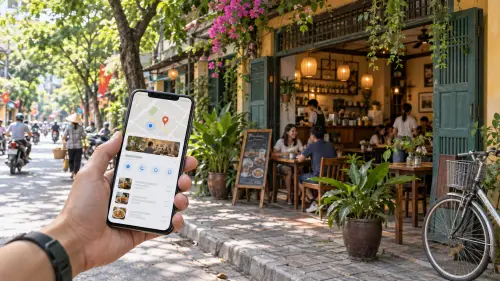
Why a Venue in Vietnam Benefits from Listing in "Places and venues"
A restaurant, café, bar, hotel, coworking space, spa, salon, dive school or other offline business in Vietnam almost always already has at least one digital…

How to earn from tourism services in Vietnam: partners, commissions and first customers
Choose a city and tourism niche in Vietnam, find local providers, agree commissions, publish a clear listing and learn how to handle your first customer…

From Mivina to Vinpearl: How a Billionaire from Kharkiv Changed Vietnam
Can instant noodles make you enough money to build your own Disneyland on a tropical island? Pham Nhat Vuong went from trading in Moscow and…