Why a Venue in Vietnam Benefits from Listing in "Places and venues"
A restaurant, café, bar, hotel, coworking space, spa, salon, dive school or other offline business in Vietnam almost always already has at least one digital channel: Google Maps, Facebook, Instagram, TikTok, its own website or a page on a booking service. So a reasonable question comes up: why create one more listing?
Because different platforms solve different problems. Google Maps is good at showing what is nearby. Social media conveys atmosphere and current content. A business’s own website gives it full control over information. A local directory helps someone who is already looking for where to go, where to eat, where to stay or which service to use specifically in Vietnam.
On Vietnam by Anilau, that is what “Places and venues” is for.
This type of listing describes the place itself and remains useful regardless of a particular promotion or event.
A permanent listing instead of a temporary post
A Story disappears. A post gradually sinks down the feed. A discount ends. An event passes. A venue listing works differently. It answers lasting questions: what kind of place it is, where it is, what it offers, when it is open and how to contact it. For an owner, it is a way to bring the essential information together on one page instead of scattering the address across Google Maps, the menu in Highlights, WhatsApp in the bio and opening hours across several old posts.
Google Maps is essential, but it does not do everything
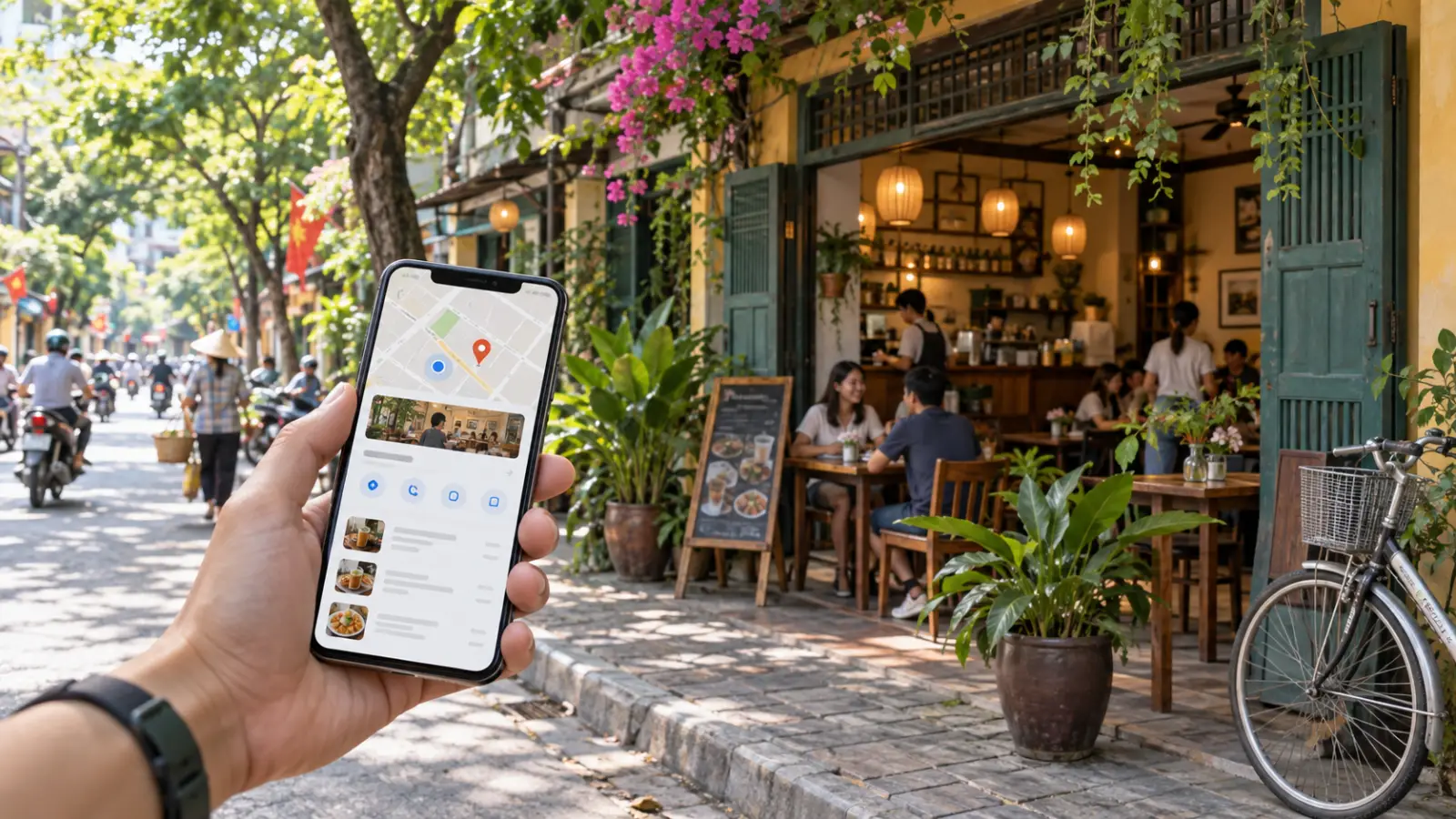
There is no reason for a business to give up Google Maps. However, users do not always start their search with a map. They may read about Nha Trang and decide to find a nearby restaurant. Browse a directory of cafés in Da Nang. Look for a coworking space for a month. Choose a dive centre on Phu Quoc or a family-friendly place in Ho Chi Minh City. In that situation, a local directory becomes another point of entry. A listing does not compete with Google Maps: it can show the real address and a map, helping someone first decide whether the venue suits them and then plan a route.
A separate page offers another path from search
A listing has its own public page with a name and description. It does not guarantee the top position on Google and should not be sold to owners as a magical SEO tool. But a high-quality standalone page creates another opportunity for people to discover a business through search or internal pages of the site. For that to work, the description needs to be specific. The phrase:
The best café with an incredible atmosphere
tells you almost nothing. This is much more useful:
A small breakfast café in northern Nha Trang: Vietnamese and European breakfasts, coffee, several vegetarian dishes, and work tables with Wi-Fi.
That text is clearer to people and more accurately describes the actual business.
Visitors need facts, not advertising adjectives
People do not open a listing to read an advertising slogan. They are trying to decide whether the place suits them. For a restaurant, useful details include the cuisine, approximate price level, breakfast, alcohol, vegetarian dishes, whether booking is needed and the seating format. For a coworking space: internet, workstations, meeting rooms, opening hours and rates. For a dive centre: programmes, seasonality, instructors’ languages and dive sites. For a salon: services, advance booking and ways to get in touch. The owner is the person who knows the answers to these questions better than a random directory contributor.
A listing is useful for more than tourists
Tourists lack local context. They do not know the distances between neighbourhoods, actual opening hours, whether they need to reserve a place or whether it is worth travelling across the city. But someone who has lived in Vietnam for several months is constantly looking for new places too: cafés, sports, medical services, coworking, studios, children’s activities and services. That is why a listing serves both tourist and long-term audiences.
Multiple languages are a real advantage
Vietnam welcomes a very diverse international audience. In Nha Trang alone, Vietnamese, Korean and Chinese residents, Russian-speaking tourists and English-speaking travellers may all be there at the same time. If a venue genuinely serves several audiences, separate language versions are more convenient than one long description containing five translations in a row. This matters especially where language affects a purchase: tours, healthcare, education, beauty, diving, children’s services and consultations. But the facts must match in every version: address, opening hours, contacts, prices and booking conditions.
Instagram and TikTok show the atmosphere, but are poor reference guides
Social media is excellent for showing food, interiors, people, parties and the day-to-day life of a venue. But practical information sometimes has to be pieced together from several places. A listing solves the opposite problem: it keeps the essential details in one stable place. So the most sensible approach is to use both tools. Social media sparks interest, while the listing helps people check the details and make a decision.
Having a website does not make a directory unnecessary
If a business has a good website, that is an advantage. But people usually arrive at the official website already knowing the business’s name or having received a direct link. In a local directory, a user may still be choosing. In this case, the listing works as an entry page: it explains what the place is, then leads to the website, booking, map or contact.
“Places & Venues” and “Events” solve different problems
This is especially important for bars, restaurants, hotels, studios and other venues that hold events regularly.
“Places and venues” is a permanent listing for the venue itself.
“Events” is for a specific event with a date.
A bar can have a page describing its concept, address and opening hours, and publish a separate listing for a concert or party. A yoga studio can have a permanent page for the space and separate event listings for retreats and workshops. There is no need to choose between promoting the venue and promoting the event. They complement each other.
What owners should make sure to include
The name should match the real sign and the name used on Google Maps. The address should be precise enough for someone who has never been to that neighbourhood. Opening hours should be kept current, especially if the kitchen closes before the bar or if the schedule varies by day of the week. The first paragraphs of the description should answer “What kind of place is this?” before telling the brand’s story. Photos should show the real place: food and dining room for a restaurant, rooms and grounds for a hotel, workstations for a coworking space, and the interior and actual services for a salon. The contact should lead to a channel where someone really responds.
Do not copy the same text from every platform
An Instagram bio is too short. Corporate website copy may be too promotional. A Google Maps description sometimes assumes that the map itself already shows the rest of the information. For a local listing, it is better to write a separate, concise description: first the type of place, then its features, followed by practical details.
Information should change as the business changes
An outdated listing is worse than no listing. If a restaurant has moved, its hours, WhatsApp number or booking rules have changed, the page should be updated. Permanent information should stay stable, while short-term promotions are better promoted through other channels.
Reviews are useful, but do not replace a description
Reviews help people see other visitors’ experiences. But they should not be the only source of information about a venue. The owner is still responsible for accurate contacts, hours, address and a clear description. There is no point in artificially filling a page with identical glowing reviews either. A few genuine, substantive comments are more useful than dozens of empty ones.
Who benefits most from the section
This format suits almost any physical venue: a restaurant, café, bar, hotel, hostel, villa, coworking space, spa, salon, fitness or yoga studio, dive centre, shop, gallery, school, club or tourist attraction. A listing is especially valuable where people are choosing between several similar options. In a competitive neighbourhood, it is not enough to be “another café.” You need to help visitors understand why this particular place fits their needs.
What a listing does not guarantee
Publishing a listing alone does not guarantee a queue at the door, the top place on Google or a sudden increase in sales. Its value is simpler: the business gains another permanent point of presence in the local information landscape. A user may discover the page, understand what kind of place it is and go straight to the map or contact. That is why “Places and venues” is best seen as part of the basic digital infrastructure alongside Google Maps, social media and the business’s own website.
How to use the listing after publication
The link can be sent to guests, used in local groups, added to posts and shared with partners. It is especially convenient for a business without a full website: one page can bring together a description, location, contacts and essential practical details.
Checklist for a good listing
Before publishing, check that:
- the name matches the real business;
- the right category and location are selected;
- the exact address is provided;
- the map pin is correct;
- the hours are current;
- the contacts work;
- the first paragraphs explain what kind of place it is;
- the photos show the actual venue;
- all language versions contain the same facts.
After publishing, open the page on your phone and imagine seeing the name for the first time.
If within a minute it is clear what the place is, where it is, when it is open and why you might go there, the listing is doing its job.
Comments
Read also
All articles
Mekong Delta: How to Plan Your Trip and What Is Actually Worth Seeing
The Mekong Delta is not a single attraction near Ho Chi Minh City. It is a huge region of rivers, canals, rice fields, orchards and…

Where to Live in Vietnam for a Month: Da Nang, Nha Trang, Ho Chi Minh City, Hanoi, or Da Lat
Choose a Vietnam base for a month by daily life: sea, work, districts, season, budget and a one-week housing test.

The Bird That Drove the World Crazy: The Vietnamese Creator of Flappy Bird
The world’s most popular mobile game was earning tens of thousands of dollars a day. Why did Nguyen Ha Dong remove Flappy Bird at its…

Vietnamese coffee: what to order and how to understand café culture
Phin, essential drinks, ordering language, city clues and a practical way to explore Vietnamese coffee.

Nha Trang Travel Guide: How Many Days, Where to Stay and What to Do
How long should you stay in Nha Trang? Three days covers the city, beach and one outing; five to seven days gives you time for…

Everyday Vietnam: How to Communicate at Markets, Cafés and in Vietnamese Homes
Travellers in Vietnam rarely need a deep understanding of local etiquette. Mispronouncing a word, choosing the wrong form of address or not knowing where to…