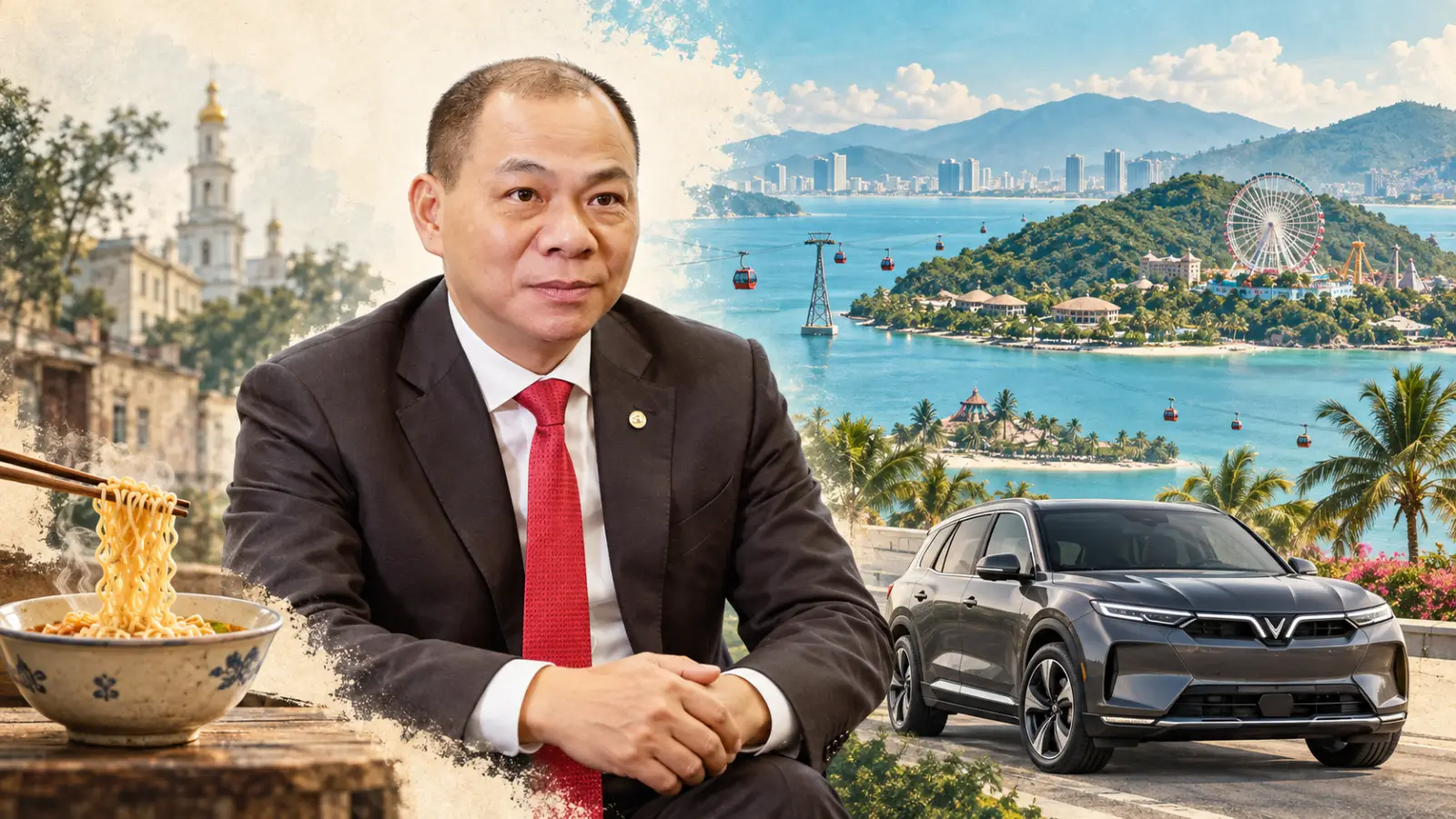
From Mivina to Vinpearl: How a Billionaire from Kharkiv Changed Vietnam
Can instant noodles make you enough money to build your own “Disneyland” on a tropical island? And open a whole network of hospitals, create an education system from kindergarten to university, and build residential districts with artificial lakes and beautiful homes? And launch an electric car brand that briefly overtook every carmaker except Tesla and Toyota in stock market value? This is the story of one Vietnamese man whose life Netflix really ought to turn into a film. Who is he, and what on earth does Kharkiv have to do with it? Read on.
Growing up in Vietnam and studying in Moscow
Pham Nhat Vuong was born in 1968 and grew up in Hanoi. His father served in the air defence forces, his mother sold tea, and money was tight in a family with three children. Vuong was the eldest and had a knack for maths, which opened the door to studying in the Soviet Union. He won a scholarship to the Moscow Geological Prospecting Institute. Yes, the man who would later make noodles, resorts and electric cars started out studying the economics of mineral extraction.
In Moscow, Vuong did more than study. By his third year, he had rented a room to run a small trading business, but it kept losing money. He tried opening a little restaurant, then began importing goods from Vietnam. Windbreakers sold well: at last, he made some decent money. Then he lost it all. As he later explained, the market had changed, and he did not yet have the experience to react in time.
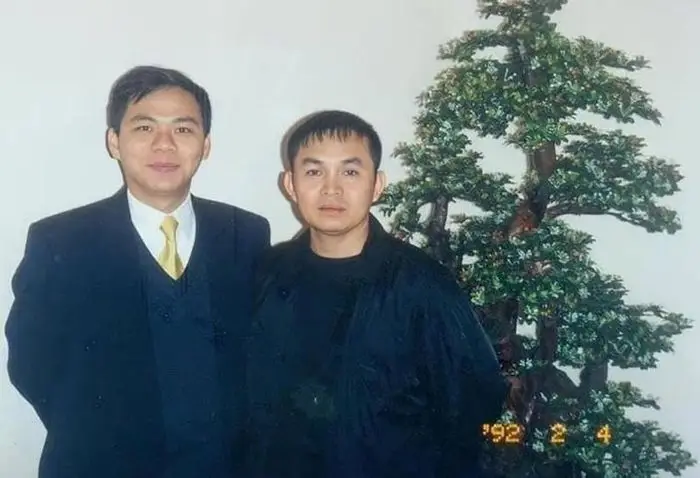
After those setbacks in Moscow, Vuong and several fellow Vietnamese decided to try their luck in Kharkiv. The choice was practical: the city seemed quieter than Moscow, yet it was a major industrial centre with good transport links—a promising place to trade and build a business. So, in 1993, the future billionaire moved to Ukraine. His Moscow ventures did leave him a souvenir, though: a debt of $40,000.
Kharkiv and Mivina
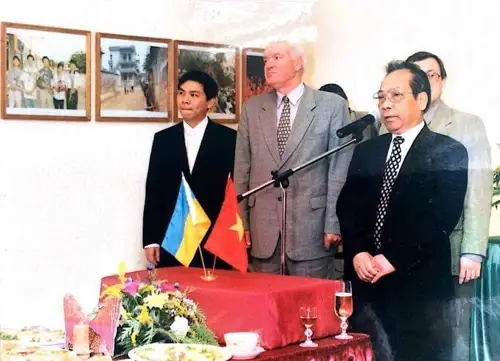
In Kharkiv, Vuong and his wife opened a restaurant. Relatives and friends helped them raise around $10,000 for it. They found premises in a former canteen at the Malyshev factory. The food was tasty and inexpensive, and the restaurant soon attracted regular customers.
Meanwhile, Vuong and his partners were looking for something they could sell in shops. In 1990s Ukraine, people needed affordable food. Back in Vietnam, one such product was already familiar: instant noodles. Once they had saved enough money, they decided to manufacture them in Kharkiv.
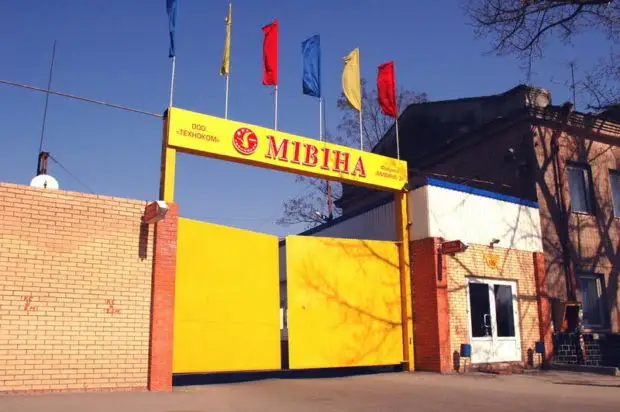
There was just one problem: noodles that were everyday fare in Vietnam were unfamiliar to many Ukrainian shoppers. For the first two years, the owners and their staff handed out free packets and explained that all you had to do was add boiling water. At first, people struggled to believe cooking could be that simple.
Even the name kept a link to home: “mi” means noodles, while “vina” refers to Vietnam. Together, “Vietnamese noodles”. The founders debated whether to highlight the product’s origins, since few people knew much about Vietnamese goods at the time. In the end, they decided they wanted their product to put their country on the map.
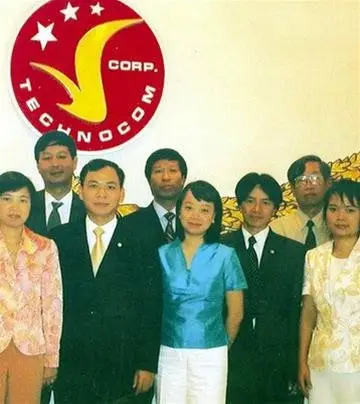
Gradually, the convenience and low price won customers over. Mivina grew into a substantial business: by 2010, its manufacturer, Technocom, had two factories in Kharkiv, around 1,900 employees and exports to 20 countries.

Russian readers are probably more familiar with Doshirak and Rollton. Doshirak originated in South Korea, while Rollton, despite its name, was also built by Vietnamese entrepreneurs who developed their business in Russia. Vuong was far from the only person to see a business opportunity in noodles he had known since childhood.
Returning to Vietnam
In the early 2000s, while Mivina was growing in Ukraine, Vuong began investing in Vietnam. For one of his first projects, he chose Nha Trang, a coastal city. Investors were relatively scarce there at the time, and the local authorities welcomed his interest. His plan was to build an upscale resort with a hotel and beach on a nearby island. He later said that a combination of circumstances had led him into property development. The extra workload, however, was quite concrete: factories in Ukraine, construction in Vietnam, and constant flights between the two. Nestlé had been offering to buy Technocom for several years, but Vuong was not ready to let it go.
As Vuong later recalled, the news of an Air France plane disappearing over the Atlantic in 2009 shook him. He was constantly flying between Ukraine and Vietnam himself. What would happen to his wife and children if one day he did not come home? By then, he had plenty of projects in Vietnam that he wanted to focus on properly. That same year, he agreed to sell his Ukrainian business to Nestlé so he could stop dividing his life between two countries.
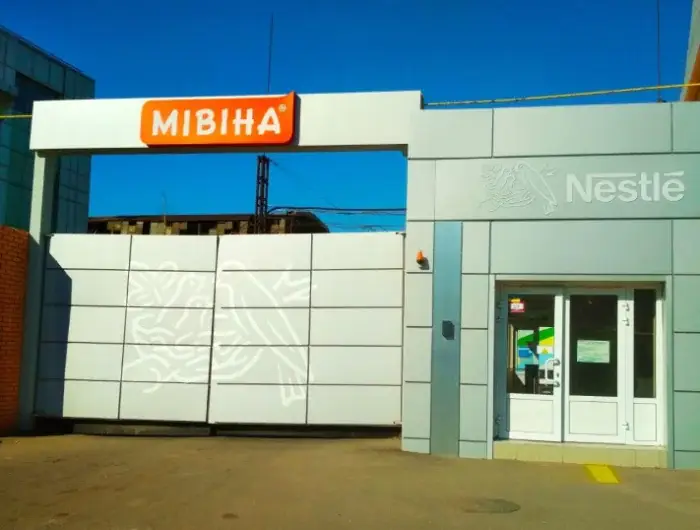
In February 2010, Nestlé announced its purchase of Technocom, the company behind Mivina. Forbes estimated the deal at around $150 million.
Vinpearl: “Disneyland” on a tropical island
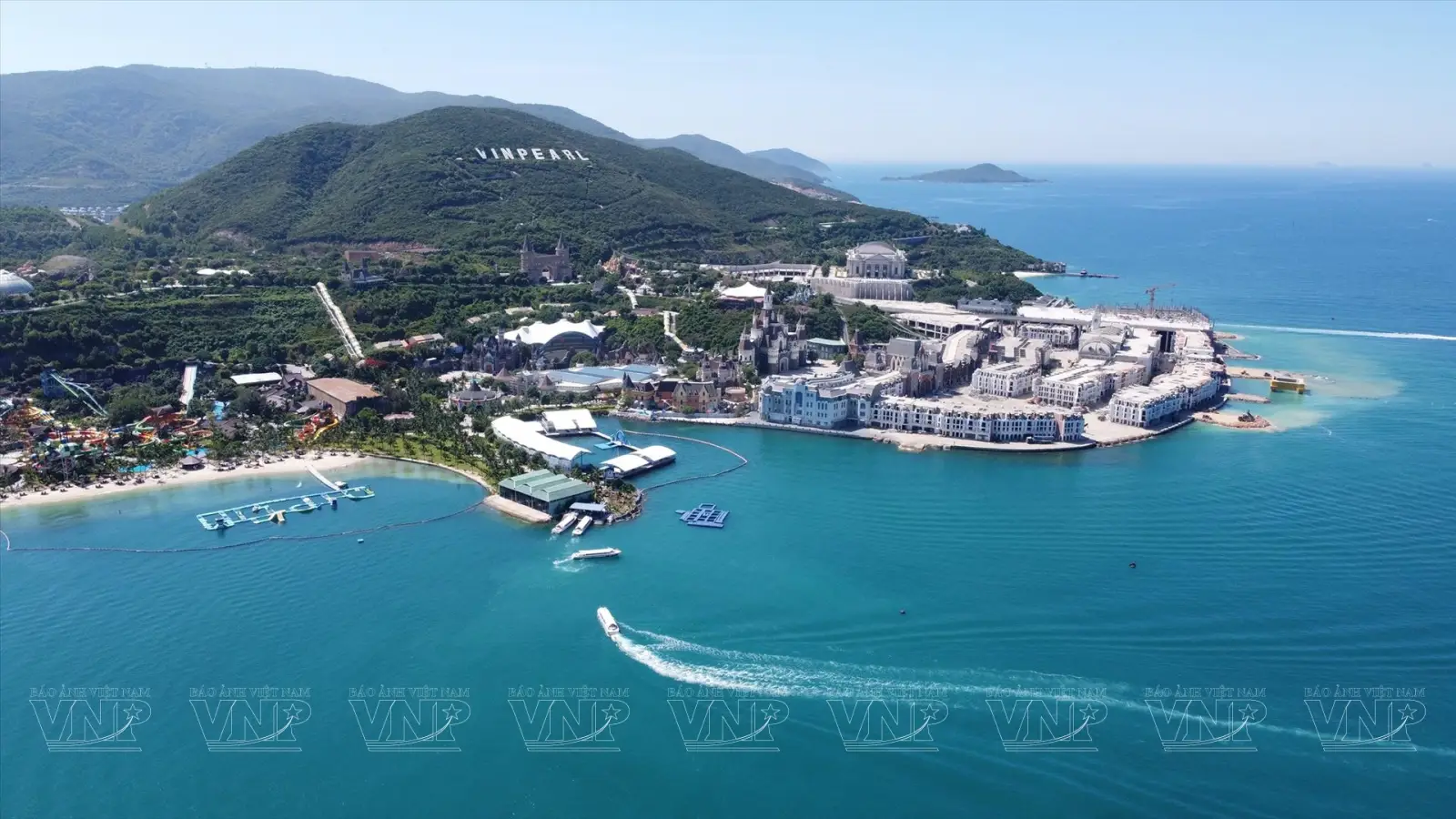
Building a resort on Hon Tre Island was no simple task: first, everything needed for construction had to get there. Before work on the hotel could begin, the team built a pier, commissioned three barges with a capacity of 200 tonnes each, and laid a road to the future resort. Cement, bricks, fuel and water came from the mainland, along with bulldozers, dump trucks, excavators and cranes. Between 1,500 and 2,000 people worked on the site each day. The hotel opened in December 2003, with guest rooms, restaurants and a large swimming pool ready to welcome visitors. The resort was named Vinpearl: the “Vietnamese pearl”.
In 2006, an amusement park opened next to the hotel. It gradually grew into a whole “Vietnamese Disneyland”: the rides were joined by a water park, a zoo, an aquarium and a botanical garden with plants from around the world. A 120-metre Ferris wheel rose above the island, and musical fountain performances filled the evenings. Later came Tata Show, a production with performers, fire and projections across a fairytale castle. The island hotel had become a major family resort where the beach was only one part of the entertainment. Today, the park is called VinWonders Nha Trang.





At first, visitors reached the island by speedboat or ferry. But Vuong decided to connect the resort to Nha Trang by cable car as well. The line opened in March 2007 and stretched 3,320 metres across the bay, making it the world’s longest overwater cable car at the time. Now, the journey took around ten minutes, with views of the sea, mountains and city on the shore from the cabin.
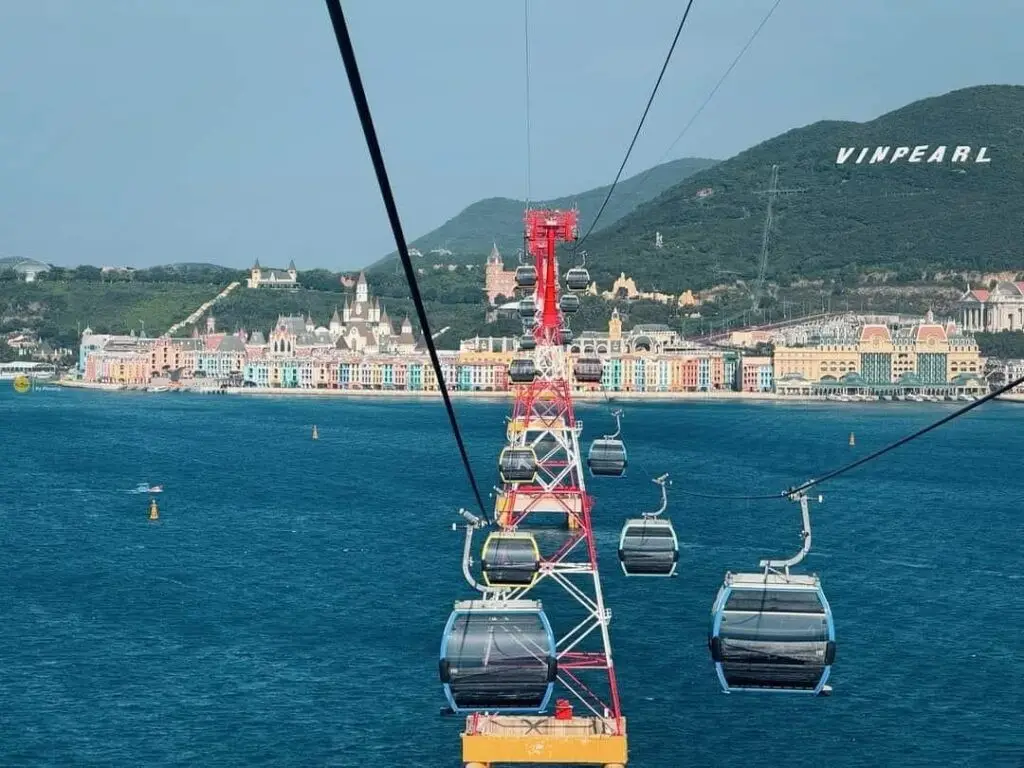
Construction of the cable car station in 2022. These photographs show later work, not the original construction for the 2007 opening.

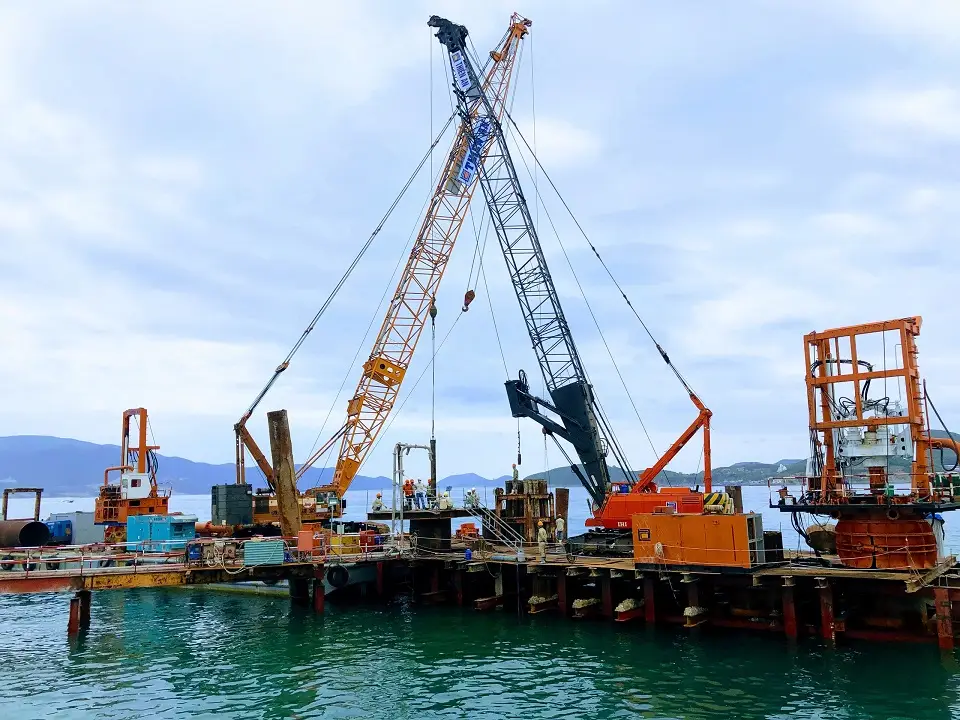
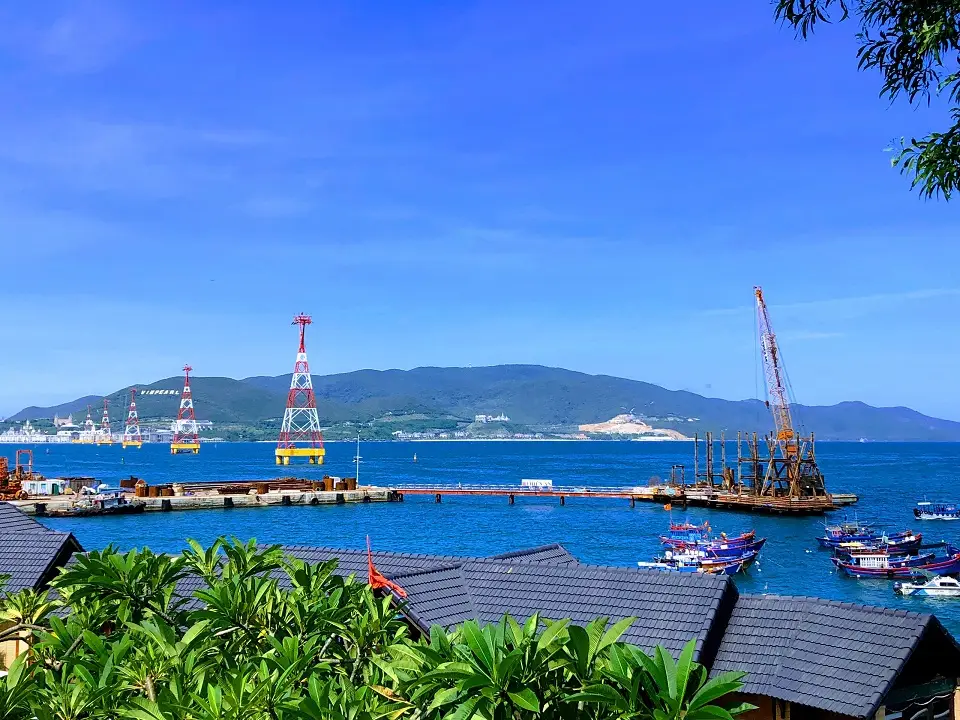
An even longer overwater cable car was later built by the company of Vuong’s former partner, Le Viet Lam, who had worked with him on Mivina in Kharkiv. After returning to Vietnam, Lam developed Sun Group, another builder of resorts and amusement parks. The Golden Bridge near Da Nang—the one held up by two enormous stone hands—is one of its projects. On Phu Quoc, the company built a cable car almost eight kilometres long to the neighbouring island of Hon Thom. Former noodle-making partners had become rivals for tourists.
In 2012, the Vinpearl resort business and property developer Vincom merged to form Vingroup.
Vinhomes residential districts
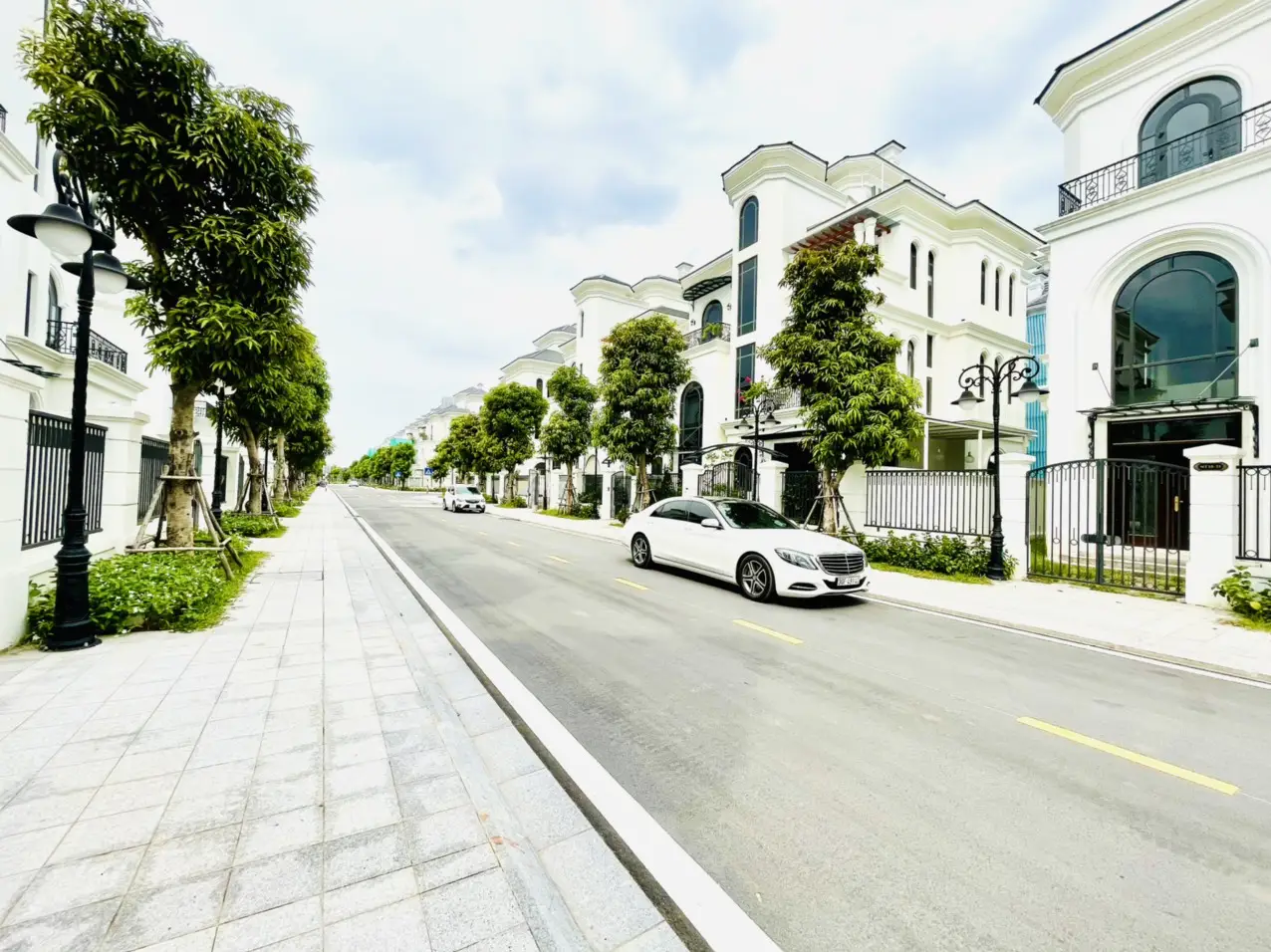
Alongside its resorts, Vuong’s company was building entire residential districts, complete with parks, schools, shops and walking paths. These projects were later brought together under the Vinhomes name.
In Vietnam’s capital, Hanoi, Vinhomes Riverside took shape: canals and little bridges ran between European-style villas, with landscaped banks along the water.
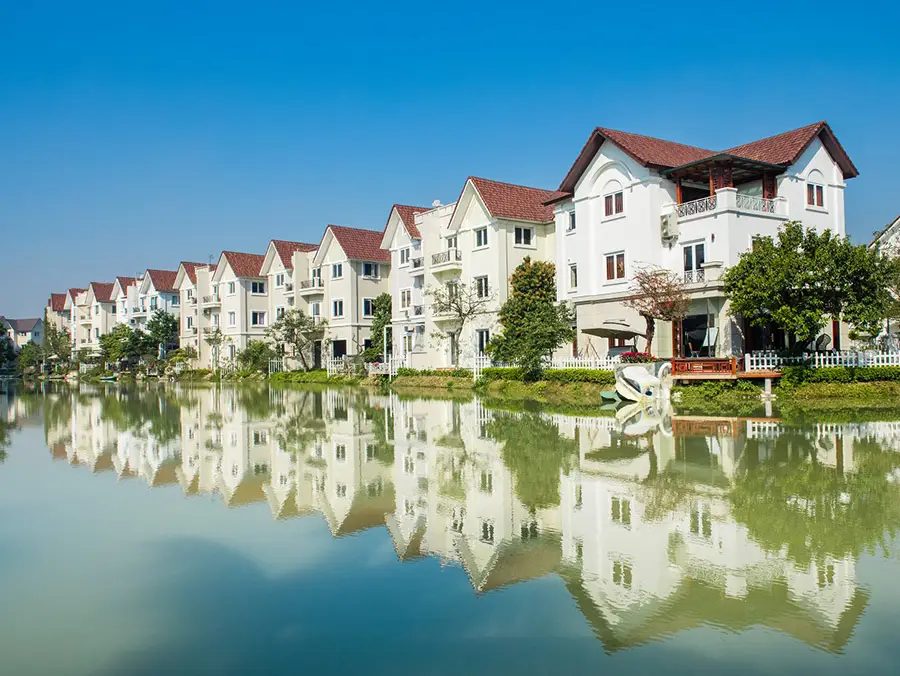
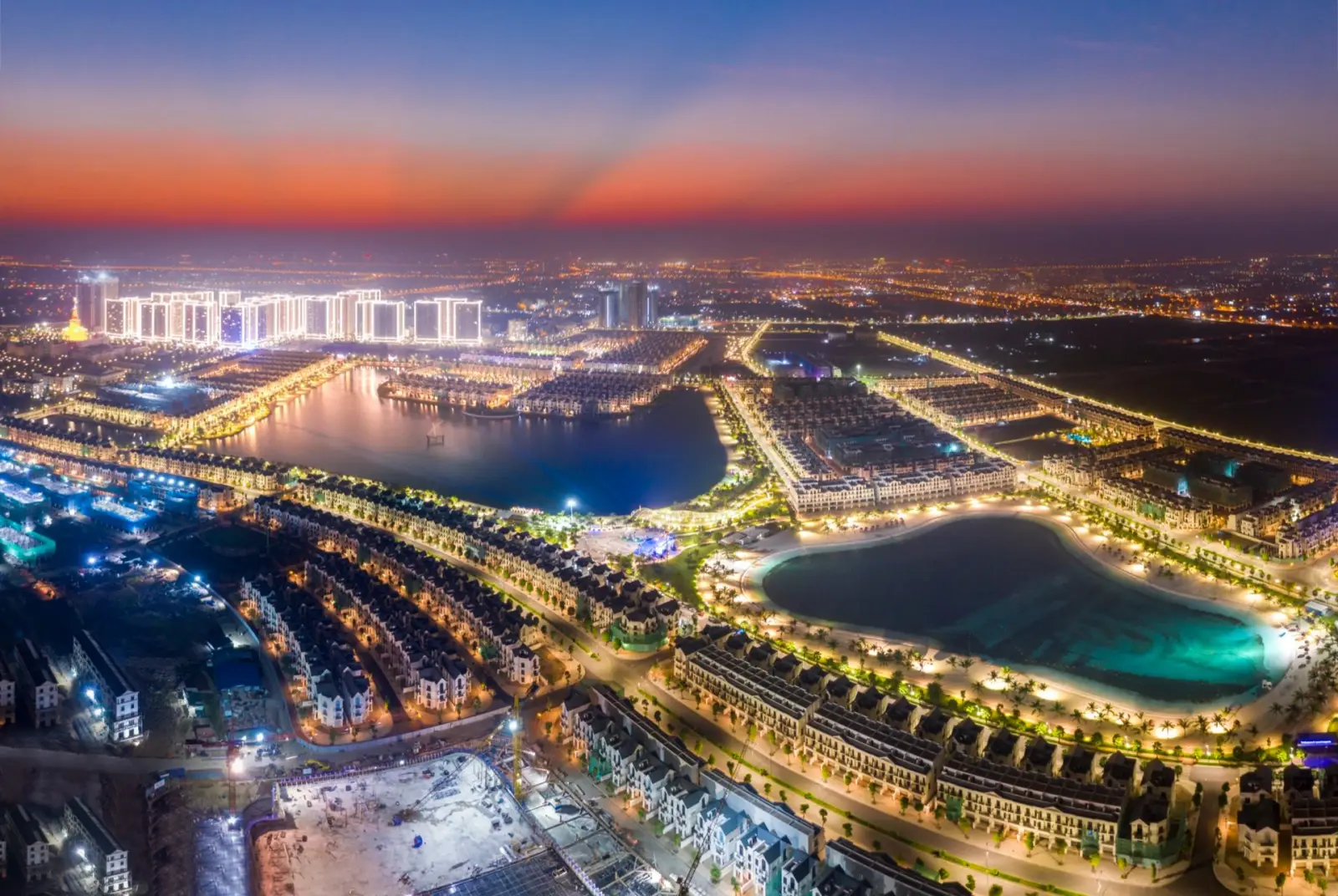
Another district, Ocean Park, gained its own little “sea”—a saltwater lagoon with a sandy beach. Nearby are a large freshwater lake and spaces for walking, sport and barbecues.
Hospitals, schools and a university of his own
The company began opening its own Vinmec hospitals for the new districts. One was headed by paediatric surgeon Nguyen Thanh Liem, whose surgical technique appeared in British and American textbooks. Over time, doctors there also began replacing cancer-damaged bones with 3D-printed implants. In one case, an eight-year-old boy had his entire thigh bone replaced. His leg was saved, and after surgery he began learning to walk again.

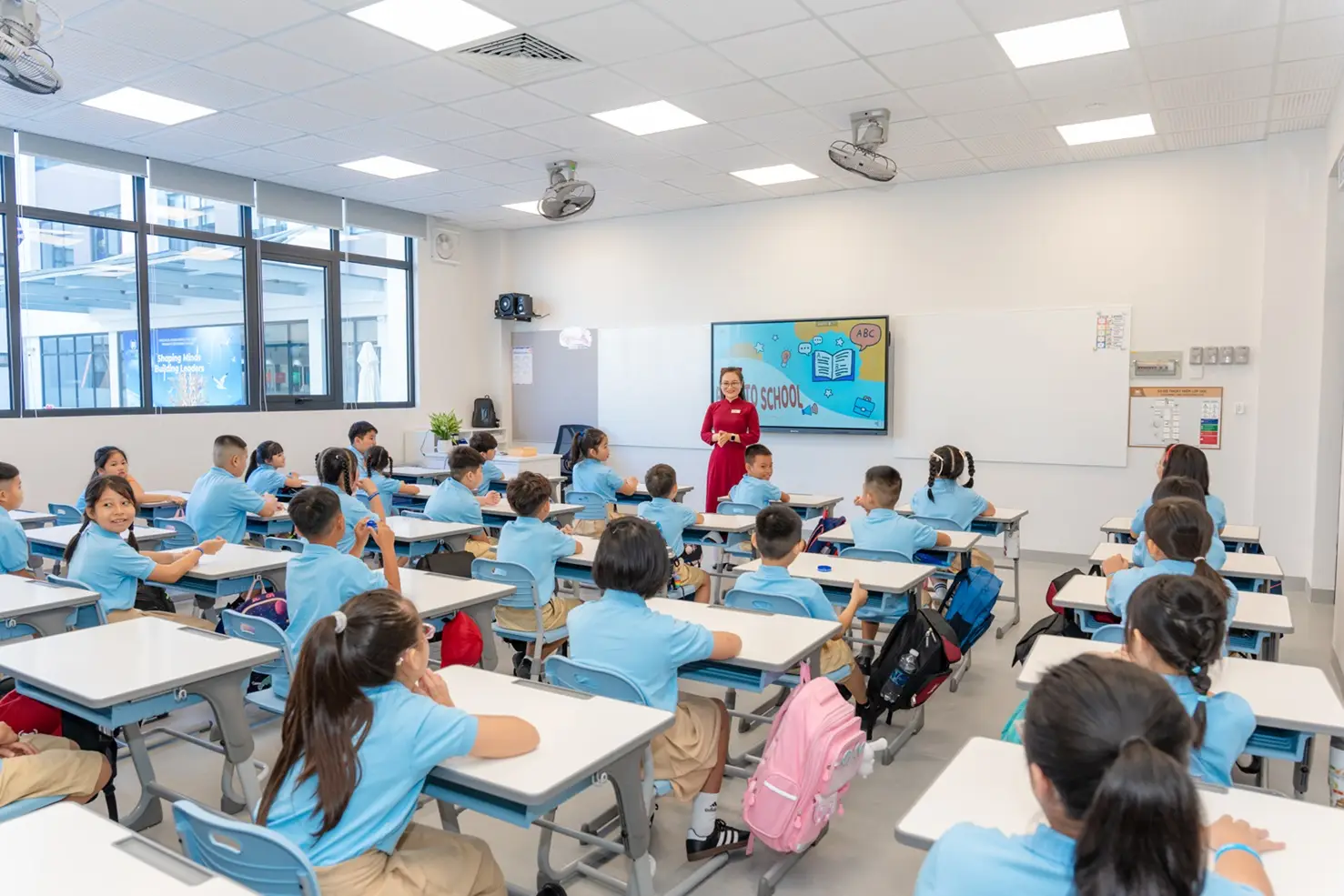
Vinschool combined Vietnam’s national curriculum with the international Cambridge programme. It created additional learning opportunities for gifted children and a scholarship programme for children from low-income families.
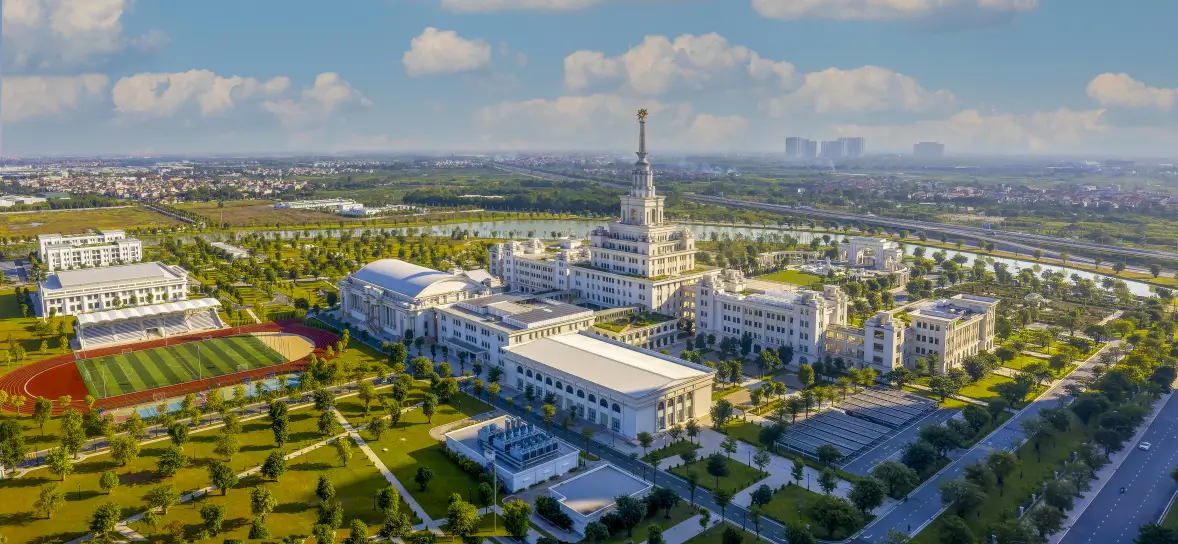
Next came VinUni. Two well-known American universities helped establish it: Cornell supported business, engineering and computer science programmes, while the University of Pennsylvania helped develop medical and nursing education. A Cornell professor became its first rector, and medical students could gain clinical experience at Vinmec hospitals. Full scholarships covering both tuition and living expenses were available from the very first intake, giving talented applicants a chance to study even if their families could not afford it.
Vuong has said that, at first, he wanted to earn enough to help his parents escape poverty, then to provide for his own family. Eventually, he wanted to do something useful for society. In 2016, Vingroup announced that all profits from Vinmec and Vinschool would be reinvested in their development: equipment, research, scholarships and staff training. Education and treatment still came at a price, but the money earned was to go back into the schools and hospitals. VinUni was set up on the same nonprofit model from the outset.
Charity and the VinFuture science prize
Through the Thiện Tâm Foundation, Vuong’s company helps pay for medical treatment and supports children from low-income families and people affected by natural disasters.
After the November 2025 floods in Nha Trang, which we also experienced, Vingroup allocated 100 billion dong—around $4 million—to recovery in the affected province of Khanh Hoa, where the city is located.
During the pandemic, Vingroup also began manufacturing ventilators. One model was based on a machine from the American company Medtronic. In August 2020, Vingroup announced that it would donate 1,700 ventilators to Vietnam’s Ministry of Health.
Vuong and his wife also founded the international VinFuture science prize. Its main award of $3 million recognises developments with the potential to improve people’s lives. The first recipients were three scientists whose research helped create messenger RNA vaccines—the technology widely used during the COVID-19 pandemic.
From VinMart to WinMart
Vuong returned to food, too, this time through VinMart supermarkets and smaller VinMart+ neighbourhood shops. But, as with Mivina, he eventually handed the business over to someone else. At the end of 2019, control of the chain passed to Vietnam’s Masan Group as Vingroup decided to focus on industry and technology. Later, the first letter on the signs changed, and the shops became WinMart.

Yet a well-earned retirement with billions in the bank was still a long way off: by then, Vuong had already moved into cars.
VinFast: from petrol cars to electric vehicles
Japan has Toyota; South Korea has Hyundai. Vuong wanted Vietnam to have a car brand known around the world, too. That was how VinFast began.
It started with petrol cars. For its first saloon and SUV, the company licensed BMW technology and commissioned designs from Pininfarina, the Italian studio that had spent decades designing Ferraris. Engineering was handled by Magna Steyr, whose factory builds the famous Mercedes-Benz G-Class. At the same time, VinFast was building its own factory in the port city of Hai Phong. Just 21 months passed between the start of construction and the opening. By 2019, customers were receiving their first cars.
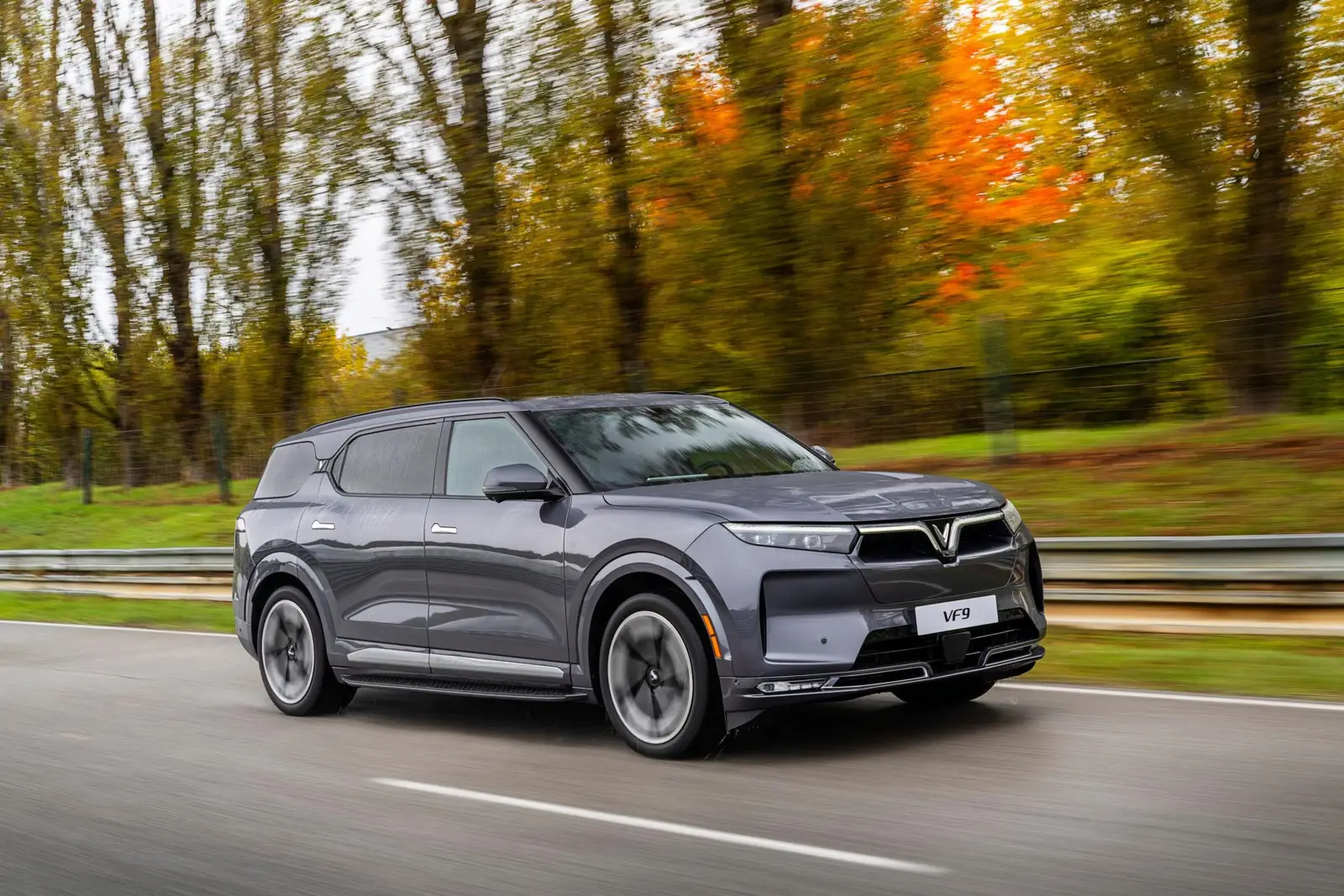
The little VinFast Fadil became Vietnam’s bestselling car model in 2021. But the company decided to concentrate on electric vehicles, seeing the growing market as a chance to expand beyond Vietnam. Petrol car production was wound down.

At the end of 2022, the first 999 electric vehicles set sail for California. VinFast’s chief executive explained the choice simply: if the brand earned acceptance in the demanding American market, winning trust elsewhere would be easier.
After listing on Nasdaq in August 2023, VinFast briefly overtook BMW, Mercedes-Benz and Volkswagen in market value. Only Tesla and Toyota remained ahead. Its sales were still nowhere near those giants. Excitement drove up the price of shares, with very few available for trading. The enthusiasm soon faded: by April of the following year, the shares were about 97% below their peak.
A taxi service and electric buses of his own
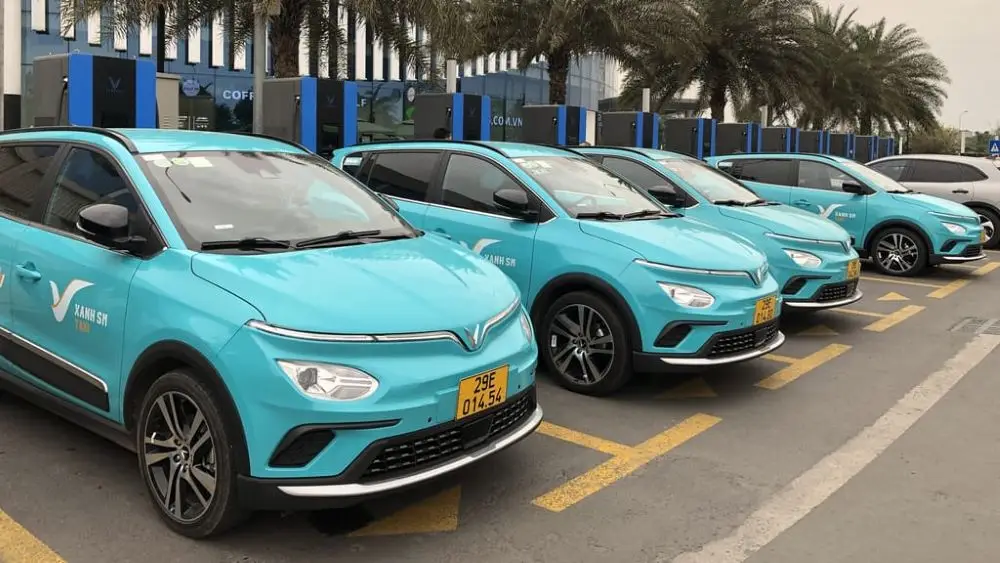
To introduce people to his electric cars, Vuong launched Xanh SM, a taxi service whose bright turquoise vehicles now travel through Vietnamese cities. The idea was simple: not everyone is ready to buy an unfamiliar car brand, but booking a ride is a much easier decision. The company hoped that passengers would enjoy the experience and eventually buy a VinFast of their own. Grab, the ride-hailing app popular across Southeast Asia, had gained a Vietnamese competitor.
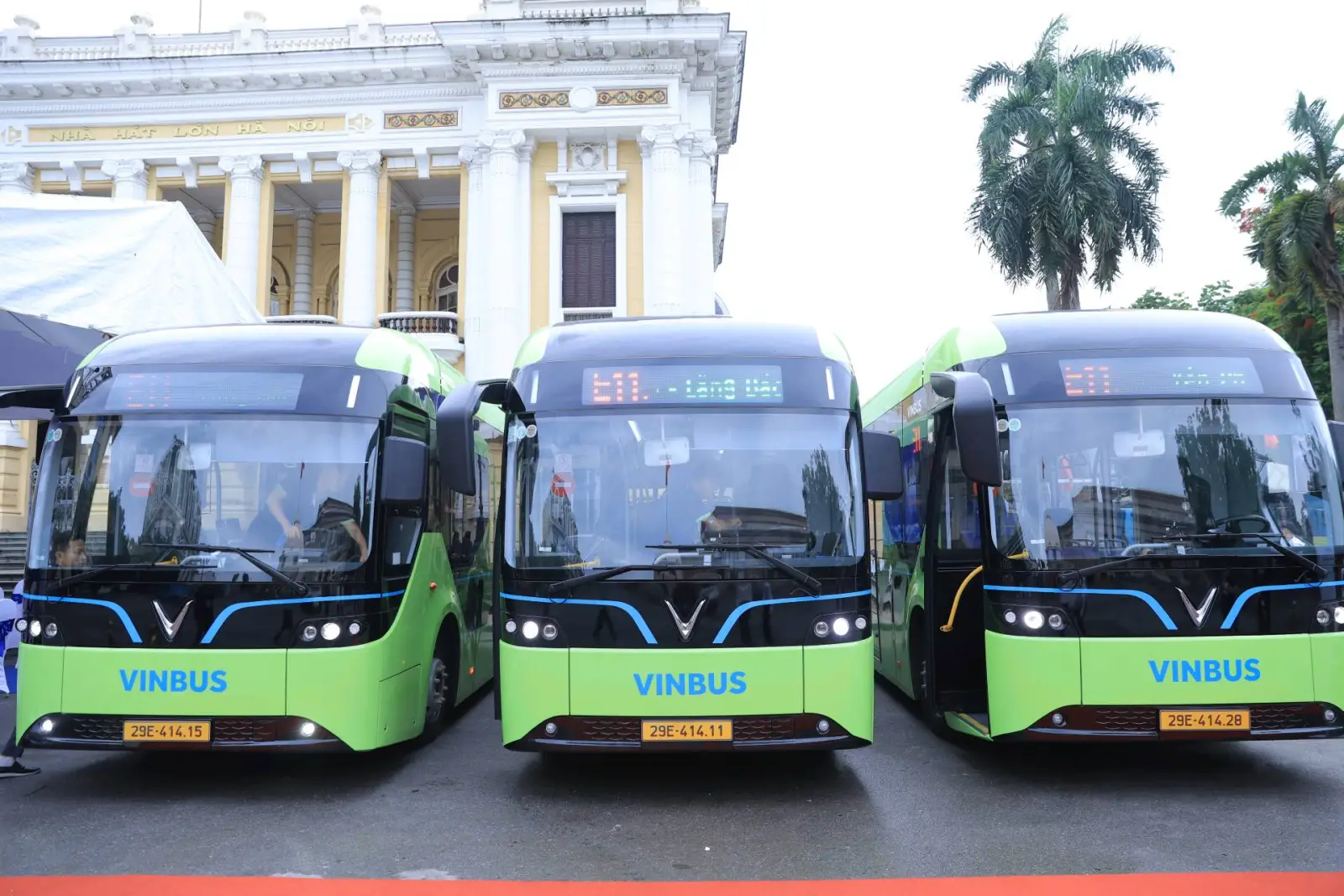
Vuong’s businesses also include electric buses: VinFast makes them, and VinBus operates the routes. In Nha Trang, you can take one to the cable car terminal for Hon Tre Island. Visitors to VinWonders and other participating Vinpearl attractions can make the return journey free of charge. So even the trip to his amusement park can be made in a vehicle produced by his own company.
VinSpeed high-speed trains
Vuong also decided to build high-speed railways. One route will connect Hanoi with Ha Long, the city beside the bay where hundreds of rocky islands rise from the water. Tourists come from all over the world for those views, but getting there from the Vietnamese capital still takes around two to three hours by car. Vuong’s company VinSpeed promises to cut the station-to-station journey to 23 minutes. You will, of course, still need to allow time to reach the station and then get to the pier. The line is scheduled to open by the end of 2028.
The trains are to be supplied by Siemens, the company behind the Sapsan trains familiar to Russian travellers. Vietnam is set to receive the new-generation Velaro Novo, designed for speeds of up to 350 kilometres per hour. The agreement also includes technology transfer: VinSpeed wants to gradually develop those capabilities in Vietnam.

The choice of routes also connects with Vuong’s other projects. A second line is being built from central Ho Chi Minh City to the coastal district of Can Gio, where Vinhomes is developing a large residential and resort complex. The planned journey from the city centre to the new development will take around 13 minutes.
Vuong has moved into energy and steelmaking as well. His companies are working on power plants and a steel complex that will supply, among other customers, his own construction and car businesses. At some point, “one-man band” no longer seems enough. This is closer to a one-man country: homes, schools, hospitals and transport, with electricity and steel production in the pipeline too.
VinBrain: artificial intelligence for doctors
Vuong also invested in AI for medicine. Backed by Vingroup, VinBrain set out to create a digital assistant for doctors. It was led by Truong Quoc Hung, a Vietnamese specialist who returned home after a senior role at Microsoft. Its engineers brought experience from Google, Microsoft, Amazon and Samsung.
The software was called DrAid. To teach it to interpret medical images, doctors marked signs of disease, and the AI learned to identify similar changes. More than 2.5 million images were collected for training. Given an X-ray, the software can flag suspicious areas in the lungs, heart or bones for a doctor to review. By 2023, it was already used in more than 100 hospitals in Vietnam, the US, New Zealand and Myanmar.
Tools for analysing CT and MRI scans followed, including applications to support the diagnosis and treatment of liver and rectal cancer. VinBrain worked with Microsoft and Stanford University on these technologies.
In 2024, VinBrain was acquired by NVIDIA, the American company known for graphics cards and AI chips. Once, Vuong had bought BMW technology to make cars in Vietnam. Now, an American technology giant was buying a Vietnamese company that had grown with his backing.
Humanoid robots
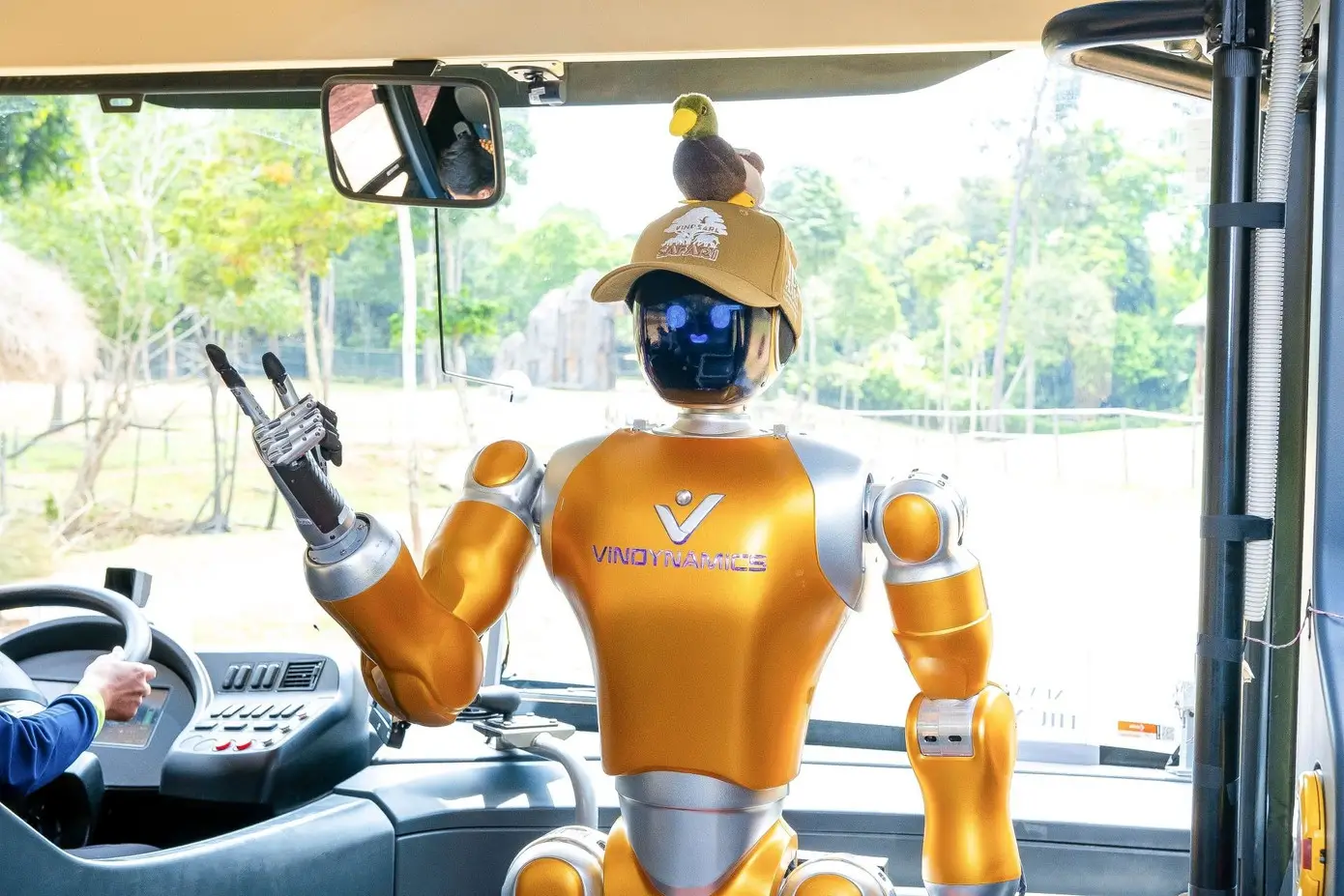
And then Vuong turned to humanoid robots. His company VinDynamics is developing assistants for household chores, patrolling sites and helping visitors. The group’s own residential districts, hotels and parks provide places to test them.
To help robots navigate their surroundings and perform different tasks, VinDynamics agreed to collaborate with the American company Skild AI. Backed by NVIDIA and Amazon founder Jeff Bezos, Skild AI is building a universal artificial “brain” for robots. Its use in VinDynamics’ products is still being explored.
One of the company’s first robots, Dyno, has already tried working as a guide at Vinpearl Safari on Phu Quoc. During trials, it told visitors about the park in different languages and answered their questions.
At this point, you might wonder whether he has plans for space as well. He does. Vuong also founded VinSpace, which is developing its own satellites. Elon Musk’s SpaceX is set to put them into orbit: a contract has been signed, with launch planned for 2027.
At the start of this article, I suggested that Netflix really ought to make a film about Vuong. But it seems he is not waiting around: he already has his own film company, V-Film. For now, it plans to make films about Vietnamese history and culture. Still, with a life like his, it will not have to look far for a story.
Read also
All articles
Vietnam in 14 days: three routes without racing across the country
Three workable two-week routes through north, central and south Vietnam: nights, transfers, weather buffer and booking order.

Ninh Binh, the Bays or the Mountains: What to Add to a Trip to Hanoi
Hanoi is rarely the only destination on a first trip to northern Vietnam. Within a few hours of the capital, you can reach dramatically different…

Best Beaches in Vietnam: Where to Go by Month and Which Destination to Choose
Vietnam has almost 3,300 km of coastline, but there is no single nationwide “beach season”. In winter, the most reliable beach weather is usually found…

Entering Vietnam in 2026: Visa-Free Travel, e-Visa and Entry Requirements
Vietnam entry rules for 2026: who can travel visa-free, when to apply for an e-Visa, and which documents to check before departure.

Hue, Da Nang and Hoi An in 5–7 Days: A Practical Central Vietnam Itinerary
Hue, Da Nang and Hoi An are close enough to combine in one trip, but they should not be treated as three similar stops. Hue…

Transport in Vietnam: How to Get Around Cities and Travel Between Them — Routes, Prices and Apps
There is no single best form of transport in Vietnam. Between Hanoi and Ho Chi Minh City, flying is usually the most rational choice. Between…



Comments
Share your thoughts or ask a question about this article.