VNeID for Foreigners in Vietnam: Who Can Apply, How to Get It, and What It Means for Tourists and Expats
On September 28, 2026, an important change to Vietnam’s electronic identification rules took effect. Until then, a foreigner generally needed a Temporary Residence Card or Permanent Residence Card to obtain VNeID. The eligible group has now expanded substantially: foreigners who have lawfully entered Vietnam or are lawfully residing in the country may request an electronic identity account.
For ordinary travelers, this is a significant change. Under the literal wording of the new rule, VNeID is no longer a system limited to foreigners with a TRC or permanent-resident status. A foreigner in Vietnam on an e-visa, an ordinary visa, or a lawful visa-free entry also falls into the new category of people who may be issued an electronic identity account. The change is very recent: Decree 320/2026/NĐ-CP took effect on September 28, 2026. The legal right now exists, but apps, website instructions, and the practices of individual immigration offices may not be updated at the same time. Older materials saying that VNeID is available only to holders of a TRC or Permanent Residence Card describe the rules that applied before September 28, 2026.
What Is VNeID?
VNeID is Vietnam’s official national electronic identification system and the name of the mobile app developed by the Ministry of Public Security — Bộ Công an. For a foreigner, an electronic identity includes a unique foreigner identification number, name, date of birth, sex, nationality, passport or other international travel-document details, a facial photograph, and fingerprints. These details are specified in Decree 69/2024/NĐ-CP. The main idea behind VNeID is to create a state-verified digital identity that can be used with government services and connected organizations instead of repeatedly entering and checking the same information. VNeID is not a visa, residence permit, or work permit. Getting an account does not extend the permitted period of stay in Vietnam or create any new immigration rights.
What Exactly Changed on September 28, 2026?
Before Decree 320/2026/NĐ-CP took effect, Decree 69/2024/NĐ-CP provided that foreigners aged six and over could obtain Level 1 and Level 2 VNeID only if they held a Temporary Residence Card or Permanent Residence Card in Vietnam. In practice, this excluded most ordinary tourists, people with e-visas, short-term business travelers, and many foreigners living in the country lawfully but without a TRC. In September 2025, Bộ Công an separately confirmed this in an official response: ordinary temporary-residence registration with the police was not enough if the foreigner did not have a Temporary Residence Card or Permanent Residence Card. At the same time, the ministry said it was preparing changes that would expand the group of foreigners eligible for electronic identification.
Decree 320/2026/NĐ-CP resolved this issue. The revised Article 7 says that an electronic identity account may, at the foreigner’s request, be issued to someone who has lawfully entered Vietnam or is lawfully residing in Vietnam, without the former restriction to TRC/PRC holders.
Does This Mean VNeID Is Now Available to Tourists?
Yes. Under the rule in force since September 28, 2026, an ordinary foreign tourist is no longer excluded from the system simply for lacking a TRC. If a person has lawfully entered Vietnam and their permitted period of stay is still valid, they belong to the category of foreigners who may be issued an electronic identity account. Under the literal wording of the rule, this covers lawful entry on an e-visa, an ordinary visa, a current visa-free arrangement, a Temporary or Permanent Residence Card, and other lawful grounds. However, for someone who is still outside Vietnam and only planning a trip, the “has lawfully entered” condition has not yet been met. In practical terms, plan to apply after entering the country.
Do You Still Need a Temporary Residence Card?
Not to qualify for VNeID itself. A TRC or Permanent Residence Card remains a separate immigration document and may be integrated with a digital identity. But after September 28, 2026, not having one should no longer by itself exclude a foreigner who has lawfully entered or is lawfully present in the country. This is one of the main differences between the new rules and the system introduced for foreigners in the summer of 2025.
VNeID Level 1 and Level 2: What Is the Difference?
There are two levels of electronic identification for individuals.
VNeID Level 1
Level 1 is created remotely through the app. It allows users to use a verified electronic identity and some functions of VNeID and connected information systems. For a foreigner, Level 1 registration involves entering the number of a passport or other international travel document, an email address or registered mobile number if available, filling in the details as instructed, and taking a facial photograph directly with the device.
The statutory maximum processing time for this request is no more than one working day after a complete and valid application is received.
VNeID Level 2
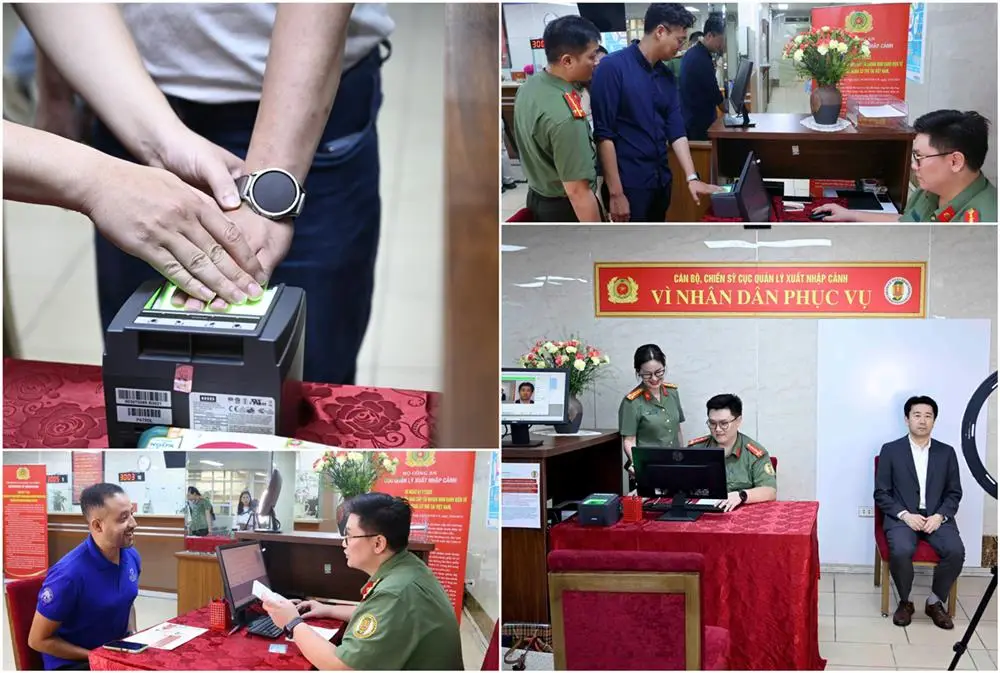
Level 2 requires in-person identity verification. An immigration officer checks the passport details, photographs the applicant, and takes fingerprints for comparison with the National Immigration Database. Level 2 lets a foreigner use their electronic identity, integrated information, and the full range of functions in government information services connected to the system, to the extent those functions have been implemented for that user. Level 2 is of greatest interest to expats, investors, company employees, and people who regularly use government and other digital services in Vietnam.
Where to Apply for VNeID Level 1
Level 1 is obtained through the official VNeID app. Install the app, enter the details of a passport or other international travel document, provide an email address or registered mobile number, take a facial photograph using the device, and submit the request. The result is sent through VNeID, the phone number, or email. Because the expansion to ordinary tourists took effect only on September 28, 2026, the interface on a particular device or app version may take time to catch up. If the app still requires the former conditions, this does not necessarily mean that the law does not apply to a tourist: the technical implementation may not yet fully reflect the new rule. Install only the official VNeID app. Government sources specifically warn users to rely on the official version and avoid fake apps and websites.
Where to Apply for VNeID Level 2
Level 2 cannot be obtained remotely; biometric registration must be completed in person.
Under the current procedure, applications are accepted by Cục Quản lý xuất nhập cảnh — the Immigration Department of the Ministry of Public Security — or Phòng Quản lý xuất nhập cảnh Công an cấp tỉnh, the immigration office of the police in the relevant province or city. An ordinary district police office or Công an phường is not listed as the main place to apply for foreigners’ Level 2 registration.
In Hanoi, since June 16, 2026, Cục Quản lý xuất nhập cảnh has handled immigration administrative procedures at its new complex at 69 Mạc Thái Tổ, phường Yên Hòa. The visitor entrance is Gate 2, on the Nguyễn Quốc Trị side.
In Ho Chi Minh City, a Cục Quản lý xuất nhập cảnh office operates at 333–335–337 Nguyễn Trãi, phường Cầu Ông Lãnh.
In other provinces, contact the local Phòng Quản lý xuất nhập cảnh Công an tỉnh/thành phố. In Nha Trang, this is the immigration office of Công an tỉnh Khánh Hòa. Before visiting, check the current address and opening hours on the provincial police’s official website.
On Which Days Are Applications Accepted?
The official instructions for issuing Level 2 accounts to foreigners specify administrative hours Monday through Friday, excluding public holidays. Some immigration offices may accept applications for other services on Saturdays, so check the schedule of the specific office before you travel there.
What Documents Are Needed for Level 2?
The basic procedure requires you to present a valid passport or another recognized international travel document in person and complete form TK01 — Phiếu đề nghị cấp tài khoản định danh điện tử. The form asks for contact details, including a mobile number registered in the applicant’s own name, an email address if available, and information the user wants integrated into VNeID. The officer takes the applicant’s photograph and fingerprints during the visit. Since the change on September 28, 2026, a TRC is no longer a universal condition for eligibility for VNeID itself. If you have a Temporary or Permanent Residence Card, it is sensible to bring it. A tourist should also keep an e-visa, visa, or other proof of lawful entry and length of stay at hand, especially during the first weeks of the new rule.
Do You Need a Vietnamese Phone Number?
For Level 1, the rule allows an email address or registered mobile number, if the applicant has one. The Level 2 procedure asks for a số thuê bao di động chính chủ — a mobile number registered in the applicant’s own name.
So a foreigner who wants Level 2 is safest arranging a Vietnamese SIM in their own passport name in advance through an official mobile operator. A SIM registered to someone else may cause a problem during registration or later when recovering access.
Should You Fill in TK01 in Advance?
TK01 is the official application form for electronic identification. You can prepare it in advance, but in practice the form may also be provided at the immigration office. It is especially important that the spelling of your name, passport number, nationality, date of birth, and other details exactly match the immigration database. Differences in the order of given and family names, spaces, or transliteration may lead to additional checks.
How Much Does VNeID Cost?
Registering for and using your own VNeID account is free.
Article 27 of Decree 69/2024/NĐ-CP explicitly states that foreigners do not pay a government fee to register an electronic identity account or use their own account in electronic transactions. If someone offers to “get VNeID through a contact” for a fee, that is not an official government charge. Third-party commercial services that use electronic authentication may charge fees, but those are not fees for creating VNeID.
How Long Does Registration Take?
The official maximum periods are counted after a complete and valid application is received:
| Account type | Maximum time |
|---|---|
| Level 1 | 1 working day |
| Level 2, if the immigration database already contains a photo and fingerprints | 3 working days |
| Level 2, if biometrics are not yet in the database | 7 working days |
These time limits are expressly established in Decree 69/2024/NĐ-CP. For an ordinary tourist completing full biometric registration for the first time, it is sensible to allow for processing of up to seven working days.
How Does Level 2 Registration Work?
The procedure consists of several steps. First, the foreigner visits Cục Quản lý xuất nhập cảnh or the regional Phòng Quản lý xuất nhập cảnh in person and presents a passport. Next, they complete TK01 with contact details and, if needed, a request to integrate additional information. An officer then enters the information into the system, photographs the applicant, and takes fingerprints. The immigration office sends a request to the state electronic identification system. After verification, the result is sent through VNeID, the registered mobile number, or email. This is the five-step procedure officially published by Cục Quản lý xuất nhập cảnh when Level 2 registration for foreigners was launched.
Activate the Account After Approval
After you receive notice that the electronic identity account has been issued, you must activate it in the VNeID app within seven days. If you miss this period, you will need to contact electronic identity system support to activate it.
After applying, keep an eye not only on the app but also on your SMS messages and email.
What Does VNeID Actually Give a Foreigner?
VNeID’s main function is a state-verified digital identity. Level 1 provides access to electronic identity information and some functions of connected systems. Level 2 lets a foreigner use their electronic identity information, integrated data, and the full range of functions of apps and information systems connected to the system. Decree 69 also establishes an important legal principle: electronic identity information and information integrated into VNeID have legal force when confirming the relevant details in administrative procedures, public services, transactions, and other activities. The Immigration Department has specifically named electronic government services, verification of details in banking transactions, renting accommodation, using utilities and other services, and storing electronic immigration and other lawful documents as practical use cases for foreigners.
What Changed for Digital Documents in September 2026?
Decree 320/2026 strengthened VNeID’s role even further. If a document or information has already been integrated into the national identity system, government agencies, organizations, and individuals must use that data during administrative procedures, public services, civil transactions, and other legally covered activities rather than demanding the original or a copy again solely to recheck information already available. The new decree also expanded the list of information and documents that may be synchronized with VNeID. The list for individuals includes, among other items, visas, proof of residence information, driving documents, vehicle registration, and some investment documents. The published list contains 66 types of documents for individuals in total. This does not mean that every foreign user will see all these items in the app on September 29, 2026. Integration depends on whether the relevant agency’s database is connected and whether that user’s information is accurate.
Can You Store a Visa or Stay Details in VNeID?
The new regulatory framework expressly provides for integrating visa and immigration information. The document list in Decree 320/2026 includes, among other things, visas and proof of residence information. Back in 2025, the Immigration Department listed the ability to store electronic information about a residence card and other lawful documents belonging to a foreigner among the benefits of Level 2. Whether a particular document is available in practice depends on database connections. Having VNeID does not mean that every e-visa or temporary-residence registration will immediately appear in the app.
Can VNeID Replace a Passport?
Within Vietnam, VNeID may be used to verify an electronic identity and information integrated into the system. The law expressly recognizes the legal value of such information for administrative procedures, public services, and other transactions.
But VNeID does not replace a physical passport as an international travel document.
A passport is still needed for crossing borders, international travel, and situations where the travel document itself is required. In other words, VNeID may reduce the number of occasions when you need to take out your passport inside the country, but it does not turn your phone into a passport for international travel.
Can VNeID Help You Open a Bank Account?
VNeID may make it easier to verify your identity with connected financial services. The Immigration Department explicitly cited identification in banking transactions as one practical benefit of Level 2 for foreigners. However, VNeID does not override the requirements of an individual bank. A bank may still check the length of your lawful stay, immigration documents, phone number, tax information, and other details required by its banking rules and KYC procedures. So the claim “I got VNeID, therefore I can automatically open any bank account” is not correct.
Does VNeID Let You Pay by QR Like a Vietnamese Resident?
VNeID itself is not a bank account and does not automatically become a VietQR wallet. The government is developing VNeID integration with bank accounts, e-wallets, and payment services, but using a particular payment method still requires a separate financial product. In 2026, VNeID is indeed developing into a broader digital platform with linked payment tools, but this does not mean that every foreigner automatically gets banking functions. For a tourist who only wants to pay by QR in cafés and shops, getting VNeID alone does not solve that problem.
Can VNeID Help When Renting Accommodation?
Yes, potentially; this is one useful area. Government explanations have already listed accommodation rental and use of various public services among the practical Level 2 scenarios for foreigners. But the requirement to register a foreigner’s temporary residence has not gone away. A hotel, landlord, or other accommodation provider usually handles this registration through the immigration system. VNeID does not cancel the rules on registering a foreigner at their actual place of residence.
Is VNeID Useful to a Business Owner or Company Director?
Level 2 is especially important for a foreigner who is the legal representative of a company in Vietnam. After obtaining personal Level 2 electronic identification, a foreign legal representative may use it in the procedure for registering an organization’s electronic identity. Official government materials have explained this scenario separately for FDI companies with a foreign legal representative. This is becoming increasingly important as government online services gradually move to VNeID as their main way to sign in and verify identity. For an investor, director of an FDI company, or foreign entrepreneur, Level 2 is therefore considerably more useful in practice than for a tourist staying one week.
Is VNeID Useful to an Ordinary Tourist?
It depends on the length of the trip. For a tourist staying five to seven days, Level 2 often has little practical value: it requires a personal visit to the Immigration Department, and statutory processing can take up to seven working days. Level 1 is easier to obtain and may serve as a convenient basic digital identity. The benefits become much more noticeable for someone staying 30–90 days, returning to Vietnam regularly, or using local banking, rental, and government services. The change is particularly interesting for long-stay tourists, digital nomads, and people spending several months in Vietnam who do not receive a TRC under their basis for staying.
Who Can Benefit Most From VNeID?
Level 2 will be most useful in practice to foreigners who live in Vietnam for extended periods, work or do business there, invest, regularly use government services, rent accommodation long-term, or obtain local permits and documents. For an ordinary short-term traveler, the system is more of an additional option than a necessity.
Do You Need a Work Permit, Employment Contract, or Company Sponsor?
The new VNeID rule does not require a work permit, employment contract, or employer sponsor just to obtain VNeID. The key condition is now different: lawful entry to Vietnam or lawful residence in the country. Of course, VNeID does not replace a work permit if one is required for your activities. Electronic identification verifies your identity but does not give you the right to work without the appropriate authorization.
Can a Foreign Child Get VNeID?
Decree 69/2024 has separate provisions for foreign minors. For a foreigner under 14, a parent, guardian, or other legal representative registers Level 1 through their own account. For Level 2, a foreigner aged six to under 14 visits the immigration office together with a representative or guardian. For children under six, the current procedure expressly provides for Level 1, while the Level 2 procedure is described for foreigners aged six and over.
Is Separate Temporary-Residence Registration Still Needed?
Yes. VNeID and immigration registration at the actual place of residence are different procedures. Getting an electronic account does not cancel the obligation to notify the authorities of a foreigner’s temporary residence under the current immigration rules. A hotel usually does this for its guests. If you rent an apartment or house, separately make sure that your residence has been registered.
Is a Foreigner Required to Get VNeID?
There is no general requirement for an ordinary tourist to get VNeID.
The new rule says an account is issued at the person’s request — khi có nhu cầu.
However, more government and commercial processes will increasingly use VNeID as a convenient or primary means of digital identification. Its practical importance will therefore grow for long-term foreign residents.
What Happens When Your Visa or Stay Period Expires?
A foreigner’s VNeID is not a way to retain status indefinitely after their lawful stay expires. Decree 69 provides for an automatic block on a foreigner’s account, including when their passport or other travel document expires or when their permitted period of residence in Vietnam ends. An account may also be blocked at the user’s request, for violating the terms of use, or in other situations established by law. So a tourist cannot use VNeID to keep acting as if their visa were still valid.
What Happens After an Extension or a New Entry?
The regulatory framework provides for updates and synchronization of data from government databases. After a new visa, an extension of lawful stay, a new passport, or another change, you may need to wait for synchronization or request an update. Decree 320/2026 strengthened this mechanism: documents from connected databases are to be updated automatically, and if such a database is not available, the user may submit a request to integrate information through VNeID. The decree sets processing periods of up to five working days for some updates. Because the new system has only just begun operating, the precise process for restoring or updating an account after a new entry may still depend on technical implementation.
Can You Apply for VNeID Immediately After Arrival?
Legally, the new “lawful entry” criterion already means that a foreigner may be considered eligible for an account after lawfully crossing the border. You can try registering for Level 1 in the app after arrival. For Level 2, you must visit an immigration office in person. But in the first days and weeks after September 28, 2026, an officer, local instructions, or an app version may still rely on the former TRC requirement.
Why Does the Internet Still Say Tourists Cannot Get VNeID?
Because before September 28, 2026, that was generally true. In the summer of 2025, Vietnam broadly launched Level 2 for foreigners, but the official program applied to holders of a Temporary Residence Card or Permanent Residence Card. The 2025 official instructions stated this criterion explicitly. Later, Bộ Công an separately confirmed that ordinary temporary-residence registration did not replace a TRC for obtaining VNeID. Most instructions published in 2025 and the first half of 2026 describe precisely this old system. That is why the publication date is now critical when reading information about VNeID for foreigners.
What Should You Bring If You Want Level 2 Now?
As of late September 2026, it is practical to bring a valid passport, a mobile number registered in your own name, an email address, an e-visa or other proof of your lawful period of stay, and a TRC/PRC if you have one. If you want to integrate other documents, bring those as well. Your photograph and fingerprints will be taken during the application. You can fill in form TK01 when you apply or prepare it in advance.
The Short Answer for Tourists
Since September 28, 2026, not having a TRC should no longer automatically block a tourist’s access to VNeID. Under the amended Decree 69/2024, as changed by Decree 320/2026, a foreigner who has lawfully entered Vietnam has the right to request electronic identification. Level 1 is registered through the app and has an official processing time of up to one working day. Level 2 requires an in-person visit to the Immigration Department or provincial immigration office, includes a photograph and fingerprints, and takes up to three or seven working days depending on whether biometrics are already in the immigration database. There is no government fee to register for or use VNeID. For a short tourist trip, the system is still more of an optional extra. For an expat, investor, long-term renter, foreign employee, or someone who regularly uses Vietnamese digital services, Level 2 may become one of the main tools for interacting with government services and private systems that are gradually being connected.
The Main Limitation Today
As of September 29, 2026, the new rule has been in force for just two days.
It is therefore important to distinguish three things: the legal right, technical support in the app, and the actual practices of a particular immigration office.
Eligibility for foreigners who have lawfully entered has already been expanded. But older instructions on government websites, local handouts, and the VNeID interface may continue to show wording from the period when a TRC or Permanent Residence Card was required. Official 2025 materials that remain available online show this. If you are applying for VNeID specifically as a tourist during the first weeks after the change, it is sensible to contact the local Phòng Quản lý xuất nhập cảnh in advance and ask whether it has started accepting applications under the amended Decree 320/2026/NĐ-CP.
Updated: September 29, 2026.
Main sources: Decree 320/2026/NĐ-CP dated August 13, 2026, effective September 28, 2026; Decree 69/2024/NĐ-CP on electronic identification and authentication; official explanations from Bộ Công an and Cục Quản lý xuất nhập cảnh on issuing VNeID to foreigners; official Government of Vietnam materials on launching Level 2 for foreigners and integrating digital documents.
Comments
Read also
All articles
Vietnam in 14 days: three routes without racing across the country
Three workable two-week routes through north, central and south Vietnam: nights, transfers, weather buffer and booking order.

Da Lat Events
Explore Da Lat sunrise concerts, live music, flower festivals and creative events. Browse current announcements or publish your own event for free.

Best Beaches in Vietnam: Where to Go by Month and Which Destination to Choose
Vietnam has almost 3,300 km of coastline, but there is no single nationwide “beach season”. In winter, the most reliable beach weather is usually found…

How to Pay in Vietnam in 2026: Cards, VietQR, Cash, ATMs and Currency Exchange
Vietnam is increasingly cashless, but cash is still useful, international cards are not accepted everywhere, and QR payments are now common even at very small…
Why a Venue in Vietnam Benefits from Listing in "Places and venues"
A restaurant, café, bar, hotel, coworking space, spa, salon, dive school or other offline business in Vietnam almost always already has at least one digital…

When to Visit Vietnam: Weather and Seasons by Month and Region
A month-by-month guide to Vietnam weather: choose the best region for beaches, cities, mountains or a multi-region trip.